Commercial slush machine and ice cream machine on a cafe counter

Slush Machine vs. Ice Cream Machine: Which Is Better for Your Business?

When the weather turns and lineups build, a frozen treat is one of the easiest ways to lift a check average, and the question we hear most is whether to buy a slush machine or an ice cream machine. They both sell cold and both draw a crowd, but they run very differently behind the counter. Our range of commercial ice cream and slush machines covers both, so this guide walks you through which one earns its space in your business.

Here is the quick take. A slush machine is the lower-cost, lower-labour play that thrives on impulse volume. An ice cream machine costs more and asks for more daily care, but it delivers a higher-ticket, signature dessert. Your traffic, your staff, and your concept decide the winner, and the sections below make that call clear.

What each machine actually makes

Start with the product, because that is what your customers actually buy. A slush machine chills a flavoured liquid mix and keeps it churning in a clear hopper so it stays as a loose, drinkable slush. It is built for frozen drinks, slushies, and granita, and the see-through bowl doubles as advertising: a swirl of bright colour pulls in impulse buys all on its own.

An ice cream machine, most often a soft serve unit, freezes and whips a richer dairy or plant mix into a smooth, pipeable dessert that you pull straight into a cone or cup. It can also handle gelato and frozen yogurt depending on the model. That means a heavier, more precise machine and a thicker product, but also a dessert people are happy to pay more for. The two units share a counter well, but they are chasing different sales.
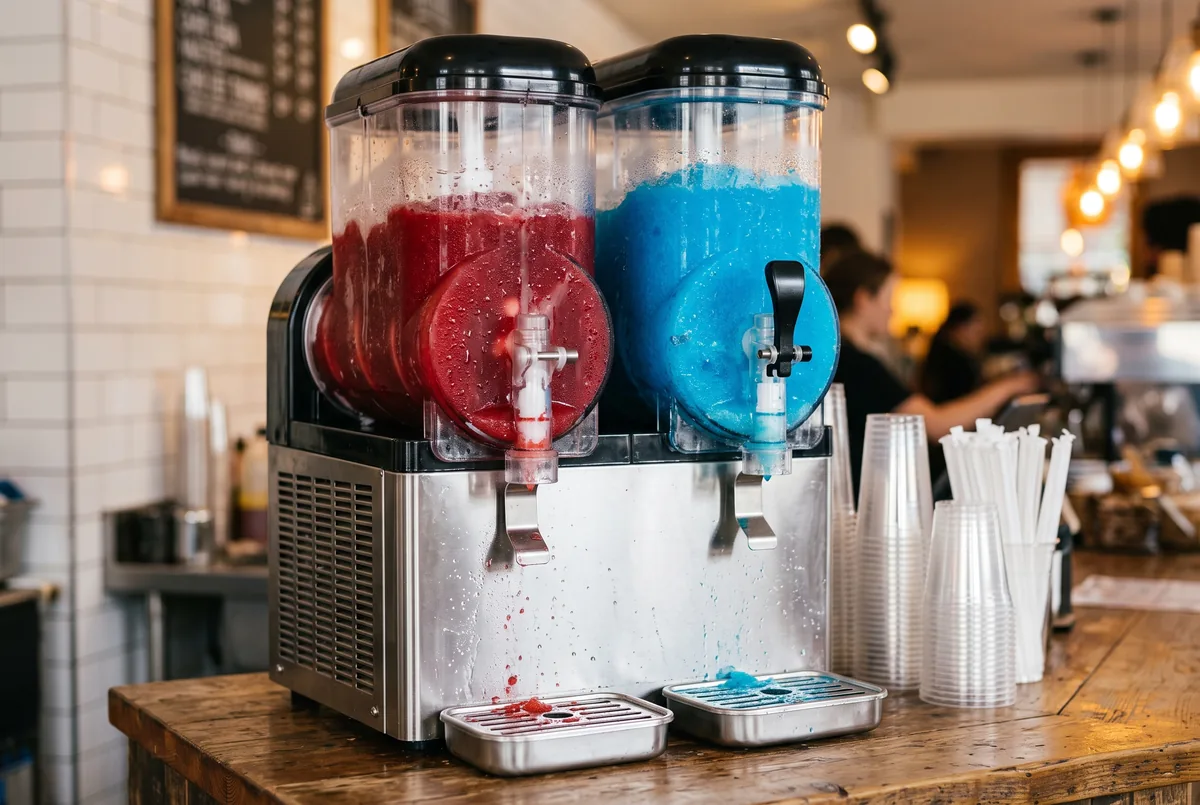
Commercial slush machine with two hoppers of bright frozen drinks
A slush machine sells on colour, low labour, and impulse volume.

Before we go deeper, the table below lines up the trade-offs side by side so you can see where each machine pulls ahead.

What you are weighingSlush machineIce cream machine
What it servesFrozen drinks, slush, granitaSoft serve, gelato, frozen yogurt
Upfront costLower to get startedHigher, more complex machine
Daily labourLight, mostly refilling mixHeavier, daily cleaning and sanitizing
Ticket and marginLow ticket, strong impulse volumeHigher ticket, signature dessert
Best fitCafes, c-stores, snack bars, patiosDessert shops, QSRs, high-traffic sweet menus

Save your money

If cash flow is tight, a slush machine is the gentler first step. The lower upfront cost and simple daily routine let you test frozen sales on your counter without a big commitment. If it flies off the shelf, that proven demand makes it far easier to justify adding an ice cream machine next season.

When a slush machine is the better buy

A slush machine shines when you want a fun, fast, low-maintenance item that sells itself. Convenience stores, snack bars, cafes, cinemas, and patio spots all do well with one, because the product is cheap to make, quick to serve, and needs almost no training. Staff top up the mix, the machine does the rest, and the bright hopper markets the drink to everyone who walks past.

It is also the easier machine to own. Daily labour is light, the upfront price is friendly, and you can add flavours or seasonal colours without changing anything about the equipment. If your goal is more impulse revenue per customer rather than a destination dessert, the slush machine is usually the smarter spend. It quietly adds dollars to tickets you were already ringing up.

When an ice cream machine wins

An ice cream machine earns its higher price when dessert is part of your identity, not just an add-on. Soft serve and gelato carry a bigger ticket and a bigger wow factor, and for a dessert shop, a quick-service restaurant, or a high-traffic sweet menu, that signature swirl can be the reason people choose you over the spot next door. The margin on a well-run soft serve program is hard to beat.

The trade-off is care. These machines cost more, they need more counter space and power, and frozen dairy demands a disciplined daily cleaning and sanitizing routine to stay safe. If you have the volume to justify it and the staff to maintain it, an ice cream machine turns dessert into a real profit centre rather than a nice extra.

Soft serve ice cream pulled from a commercial machine into a cone
An ice cream machine trades more daily care for a higher-ticket signature dessert.

Did you know?

Some of our units are ice cream and gelato showcases paired with slush capability, so you can merchandise scooped product and pour frozen drinks from one display. For a shop that wants a full frozen dessert corner, those combination showcases can cover more of the menu in a single footprint. Read the model details to see exactly what each one serves.

Polar U-Series Compact Soft Serve Ice Cream Machine – Setup Guide

Match the machine to your space and volume

Once you know which product fits your concept, size it to your traffic and your counter. A single-hopper slush unit suits a small cafe, while a busy c-store may need two or three bowls so it never runs dry on a hot afternoon. For soft serve, match the machine output to your rush and confirm you have the power and clearance. Run your situation through the quick selector below.

Which frozen unit fits my business?

A quick pointer, not a final spec. Volume, power, and space still matter, so ask for a quote.
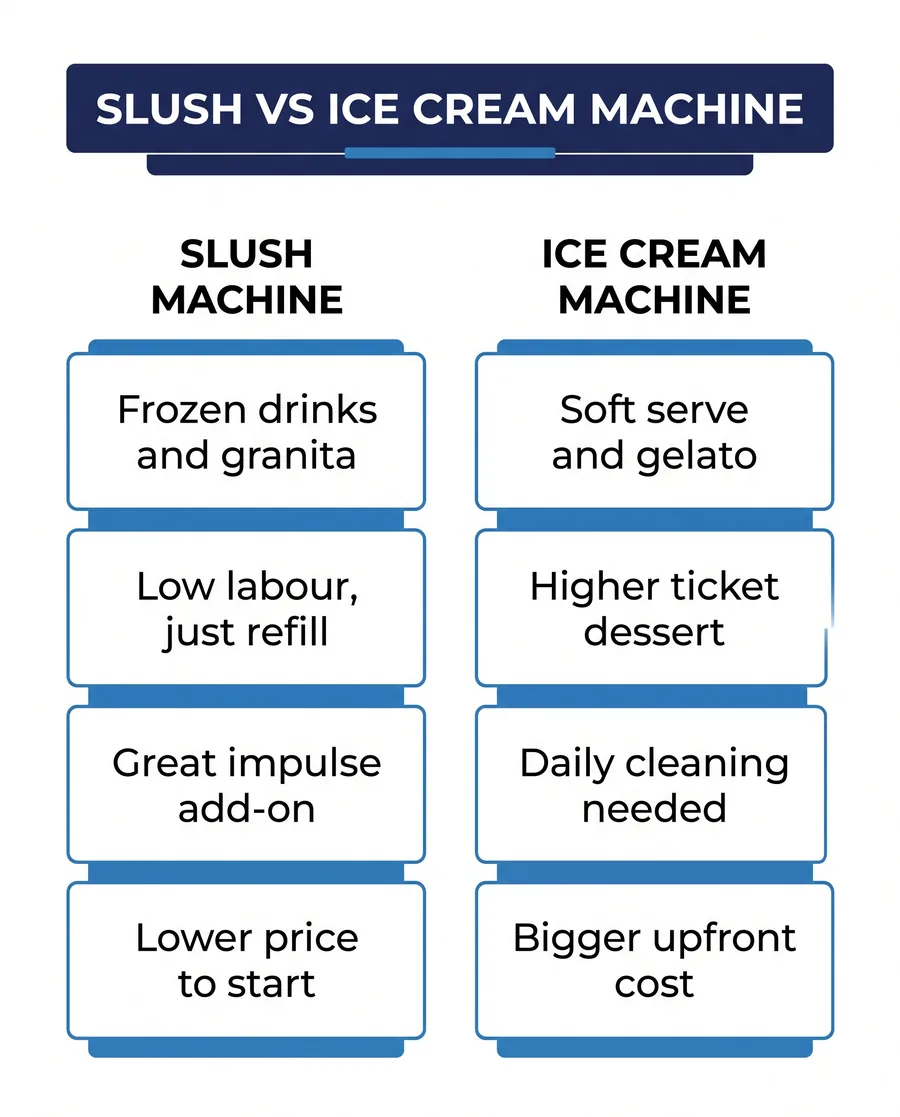
Comparison chart of a slush machine versus an ice cream machine
Slush versus ice cream machine, side by side.

Pro tip

Whatever you choose, size up for your peak, not your average. A frozen unit that empties mid-rush costs you the exact sales you bought it for. Tell us your busiest hour and your counter dimensions and we will point you to a unit that keeps up without crowding your line.

Please note: This article is general buying guidance for foodservice operators, not a food safety ruling or a guarantee of results. Frozen dessert equipment varies in capacity, power draw, and cleaning requirements. Confirm the specs, your electrical supply, and local health rules for frozen dessert handling before you order.

Download the free decision guide

Keep the slush vs ice cream machine guide handy while you compare models and quotes.

Slush vs Ice Cream Guide – Free PDF

Canada Food Equipment supplies new frozen dessert equipment to cafes, convenience stores, dessert shops, and restaurants across Canada. Compare models in our ice cream and slush machines range, explore the gelato showcases and slush machines, or pair either with a commercial ice machine. When you are ready, contact our team for a quote and we will size the right unit for your space and volume.

Frequently asked questions

Is a slush machine or an ice cream machine cheaper to run?

A slush machine is usually the lighter lift on both cost and labour. The unit itself tends to cost less upfront, the mix is simple to prepare, and daily upkeep is mostly topping up the hopper rather than a full teardown. An ice cream machine, especially a soft serve unit, costs more to buy and demands a real daily cleaning and sanitizing routine to stay safe and legal. Running costs also depend on how hard the compressor works, so pick an energy-conscious model. You can review the ENERGY STAR Canada program when you compare efficiency.

Can one machine make both slush and ice cream?

Not really, and you should be cautious of anything that claims to do both well. A slush machine freezes a liquid mix just enough to keep it in a drinkable, slushy state, while an ice cream machine freezes and churns a richer mix to a scoopable or pipeable texture. The refrigeration, the augers, and the mix are tuned for those different end results. If you want both on your menu, most operators run two dedicated units. That keeps each product at its best and avoids a compromise machine that does neither job cleanly.

How much daily cleaning does each one need?

Slush machines are the easier of the two. Many can run a couple of days between full cleans if the mix and manufacturer allow, though you should still wipe down and follow the maker’s schedule. Soft serve ice cream machines are stricter: dairy mix sitting in the barrel needs regular breakdown, cleaning, and sanitizing, often daily, to prevent bacterial growth. Before you buy, be honest about the staff time you can commit. Handling frozen dairy safely is a real responsibility, so check the food safety standards from the Canadian Food Inspection Agency for your setup.

Which one makes more money for a small cafe or store?

It depends on your traffic and your concept. A slush machine wins on volume and impulse: it is a low-cost, fun add-on that sells fast on a hot day and needs little training, which suits a convenience store, snack bar, or patio. An ice cream machine wins on ticket size and identity: soft serve and gelato carry a higher price and can become the reason people visit, which suits a dessert-focused shop or a busy quick-service spot. If you are unsure, many operators start with a slush unit and add an ice cream machine once demand proves out.

Stainless commercial pizza prep table in a restaurant kitchen

Pizza Prep Table vs. Sandwich Prep Table: What’s the Difference?

If you are speccing a new line, a pizza prep table and a sandwich prep table can look almost identical in a catalogue: both are a refrigerated base with a rail of pans on top. The difference is real, though, and buying the wrong one slows your line every shift. Our refrigerated pizza prep tables and sandwich and cold prep tables are built around two different jobs, and this guide shows you which job matches your menu.

Short answer first. Choose a pizza prep table when your menu is built on dough and you need a wide board plus deeper topping pans. Choose a sandwich prep table when you build subs, wraps, and salads and want more shallow pans in reach for fast assembly. The rest of this guide breaks down why.

What a pizza prep table is built to do

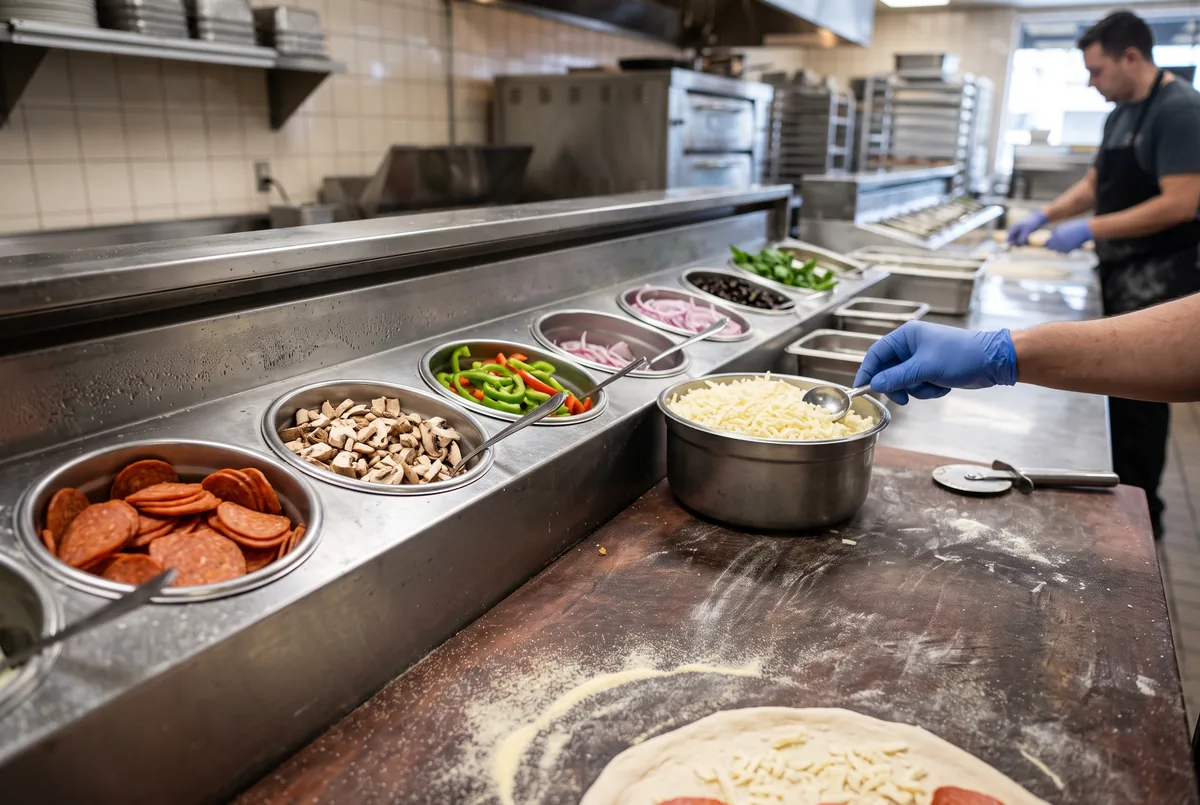
A pizza prep table is designed around one thing: stretching and dressing dough. The giveaway is the wide cutting board across the front, usually deeper than what you see on other prep units, because you need real estate to work a crust. Behind that board sits a raised rail of refrigerated pans, and those pans tend to be deeper so they can hold a full service of sauce, shredded cheese, and chunky toppings without constant refills.

The base matters just as much. Pizza prep tables are commonly sized to store dough boxes and bulk cheese in the refrigerated cabinet below, so your whole pizza station lives in one footprint. If you run a dedicated pizza program, that combination of a big board, deep pans, and dough-friendly storage is exactly why the unit exists. Pair it with the right oven from our commercial pizza ovens and the station almost builds itself.

Pizza prep table with round topping pans on a raised refrigerated rail
The wide board and deep topping rail are what set a pizza prep table apart.

People often ask: do I need a special pizza table, or will any prep table work?

If pizza is a core part of your menu, the answer is usually yes. The wide board and the deeper pan wells are hard to fake on a standard sandwich unit, and a cramped board slows every pie. If pizza is a small side item, a general prep table with the right pans can get you by until volume grows.

What a sandwich prep table does differently

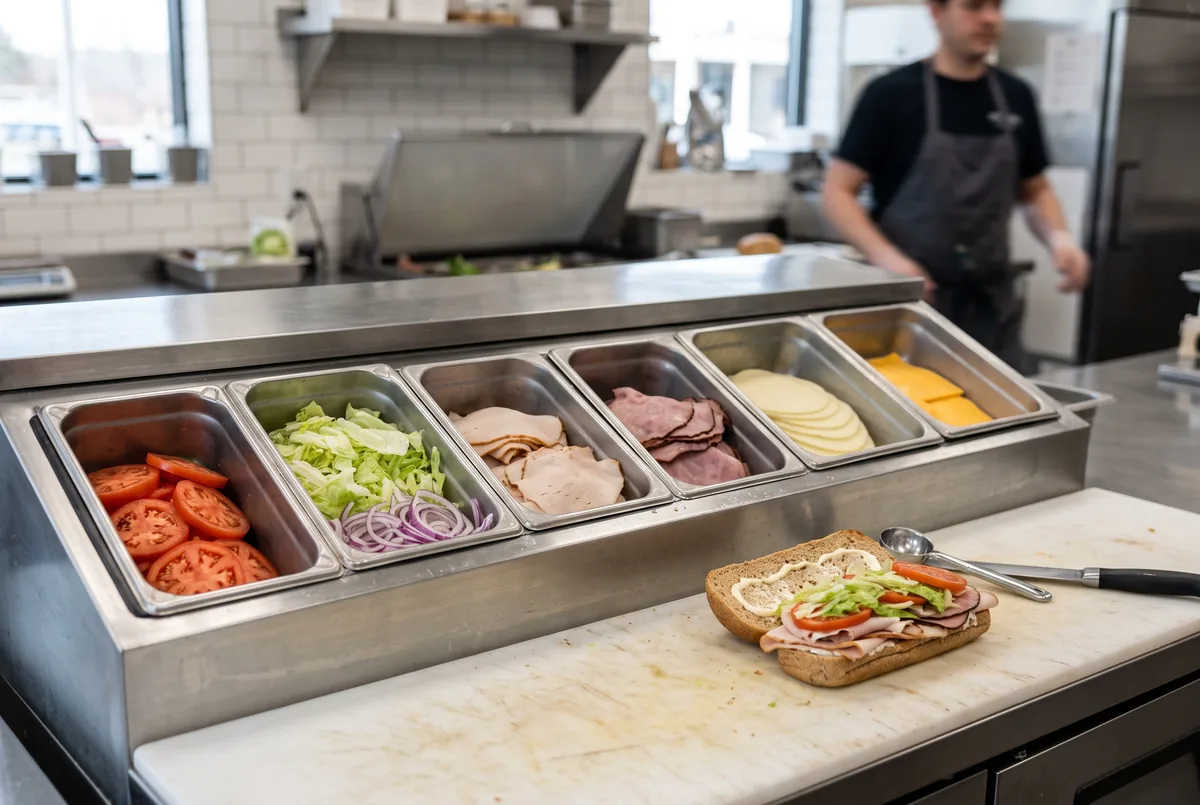
A sandwich prep table, sometimes called a cold table or a sandwich and salad unit, is tuned for speed and variety rather than dough. Instead of one big board, it gives you a narrow assembly strip along the front and a flat rail that holds more pans across the top. Those pans are usually shallow and rectangular, which is perfect when you need lettuce, tomato, three deli meats, two cheeses, and a few spreads all within one arm’s reach.

Because the rail carries the workload, sandwich tables often run shorter and shallower than pizza units, which helps them slot into a tight deli or cafe line. The refrigerated base below still holds backup pans and trays, so your line cook can restock without leaving the station. If your day is built on subs, wraps, burgers, and salads, this layout keeps assembly fast and keeps every cold ingredient at the point of use.

Sandwich prep table with rectangular pans of deli ingredients on a flat rail
A sandwich prep table packs more shallow pans across a flat rail for fast assembly.

Did you know?

Some units are sold as mega-top or dual-purpose tables that widen the pan rail so you can carry a big ingredient count. They blur the line between the two styles, which is handy for a mixed menu, but they still favour either dough work or deli assembly depending on the board width and pan depth. Read the pan chart, not just the name.

Pizza prep table vs sandwich prep table at a glance

Here is the quick comparison most buyers want. Treat it as a starting point, then confirm the exact pan layout and dimensions on the model you like, since manufacturers vary.

What you are comparingPizza prep tableSandwich prep table
Work surfaceWide, deep cutting board for stretching doughNarrow front board for quick assembly
Topping pansDeeper round or square inserts on a raised railMore shallow rectangular pans across a flat rail
Base storageSized for dough boxes and bulk cheeseSized for deli trays and backup pans
Best menu fitPizza, calzones, flatbreadsSubs, wraps, burgers, salads
FootprintOften deeper front to back for the boardOften shorter, fits a tight line
Beverage-Air Pizza Prep Table Overview

Pro tip

Before you fall for a spec sheet, walk your line with a tape measure and count your busiest pan set. Nine times out of ten the right table is decided by two things: how many pans you need in reach and how much room the board needs. Everything else is a detail.

Which one fits your menu

Run your menu through the quick selector below. It points you toward the style that usually fits, then you can narrow down the size and pan setup from there or ask us to spec it with you.

Which prep table fits my menu?

A quick pointer, not a final spec. Pan sizes and line layout still matter, so ask for a quote.

Comparison chart of pizza prep table versus sandwich prep table
Pizza versus sandwich prep table, side by side.

Please note: This guide is general buying information for foodservice operators, not a food safety or engineering ruling. Pan sizes, capacities, and refrigeration performance vary by model. Confirm the specs, the pan configuration, and local health rules for cold holding before you commit to an order.

Download the free spec checklist

Take the pizza vs sandwich prep table checklist with you when you compare models.

Prep Table Spec Checklist – Free PDF

Canada Food Equipment ships new commercial refrigeration to restaurants, delis, pizzerias, and cafes right across Canada. If you are still weighing a pizza prep table against a sandwich prep table, browse the full range in our commercial refrigeration category or contact our team for a quote and we will match a unit to your menu, your line, and your budget.

Frequently asked questions

What is the main difference between a pizza prep table and a sandwich prep table?

The difference comes down to the work surface and the pans. A pizza prep table gives you a wide, deep cutting board across the front so you have room to stretch dough and dress a pie, and it uses a raised rail of deeper topping pans behind it. A sandwich prep table trades that big board for a narrow assembly strip and packs more shallow rectangular pans across a flat rail. Both keep ingredients cold at the point of use, but the pizza unit is shaped around dough work while the sandwich unit is shaped around fast, high-count assembly.

Can I make sandwiches on a pizza prep table, or pizza on a sandwich table?

You can, within reason. A pizza prep table will handle sandwich building if you swap in shallower pans, and many kitchens run a mixed menu off one. Going the other way is harder: a sandwich prep table usually lacks the wide board and the deeper pan wells that pizza work wants, so dough stretching feels cramped. If your menu leans one way, buy for that side. If you are truly split, a pizza table with a large mega-top rail tends to adapt better than forcing a sandwich unit to do pizza.

What food temperature should a prep table hold?

A commercial prep table is a cold-holding unit, so the goal is to keep ingredients out of the temperature danger zone. In Canada that means keeping cold food at or below 4C. Well-designed units hold the base and the pan rail cold, but a busy line, a warm kitchen, or overfilled pans can let the top pans drift warmer than the base. Keep pan lids on when you can, do not overfill, and check pan temperatures during service. You can review the general food safety standards from the Canadian Food Inspection Agency for your operation.

How do I know what size prep table to order?

Start with two numbers: how many pans you need in reach during a rush, and how much line space you actually have. Count your busiest topping or filling set, add a little room to grow, and that tells you the rail length. Then measure the gap on your line, front to back and side to side, including door swing and walk space. Pizza tables often run deeper because of the board, so a unit that fits a deli line may crowd a pizza station. When the two numbers pull against each other, share them with our team and we will point you to models that fit both.

Gas vs electric commercial fryers, a stainless steel deep fryer station in a professional kitchen

Gas vs. Electric Commercial Fryers: Which Is Right for Your Kitchen?

Should you buy a gas or an electric commercial fryer? The honest answer is that it depends on three things: where your kitchen gets its energy, how fast you need oil to recover during a rush, and what your local utility charges per unit. Both technologies fry beautifully. The difference shows up in install cost, recovery speed, and your monthly bills. If you are weighing models right now, our range of commercial deep fryers covers both, and this guide walks through how to pick the right one for your menu and your room.

Quick take

Choose gas if you run high-volume frying, already have a gas line, and want the fastest oil recovery for back-to-back baskets. Choose electric if you have limited or no gas service, want simpler installation and more even heat, or are fitting out a smaller or mobile kitchen. Most kitchens can succeed with either; the deciding factors are volume and the utilities you already have.

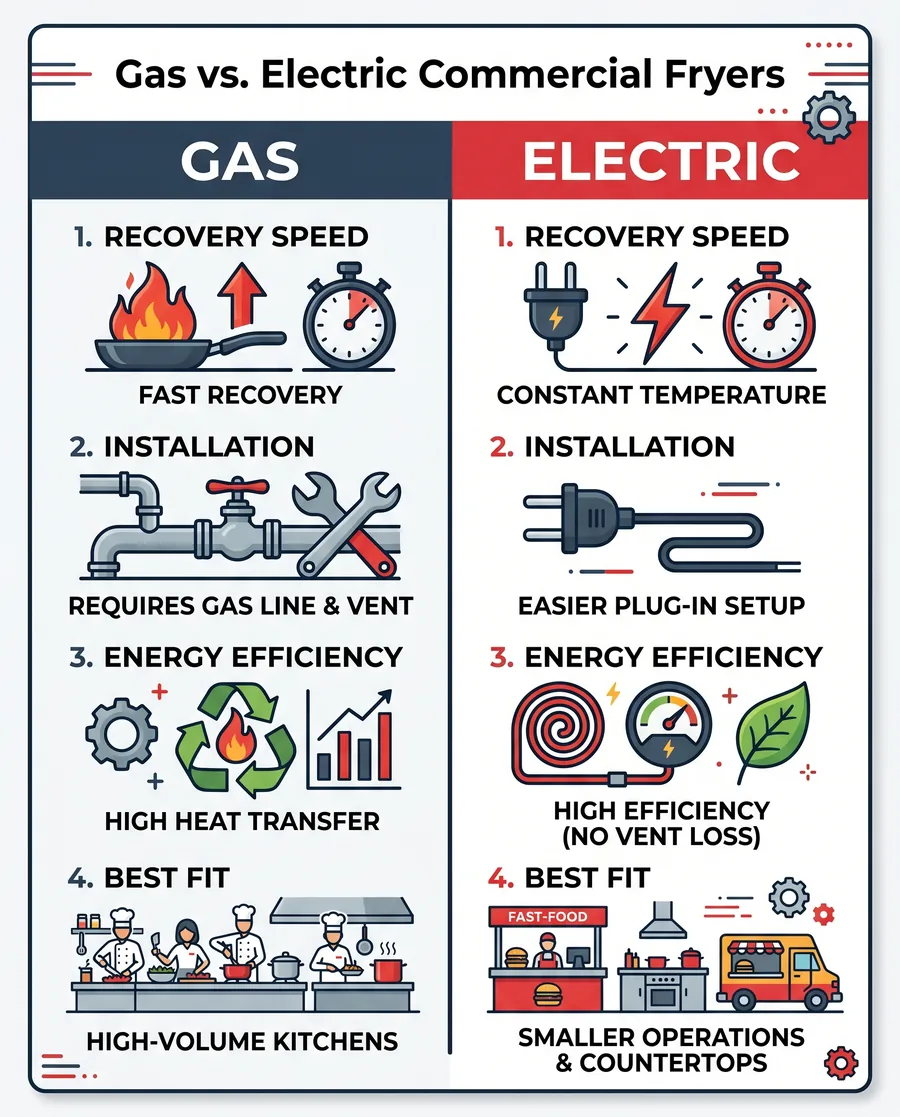
Infographic comparing gas and electric commercial fryers on recovery, install, efficiency and best fit
Gas versus electric fryers at a glance: recovery speed, install needs, efficiency, and best fit.

The two options at a glance

A commercial fryer heats a vat of oil to roughly 175 C and holds it there while baskets of cold, wet food keep pulling the temperature down. The job of the burner or element is to put that heat back fast. That is the whole game, and gas and electric go about it differently.

Gas fryers burn natural gas or propane under the oil vat. They heat the oil through the tank walls or through internal tubes, and they tend to deliver a lot of raw power, which means strong recovery during a busy service. Electric fryers use heating elements that sit directly in the oil. Because the element is immersed, electric units transfer heat very efficiently and hold a steady, even temperature, which is part of why so many countertop and lower-volume models are electric.

A stainless steel commercial gas deep fryer with baskets of food in a busy restaurant kitchen
Gas fryers put out strong heat for fast oil recovery during back-to-back baskets.

Gas vs electric: side by side

Here is how the two stack up on the factors that actually affect a working kitchen. Treat this as a starting point for a conversation with your supplier, not a hard rule for every model.

FactorGas fryerElectric fryer
Oil recovery speedVery fast, strong for high volumeFast and very steady, great for consistency
Heat-up from coldQuickOften a touch slower to reach temp
Energy efficiency at the vatLower, more heat escapesHigher, immersed element heats oil directly
InstallationNeeds a gas line and proper ventingNeeds the right electrical service and outlet
Upfront cost (typical)Often lower per BTU of outputComparable; countertop models can be cheaper
Temperature evennessGoodExcellent, very stable
Best fitHigh-volume, gas-equipped kitchensSmaller, mobile, or all-electric kitchens
Cleaning and serviceBurners and venting to maintainElements often swing up for easy cleaning

Notice that neither column is all wins. Gas gives you brute recovery power but loses more heat to the room and needs venting. Electric is more efficient at the oil and easier to install, but a high-output gas unit will usually out-recover an electric one of the same size. For more on matching a fryer to your menu, see our guide on choosing the best fryer for your menu.

Gas vs Electric Deep Fryers: Which Do You Need?

What each one really costs to run

Pricing and figures note: Any prices, energy figures, or running-cost numbers on this page are general 2026 estimates for commercial equipment in Canada and are meant for planning only. What you actually pay or save depends on the make and model, your menu and volume, local utility rates, install conditions, and the quote your supplier or utility provides. Always confirm current pricing and specifications before you buy.

Operating cost comes down to two things: how efficiently the fryer turns energy into hot oil, and what you pay for that energy. Electric fryers convert a higher share of their input into useful heat at the oil, so they often look very efficient on paper. But in much of Canada, natural gas costs less per unit of energy than electricity, which can flip the math back toward gas in a high-volume kitchen.

The cleanest way to compare is to look for certified models. Both gas and electric fryers can earn an ENERGY STAR rating, which means they meet heavy-load cooking efficiency and idle-energy targets. In Canada, you can cross-check eligible products through Natural Resources Canada. A certified fryer of either fuel type wastes less energy idling between rushes, which is where a surprising amount of a fryer’s lifetime cost actually hides.

Save your money: count the idle hours

Most fryers spend more of the day holding temperature than actively cooking. That idle energy adds up. Before you pick a fuel type, estimate how many hours your fryer sits hot but unused, then favour a model with strong idle-efficiency numbers, whatever the fuel. Pair that with a good lid and a habit of switching to a lower hold temperature during slow periods, and you can trim your fryer energy bill noticeably without changing a single recipe.

People often ask: is gas or electric cheaper overall?

For a high-volume kitchen that already has a gas line, gas is often cheaper to run because natural gas tends to cost less per unit of energy than electricity in most of Canada, and gas units recover fast enough to keep up. For a low to medium volume kitchen, or one without gas service, a modern electric fryer is usually the better total value once you factor in its higher efficiency and simpler install. There is no single winner; the cheaper option is the one matched to your volume and your local utility rates.

A commercial electric countertop deep fryer with the heating element lifted up for cleaning
Electric fryers heat oil directly and many lift the element for easy cleaning.

Which fryer fits which kitchen

Step back from the spec sheet and look at your operation. The right answer usually becomes obvious once you frame it around volume and utilities.

  • High-volume restaurant or quick-service. If fries, wings, and fried items are core to your menu and you already have gas, a floor-standing gas fryer with strong recovery is hard to beat.
  • Cafe, bar, or low to medium volume. An electric fryer, often countertop, gives you steady temperature, easy cleaning, and a simple plug-and-go install when frying is a side act, not the headliner.
  • Food truck or mobile kitchen. Power and space drive the call. Many trucks run propane for fast recovery off-grid; others go electric when shore power or a generator can handle the load.
  • New build or full renovation. If you are running new utilities anyway, decide on fuel before the trades arrive, because adding a gas line or upgrading electrical service later is expensive.

If your kitchen is built around live-flame cooking, it is worth thinking about your whole line at once. The same gas-versus-electric trade-offs show up on your stovetop, which we cover in our piece on gas versus electric commercial ranges.

Edge cases and common mistakes

Please note: This article is for general guidance only and is not a substitute for your equipment manual, your manufacturer, or a licensed professional. Canada Food Equipment is not liable for any damage, injury, or cost resulting from action taken based on this content. Commercial cooking and refrigeration equipment involves gas, high voltage, hot oil, and refrigerant. Anything beyond routine cleaning, especially gas, electrical, or sealed refrigeration work, must be handled by a qualified technician, and you should always follow your local food-safety and health-authority requirements.

  • Buying more BTUs or watts than you need. Oversizing wastes energy and money. Match output to your real peak, not your busiest day ever.
  • Forgetting the hood and venting. Gas fryers produce combustion byproducts and need proper ventilation. Confirm your hood and make-up air can handle the unit before you buy.
  • Ignoring electrical capacity. A big electric fryer can need a dedicated circuit and specific voltage. Have an electrician confirm your panel can carry it.
  • Skipping sanitation and food-safety basics. Choose equipment built for commercial cleanability and run it within your food-safety program. The Canadian Food Inspection Agency outlines the food-safety expectations every foodservice operator works under.
  • Overlooking maintenance. Whatever you choose, oil management and regular service decide how long it lasts. Our complete deep fryer maintenance guide walks through the routine.

Sources and further reading

Frequently asked questions

Do gas fryers really recover oil temperature faster than electric? +

Generally yes, especially at higher output levels. Gas burners can deliver a large amount of raw heat quickly, which helps the oil bounce back to frying temperature after you drop in cold, wet food. That fast recovery is why high-volume kitchens lean toward gas. Electric fryers recover well too and hold temperature very evenly, but a big gas unit will usually out-recover an electric one of similar size during back-to-back baskets. If your menu hammers the fryer all day, recovery speed is a real reason to consider gas.

Is an electric commercial fryer more energy efficient? +

At the oil vat, yes. Electric fryers use an immersed heating element, so a higher share of the energy goes straight into the oil instead of escaping around the tank. That makes them efficient on paper. The catch is energy price: in much of Canada, natural gas costs less per unit than electricity, so a gas fryer can still be cheaper to run despite lower efficiency. The smartest move is to compare ENERGY STAR rated models of both types and weigh their efficiency against your local utility rates.

Can I switch from a gas fryer to an electric one, or the other way? +

You can, but it is not always a simple swap. Going from electric to gas means adding or confirming a gas line and the right venting, which is a job for licensed trades. Going from gas to electric usually means confirming your electrical panel and circuits can carry the load, since a large electric fryer may need a dedicated, higher-voltage circuit. Before you commit to a switch, have the relevant professional check your utilities. Often it is easier to choose the fuel that matches your existing services.

Which fryer is better for a small kitchen or food truck? +

For tight or mobile setups, an electric countertop fryer is often the easiest choice because it installs with the right outlet and circuit, holds steady temperature, and is simple to clean. That said, many food trucks run propane gas fryers when they need fast recovery away from a strong power source. The deciding factor is your available power: if you have reliable electrical capacity, electric keeps things simple; if you are working off propane or a generator, a compact gas fryer can make more sense.

Does the fryer fuel type change the taste of the food? +

No. The food cooks in hot oil, not in the flame or the element, so a properly maintained gas fryer and a properly maintained electric fryer at the same temperature will produce the same result. What actually affects taste and quality is oil condition, frying temperature, and how consistently the fryer holds that temperature during a rush. Clean oil, accurate thermostats, and good recovery matter far more to your fries than whether the heat came from gas or electricity.

Download the free quick guide

Take our printable gas versus electric comparison and buying checklist to your next equipment decision.

Download the fryer buying checklist

Not sure which fryer your kitchen needs?

The verdict: gas wins on recovery for high-volume, gas-equipped kitchens, while electric wins on efficiency and easy installation for smaller or all-electric setups. Match the fuel to your volume and your utilities and you will not go wrong. Browse our selection of commercial deep fryers, stock up on fryer baskets and filters, or contact our team and we will help you spec the right unit.