commercial grease trap maintenance

A Complete Guide to Commercial Grease Trap Maintenance for Restaurants


A backed-up kitchen on a Friday night is almost always a grease problem that someone put off. The fix is unglamorous and cheap compared to the alternative: a simple, written maintenance routine for your commercial grease trap. Keep it clean on a schedule and it does its job silently for years. Ignore it and it will eventually flood your floor, foul your drains, and hand you a bylaw fine.

This guide keeps it practical. We cover why the trap matters, how it works, how to set a cleaning schedule that actually sticks, the step-by-step for cleaning a small unit yourself, and the warning signs that mean it is time to act. No jargon, just the routine that keeps your kitchen running and your inspections boring.

Why a grease trap is not optional

Fats, oils, and grease are the enemy of every drain in a commercial kitchen. Pour them down a sink and they cool, harden, and cling to pipe walls until the line chokes. That is the problem cities are trying to prevent, which is why most municipalities require food businesses to install and maintain a trap. The City of Toronto, for example, mandates a working grease interceptor for any food service establishment and backs it with fines that can reach into the tens of thousands.

It is not just a local concern. Keeping grease out of the sewer is the whole point of programs like the US EPA National Pretreatment Program, and Canadian cities run their own versions. The takeaway for an operator is simple: the trap is the law, and keeping it clean is your responsibility, not the city’s.

Did you know?

Hardened restaurant grease is the main ingredient in the sewer blockages cities call fatbergs, some of them the size of a bus. A single neglected kitchen trap will not build one alone, but every trap that overflows feeds the problem, which is exactly why municipal bylaws come with real penalties attached.

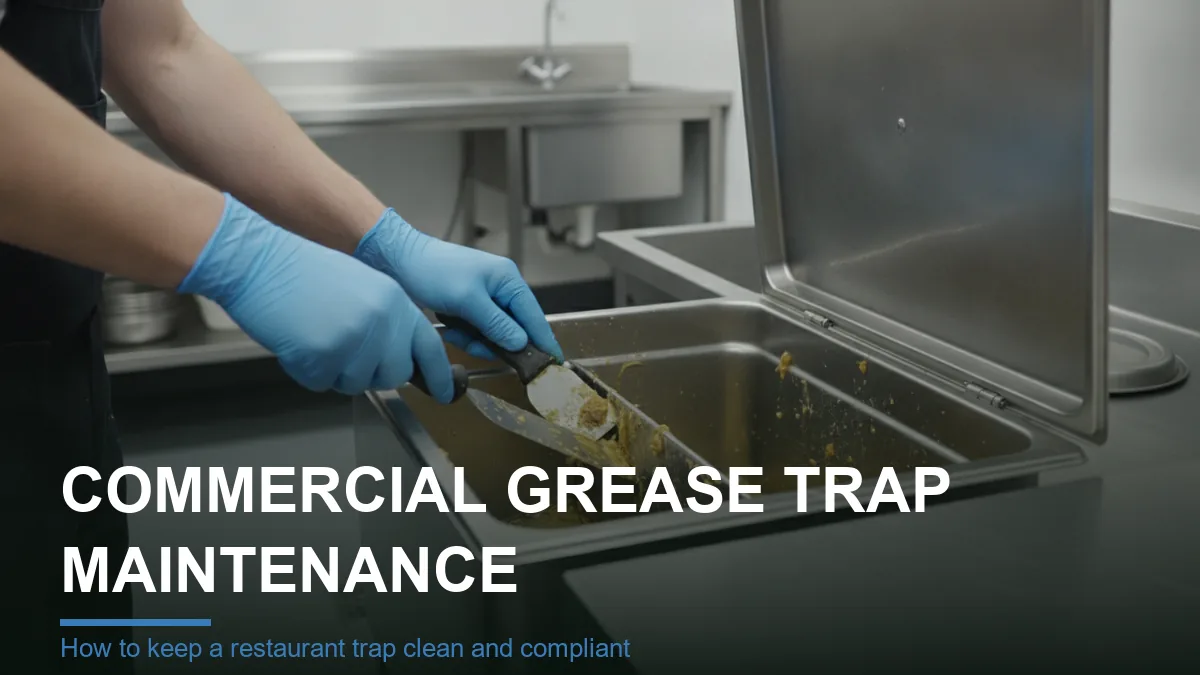
Gloved hands cleaning a commercial under-sink grease trap with a scraper

How a grease trap actually works

The mechanism is refreshingly simple, which makes the maintenance simple too once you picture it. Wastewater from your sinks and dishwasher flows into the trap. Inside, the flow slows down, and physics does the sorting. Grease and oil are lighter than water, so they float and collect at the top. Food solids are heavier, so they sink to the bottom. The cleaner water in the middle passes out to the sewer.

Over a few weeks that top layer of grease and bottom layer of solids both grow. The trap keeps working until those layers get thick enough to reach the outlet, and then grease starts slipping through into your drain lines. That is the moment your maintenance window closes. The entire job of a cleaning routine is to scoop those two layers out before they ever get that far.

People often ask: do dishwasher detergents make it worse?

They can. Harsh degreasers and very hot water can emulsify grease, breaking it into tiny droplets that float less and slip through the trap into the sewer. Using the right cleaning products and not overloading the system helps the trap do its job. It is one more reason to pair good equipment with the right consumables.

Grease trap maintenance at a glance: clean before 25 percent full, measure, schedule, log, dispose
Building a cleaning schedule that holds

Here is the rule almost every program comes back to: clean the trap before the grease and solids reach 25 percent of its depth. The City of Toronto grease interceptor maintenance guidance and most municipal codes use that 25 percent line, sometimes with a fixed maximum interval on top of it.

How often that lands for you depends on your kitchen. A small under-sink trap in a busy fryer-heavy kitchen might hit 25 percent in a week or two. A larger interceptor on a moderate menu might run a month or more. The smart move is to measure, not guess.

  1. Measure for the first few cycles. Open the trap weekly and note how deep the grease and solids have built up.
  2. Find your 25 percent point. See how long it takes to reach a quarter of the trap depth.
  3. Set the schedule with a margin. Clean a little before that point so a busy week never pushes you over.
  4. Write it down and assign it. A named person, a fixed day, and a log. Routines that live in someone’s head get skipped.
  5. Keep your records. Note the date, who cleaned it, and where the waste went. Inspectors ask.

Pro tip from the maintenance side

Tape a simple log sheet to the wall right above the trap, not in an office binder. Date, initials, and a tick. When the record lives where the work happens, it actually gets filled in, and you have instant proof for an inspector. The cheapest compliance tool in the kitchen is a printed sheet and a pen.

Stainless steel commercial kitchen sink and dishwashing area drain line

How to clean an under-sink trap, step by step

For a small under-sink unit, an in-house clean is realistic with a trained, gloved team. Larger in-ground interceptors usually need a licensed hauler with a pump truck. For the small ones, the routine looks like this.

  1. Gear up. Gloves, apron, a scraper or scoop, a heavy-duty bag or bucket for the waste, and rags.
  2. Stop the flow. Make sure no one is running water into the trap. Remove the lid carefully, expect an odour.
  3. Note the levels. Quickly check the grease and solid depth for your log before you disturb them.
  4. Scoop the grease and solids. Remove the floating grease, then the settled solids, into your waste container.
  5. Scrape and wipe. Clean the lid, baffles, and walls so buildup does not get a head start next cycle.
  6. Reassemble and check the gasket. Reseat the lid properly so it seals and does not leak odour into the kitchen.
  7. Dispose properly and log it. Send the waste to a licensed facility, keep the receipt, and fill in the sheet.


Stock the right consumables and the job goes faster and cleaner. Keep equipment cleaning supplies, sanitation products, and the correct dishwashing detergents on hand so your team is never improvising. A clean trap is part of the same routine that keeps your whole dishwashing area sanitary.

Common problems and how to fix them

Most trap trouble announces itself before it becomes a disaster. Catch these early and you avoid the mid-service flood.

  • Slow drains at the sinks. Usually the trap is full or grease has reached the outlet. Clean it now, do not wait for the schedule.
  • Foul, sewage-like smell. Often a trap overdue for cleaning or a lid that is not sealing. Clean it and check the gasket.
  • Gurgling or backups. Grease may have moved past the trap into the drain line. You may need a plumber to clear the line.
  • Grease in the outflow. The trap is undersized or overdue, or detergents are emulsifying the grease. Review sizing and products.
  • Leaking lid. A worn or misseated gasket. Replace it and reseat the lid so it seals fully.

If problems keep coming back even with a clean trap, the unit may be the wrong size for your kitchen, and that is worth fixing properly. Browse grease traps and interceptors or the wider equipment shop, and size the new unit against your fixtures and local code before you buy.

Please note: This article is general information only and is not plumbing, engineering, or legal advice. Grease trap sizing, cleaning intervals, waste disposal, and record-keeping rules are set by your local municipality and provincial code and vary by location. Always confirm current requirements with your municipality and use a licensed professional where required. Canada Food Equipment is not liable for outcomes from actions taken based on this content.

Download the free quick guide

Save this as a PDF to keep on hand.

Grease Trap Maintenance Routine (PDF)

Frequently asked questions

How often should a restaurant clean its grease trap?

The common rule of thumb is to clean a grease trap before the combined fats, oils, grease, and solids reach 25 percent of the trap’s depth. For a busy kitchen that often lands at every two to four weeks for a small under-sink unit, and on a longer cycle for a larger in-ground interceptor. The real answer depends on your volume, your menu, and your local bylaw, some of which set a fixed maximum interval. The safest approach is to track how fast yours fills for a few cycles, then set a schedule with a margin so you never hit that 25 percent line.

What happens if you do not maintain a grease trap?

Grease builds past the trap and into your drain lines and the city sewer. Inside the restaurant that means slow drains, backups, foul odours, and the kind of overflow that shuts a kitchen mid-service. Outside, hardened grease blocks municipal sewers and can trigger fines that run into tens of thousands of dollars under local sewer bylaws. On top of that, a neglected trap is a health inspection liability. None of it is cheap, and all of it is preventable with a simple cleaning routine.

Can I clean a grease trap myself or do I need a professional?

Small under-sink and countertop traps can often be cleaned in-house if your team is trained, gloved, and follows a safe routine. Larger in-ground interceptors usually need a licensed waste hauler with a pump truck, because the volume and the disposal rules are beyond a manual scoop. Either way, the grease you remove is regulated waste and cannot go down a drain or into regular trash. Check your local bylaw, many municipalities require records of who cleaned the trap and where the waste went.

Where does the grease go after it is removed?

Collected fats, oils, and grease are regulated waste, so they go to a licensed disposal or rendering facility, never down a drain, into a storm sewer, or in the regular garbage. Many haulers recycle it into products like biodiesel or industrial feedstock. Keep your disposal receipts, because inspectors and municipal sewer programs often ask for proof that the waste was handled properly. Treating grease as trash, or worse, pouring it out, is exactly the behaviour that bylaws and pretreatment programs exist to stop.

What size grease trap does my restaurant need?

Sizing is based on the flow rate through your fixtures, the number of seats or meals you serve, and your local code, which is why it is set by a plumber or engineer rather than guesswork. Too small and it fills constantly and lets grease slip through; too large and you may struggle to clean it on a sensible cycle. If you are opening, expanding, or replacing a unit, get the size confirmed against your fixtures and your municipal requirements before you buy, then build the cleaning schedule around the capacity you actually have.

Sources and references

Your next step: find your trap’s 25 percent point, set a written schedule with a margin, and put a log sheet on the wall above it. That one routine prevents almost every grease emergency. If your trap keeps causing trouble or you are not sure it is sized right, talk to Canada Food Equipment and we will help you sort the equipment side out.
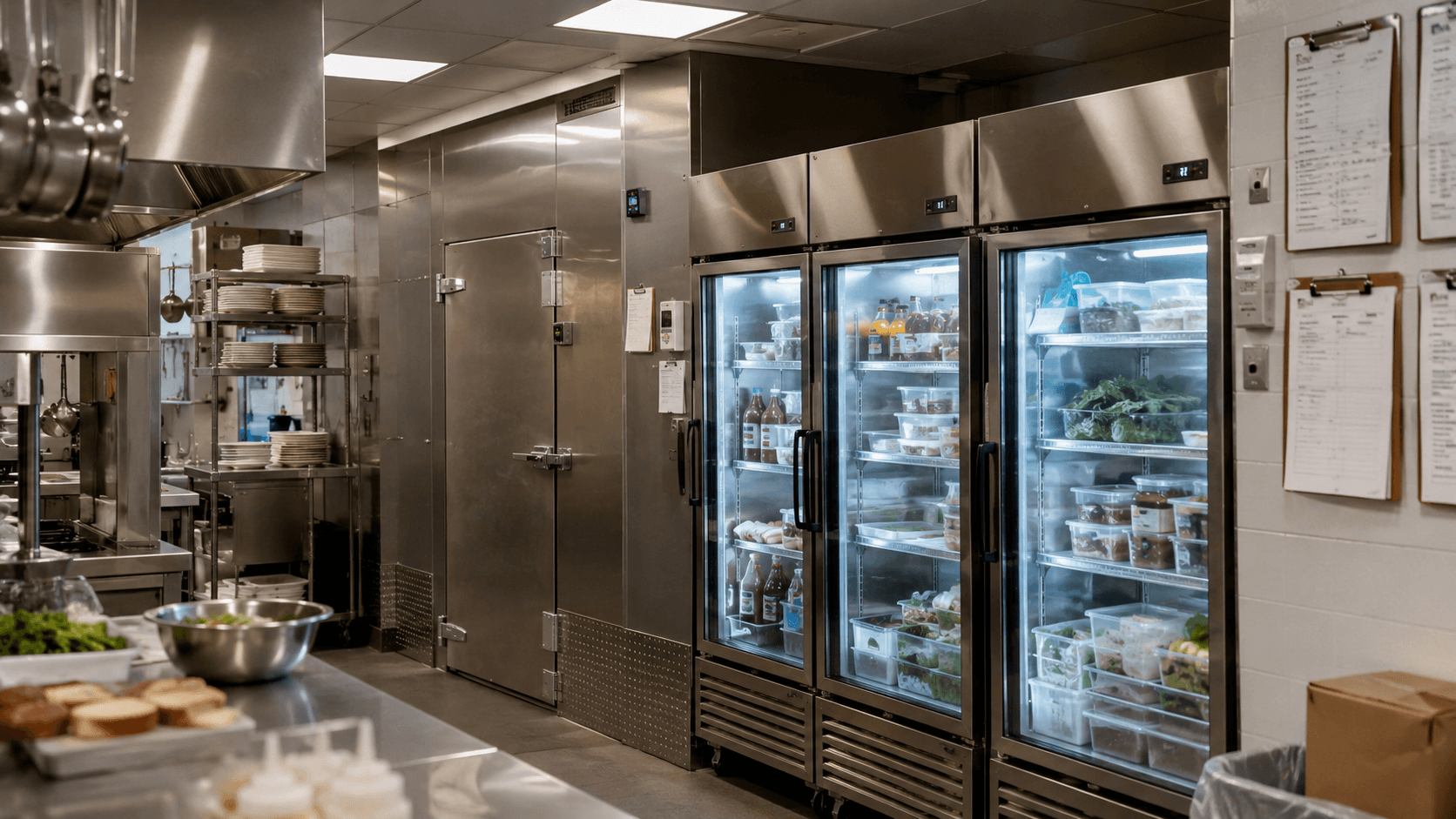
Commercial refrigeration units operating efficiently in a professional restaurant kitchen

How to Reduce Commercial Refrigeration Energy Costs (Maintenance Tips)

Commercial refrigeration is the single biggest energy cost in most restaurant and food service operations, accounting for 30-45% of total electricity consumption. Unlike lighting or HVAC, refrigeration runs 24 hours a day, 365 days a year, never stopping between services or overnight. A walk-in cooler running just 10% less efficiently than it should costs a typical Canadian restaurant $400-$1,200 extra per year.

The good news? Most commercial refrigeration energy savings don’t require expensive equipment replacement. Many of the most effective interventions are operational changes or low-cost maintenance tasks that can be implemented by your staff immediately. Here are the most practical ways to reduce your commercial refrigeration energy costs using the equipment you already have.

The True Cost of Inefficiency

A typical full-service restaurant might be running $5,000-$10,000 per year in refrigeration electricity costs alone. Reducing that by even 20% through better maintenance saves $1,000-$2,000 per year. For a restaurant operating on 5-10% net margins, $2,000 in energy savings is equivalent to generating $20,000-$40,000 in additional revenue.

Beyond the hydro bill, there are serious maintenance benefits. Inefficient units run their compressors harder and longer, generating more heat and accelerating wear. Keeping a unit running efficiently extends the interval between major repairs, saving you from a $1,500-$3,500 emergency compressor replacement.

Tips 1-2: Gaskets, Seals, and Door Discipline

Tip 1: Perform the Dollar-Bill Test. Door gaskets are the rubber or vinyl seals around the perimeter of refrigerator doors. When they harden or crack, cold air escapes continuously. Perform the dollar-bill test monthly: close the door on a piece of paper and try to pull it out. If the paper slides out easily without resistance, the gasket is failing. Replacement gaskets cost $40-$150 and typically pay for themselves in energy savings within 3-6 months.

Tip 2: Minimize Door Open Time. This is purely operational but makes a massive difference. Equip staff with protocols: install PVC strip curtains on walk-in doors (these plastic barriers reduce cold air loss by up to 40% in high-traffic coolers), enforce a policy about closing doors promptly, and organize interior shelving so staff aren’t leaving the door wide open while searching for ingredients.

Commercial refrigerator gasket inspection and maintenance for energy efficiency

Tips 3-4: Condenser Coils and Airflow Management

Tip 3: Clean Condenser Coils Quarterly. When condenser coils are coated with kitchen grease and dust, their ability to transfer heat is severely reduced. The compressor must run longer and at higher pressure. Cleaning coils is straightforward: use a stiff refrigeration coil brush and a vacuum. Moving from annual to quarterly cleaning can reduce energy consumption by 10-20% on neglected units.

Tip 4: Clear the Airflow. Condenser coils need clear airflow on both the intake and exhaust sides. In many commercial kitchens, boxes are stacked against refrigeration units, suffocating the compressor. Ensure there’s at least 6 inches of clearance around condenser coils and that exhaust air from one unit isn’t blowing directly into another.

Watch: Restaurant Energy Efficiency Tips – Refrigeration

Tips 5-6: Temperature Settings and Thermostat Calibration

Tip 5: Do Not Set It Colder Than Necessary. There’s a misconception that running refrigeration colder is always better. Running a walk-in cooler at 32°F instead of the optimal 36-38°F increases energy consumption by roughly 8-12% without meaningful food safety benefit. Verify your equipment is set strictly to the minimum safe temperature recommended by Health Canada.

Tip 6: Calibrate Thermostats. Commercial refrigeration thermostats drift over time. A unit that reads 36°F at the control panel may actually be holding 28°F (wasting energy). Use a calibrated digital thermometer to verify actual temperatures against the thermostat reading. If they differ, have a technician recalibrate it.

When It Is Time to Upgrade (and Get Rebates)

If your refrigeration units are more than 10-15 years old, simple maintenance might no longer be enough. Older compressors and shaded-pole fan motors draw significantly more electricity than modern, Energy Star certified models equipped with EC (electronically commutated) motors.

Looking to replace an old, inefficient unit?

The wrong purchase will cost you in high energy bills for the next decade. Before you buy, read our comprehensive Commercial Refrigerator Buying Guide for Canadian Restaurants to learn which configurations, brands, and compressor locations (Top vs. Bottom) save the most money over time.

The good news is that Canadian utility companies (like Hydro Quebec, Ontario Hydro, and BC Hydro) offer significant rebates for upgrading to Energy Star commercial refrigeration. The combination of utility rebates and the ongoing monthly hydro savings means a new, efficient unit often pays for itself much faster than operators expect.

Need Energy-Efficient Commercial Refrigeration?

Canada Food Equipment offers new and used commercial restaurant equipment across Canada, including top brands like True and Atosa. Get in touch for expert advice and competitive pricing.

Browse Our Inventory

Frequently Asked Questions

How much does commercial refrigeration contribute to a restaurant’s energy bill?+

Commercial refrigeration typically accounts for 30-45% of total energy consumption in a food service operation, making it the single largest energy cost category in most commercial kitchens. Walk-in coolers and freezers are the biggest consumers.

How often should commercial refrigerator door gaskets be replaced?+

Inspect door gaskets monthly using the dollar-bill test. In high-use environments, gaskets may need replacement every 1-2 years. A damaged gasket causes the compressor to run almost continuously, which can double refrigeration energy costs for that unit.

Should I turn off commercial refrigerators overnight to save energy?+

No. Cycling commercial refrigeration off overnight causes several problems. The warm-up and pull-down cycle when restarting is energy-intensive, and the temperature fluctuation causes food quality to deteriorate faster. The correct approach is to minimize door openings and ensure tight seals.

outdoor restaurant patio equipment

Warmth and Style: Enhancing Your Restaurant Patio Equipment

As the days grow longer and the temperatures start to rise, restaurateurs everywhere are thinking about how to make their outdoor spaces more welcoming. Spring is the perfect time to revamp with restaurant patio equipment; not just to attract more customers, but also to enhance their dining experience. At Canada Food Equipment, we provide a range of high-quality commercial patio equipment that ensures your outdoor space is as comfortable and stylish as it is inside.

Omcan 1.5KW Wall-Mounted Patio Heater

With spring’s unpredictable weather, ensuring your guests’ comfort with reliable heating solutions is crucial. The Omcan 1.5KW Wall-Mounted Patio Heater is perfect for just that. Its sleek design integrates seamlessly into any patio decor, providing warmth without taking up valuable floor space. This heater is designed to deliver consistent heat, ensuring your guests remain comfortable even when the evening chill sets in. It’s an excellent choice for extending the outdoor dining season and making the most of it with our restaurant patio equipment.

restaurant patio equipment canada

Patio Heater Column 71”

Elevate your restaurant’s patio ambiance with the Patio Heater Column 71. Standing elegantly at 71 inches, this stainless steel heater not only adds a touch of sophistication to your outdoor dining area but also provides a generous 34,000 BTU of propane-driven warmth, making chilly evenings comfortably inviting for your diners. Its sleek, modern design fits seamlessly among sophisticated outdoor decor, ensuring that style is not sacrificed for comfort. Currently out of stock, this item is well worth the wait, especially with its attractive price and the benefit of free shipping on orders over $250. Keep an eye on its availability to enhance your guests’ dining experience.

Vinod Ash Tray Square – AT-S

While not all guests may appreciate this addition, having a designated smoking area equipped with the right amenities can enhance the experience for those who do. The Vinod Ash Tray Square is a discreet yet stylish solution that maintains the cleanliness and comfort of your patio. Its compact design and durability make it ideal for withstanding outdoor elements, ensuring that all guests enjoy a clean dining environment.

Frost Outdoor Ashtray Large – 909

For busier venues that cater to a larger crowd, the Frost Outdoor Ashtray Large is an essential addition to your smoking area. It’s robust, easy to clean, and designed to manage a higher volume of disposal without frequent maintenance. This ashtray helps keep your outdoor dining area tidy and free from cigarette litter, preserving the aesthetic appeal and comfort of your space.

Enhancing Patio Ambiance with Style

More than just providing equipment, it’s about creating an atmosphere where people want to spend time. Incorporating elements such as patio heaters and well-placed ashtrays are part of crafting an inviting environment. It’s important to balance functionality with aesthetics to ensure that every piece adds to rather than detracts from the overall dining experience.

commercial patio equipment

Create a Welcoming Summer Restaurant Patio

A well-equipped patio can set your restaurant apart, providing a comfortable and enjoyable atmosphere that encourages guests to return. As you plan your outdoor space, consider how each piece of equipment will enhance the functionality and style. At Canada Food Equipment, we offer a range of options that can meet your needs for commercial patio equipment.

Engage With Top-Tier Restaurant Patio Equipment

To make your restaurant’s patio a preferred destination this spring, investing in high-quality, reliable equipment is key. Our selection at Canada Food Equipment ensures you have access to the best in the market, from heaters to ashtrays and more. Each product is chosen for its durability, design, and ability to enhance customer comfort. Thus making your restaurant the go-to place for enjoyable al fresco dining.

canada cafe patio equipment

Restaurant Patio Refresh

As you refresh your patio for the spring season, remember that the right equipment can make all the difference. At Canada Food Equipment, we’re here to help you make the best choices for your outdoor dining area. Browse our selection of commercial patio equipment and take the first step towards a bustling, vibrant patio this spring.

For more information or to view our full product range, visit our website or contact us today. Let us help you create an outdoor dining experience that your guests will love and remember.

Restaurant Guide: Best Commercial Ice Machines

Selecting the right commercial ice machine is crucial for any restaurant, impacting everything from the efficiency of the kitchen to the satisfaction of your customers. Commercial ice machines play an integral role in food preservation and beverage service in restaurants. Among the reputable brands available, ITV ice machines and Manitowoc Kool-Aire stand out for their reliability, quality, and technological innovation. This guide will delve into some of the best commercial ice machines available, highlighting how ITV and Manitowoc Kool-Aire products can cater to your restaurant.

Understanding Your Ice Machine Needs

Before we explore specific models, it’s important to understand the types of ice machines and the kind of ice they produce. The primary types include modular, under-counter, and countertop ice machines, each designed for different operational scales and spaces:

  • Modular Ice Machines: These are large units ideal for establishments requiring substantial amounts of ice.
  • Undercounter Ice Machines: Compact and designed to fit under counters, these machines are perfect for smaller bars, cafes, or supplementary units.
  • Countertop Ice Machines: Often equipped with water dispensers, they are suitable for office spaces or small waiting areas.

Different types of ice suit different purposes:

  • Cube Ice: Best for cocktails and soft drinks as it melts slowly and cools beverages quickly.
  • Nugget Ice: Preferred for its soft, chewable texture, ideal for blended drinks.
  • Flake Ice: Excellent for food display and healthcare needs, as it cools quickly without adding much water content.

Top Commercial Ice Machines for Restaurants

ITV Ice Machines

ITV Ice Machines are renowned for their reliability, efficiency, and cutting-edge technology, making them a top choice for commercial establishments looking to fulfill their ice production needs. With a broad range of models that cater to various ice types including cube, flake, and nugget, ITV Ice Machines offer adaptable solutions for restaurants, bars, hospitals, and other industries requiring high-quality ice. Their innovative design not only ensures consistent performance but also emphasizes energy efficiency, helping businesses reduce their operational costs while maintaining optimal functionality.

ITV Spika Ice Machine

ITV SPIKA NG360A U/C Ice Machine 

  • The ITV Spika ice machines are standout compact ice machines, perfect for restaurants and bars with limited space but a high demand for quality ice. Its sleek, compact design allows it to fit seamlessly under counters and against walls, maximizing space efficiency without sacrificing performance.
  • Known for its reliability and consistent ice production, the ITV Spika ensures that your establishment is well-equipped with cube ice, even during the busiest times. This model is particularly favoured for its ability to quickly generate ice, making it an indispensable asset for fast-paced environments.

ITV Delta Cubed Ice Machine

ITV DELTA NG80A

  • ITV Delta Cubed Ice Machines are designed for versatility and exceptional performance in producing cubed ice. Ideal for use in presentations, and buffets, it offers a high output of fine cubed ice.
  • Its robust construction and advanced technology ensure efficient operation and durability, making it a wise choice for businesses that require a steady, reliable supply of cubed ice. The efficient cooling system also makes it an economical choice, reducing energy consumption while maintaining optimal ice production.

Manitowoc Kool-Aire Ice Machine

Manitowoc Kool-Aire KDF-0150A

  • Manitowoc Kool-Aire Ice Machines are distinguished by their robust construction and dependable performance, making them an excellent choice for businesses requiring high volumes of ice. These machines are engineered to cater to a wide range of needs, producing various ice forms such as cubes, nuggets, and flakes, ideal for restaurants, bars, and healthcare facilities.
  • Manitowoc Kool-Aire units are specifically designed to maximize efficiency and ease of use, featuring intuitive controls and maintenance-friendly designs.

Manitowoc Kool-Aire Undercounter Ice Machine

Manitowoc Kool-Aire 250 KDFO250A-161B

  • Perfect for smaller spaces that require high efficiency, Manitowoc’s under-counter models fit neatly under most bars and counters. These machines are known for their energy efficiency, helping to reduce operating costs while providing exceptional ice production.

Manitowoc Kool-Aire 250 lbs Ice Machine

Manitowoc Kool-Aire 250 lb. KDFO250A

  • For high-volume needs, Manitowoc Kool-Aire 250 lbs ice machines offer robust performance and large-scale production capacities. They are ideal for busy restaurants that need a continuous, reliable ice supply.

Features to Look for in Commercial Ice Machines

When choosing an ice machine, consider these essential features:

  • Production Capacity: Match the machine’s output with your daily ice requirements.
  • Size and Footprint: Ensure the ice machine fits within the available space in your establishment.
  • Energy Efficiency: Opt for machines with Energy Star ratings to minimize energy consumption.
  • Ease of Use and Maintenance: Look for user-friendly designs with self-cleaning features to simplify upkeep and ensure hygiene.
  • Warranty and Support: Choose brands that provide comprehensive warranties and reliable customer support.

Why Choose ITV and Manitowoc Commercial Ice Machines?

Both ITV and Manitowoc are known for their innovative designs and commitment to quality:

  • Reliability: These machines are built to withstand the demands of commercial use, ensuring longevity and minimal maintenance.
  • Efficiency: Many models from both brands are designed to be energy-efficient, which can significantly reduce your restaurant’s operating costs.
  • Variety: Offering a wide range of machine types and ice forms, ITV and Manitowoc meet the diverse needs of any restaurant.

Contact Us

Choosing the right commercial ice machine enhances your restaurant operations and customer service. Whether you opt for the robust options from Manitowoc Kool-Aire for high-volume needs or prefer the specialized ice types from ITV, these brands offer the performance and reliability essential for a bustling restaurant. By assessing your specific ice requirements and the features of these outstanding machines, you’ll ensure your restaurant operates smoothly and efficiently every day. Contact us today for all your commercial ice machine solutions!

FAQs

What factors should I consider when choosing a commercial ice machine?

Consider your daily ice needs, the space available for installation, energy efficiency, and the type of ice required (e.g., cube, flake, or nugget).

How do I determine the right size for a commercial ice machine?

Estimate your peak daily ice usage and select a machine that can produce 20% more than your estimated need to ensure you don’t run short.

Are there energy-efficient commercial ice machines?

Yes, look for machines with Energy Star ratings as they use less electricity and water, reducing operational costs.

Buying Used Kitchen Supplies Can Help Your Restaurant's Bottom Line

Why Buying Used Kitchen Supplies Can Help Your Restaurant’s Bottom Line

Running a restaurant can be costly, with high overhead costs, such as rent, utilities, and labour, cutting into your profit margins. However, one area where you can save money is by purchasing used kitchen supplies for your restaurant. Here are some reasons why buying used kitchen supplies can help your restaurant’s bottom line:

Cost Savings

The most significant benefit of purchasing used kitchen supplies is cost savings. Used equipment is often sold at a fraction of the cost of new equipment, which can be a lifesaver for smaller restaurants or startups with limited budgets. By buying used, you can save up to thousands of dollars, allowing you to allocate those savings to other areas of your restaurant, such as marketing or staff training.

Higher-Quality Equipment

Another advantage of buying used kitchen supplies is that you may be able to afford higher-quality equipment than you could if you bought new ones. High-quality equipment is typically more expensive, but it can also last longer and require less maintenance. By purchasing used, you may be able to afford top-of-the-line equipment that can improve the efficiency and effectiveness of your kitchen operations.

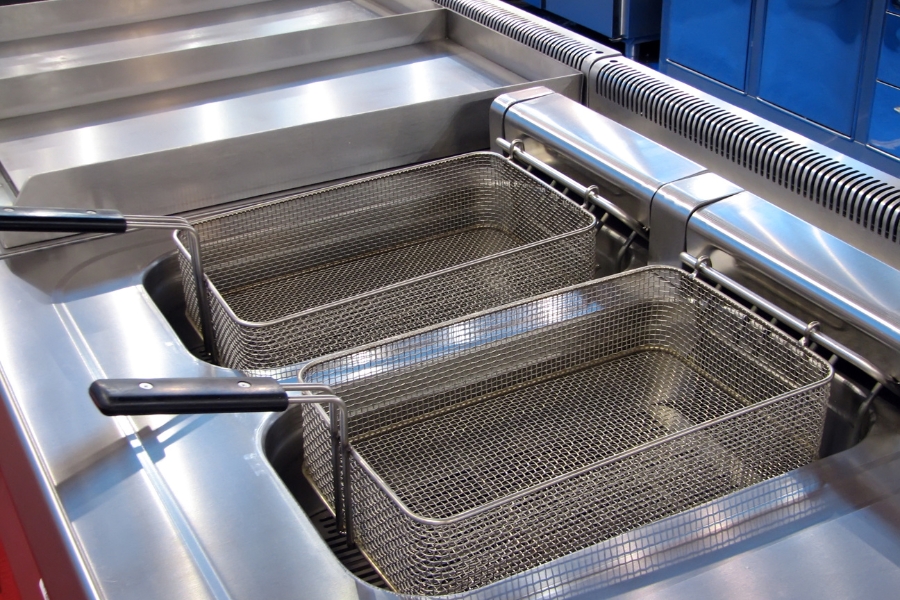
Used Fry Vats in Restaurant

Greater Selection

Buying used kitchen supplies also opens up a wider range of options for your restaurant. Many manufacturers may no longer produce certain models, but used equipment resellers may have them available. You can also find unique and specialty items that may not be available new or may be too expensive to purchase new.

Immediate Availability

Another advantage of buying used kitchen supplies is that they are often available immediately. When you purchase new equipment, it may take weeks or even months to be delivered, and you may have to wait for installation or training. On the other hand, used equipment, is often available for immediate delivery and installation, allowing you to get up and running quickly.

Eco-Friendly Option

Buying used kitchen supplies is also an eco-friendly option. When you purchase used equipment, you’re keeping it out of landfills and reducing the environmental impact of producing new equipment. By reducing your restaurant’s carbon footprint, you can attract eco-conscious customers and promote your business as socially responsible.

Canada Food Equipment Ltd is dedicated to providing top-quality used kitchen equipment to businesses of any size all over Canada. With over 30 years of experience in the industry, their team has the knowledge and expertise to help you find the best equipment for your restaurant or commercial kitchen, all at highly competitive prices. Contact us today at (416) 253-5100 or shop online today.

How to Shop for a Used Commercial Fridge

Are you in the market for a used commercial fridge? Shopping for used equipment can be intimidating, especially if it’s been pre-owned. But with the right knowledge and due diligence, you can find a quality used commercial fridge that will meet your business’s needs. Consider these factors when shopping for a pre-owned refrigerator.

Condition of the Equipment

When buying any kind of used equipment, it is essential to assess its condition before making the purchase. Look out for dents, scratches, and wear and tear on the exterior of the unit. Ensure that all hinges and doors work properly; these components should not squeak or be loose. You should also ensure that shelves and any additional accessories, such as drawers and racks. Lastly, pay attention to any unusual noises inside the unit; these could indicate an issue with the compressor or motor.

Age and Brand

It is usually recommended that you buy a three-year-old or newer refrigerator; this will ensure you get one with plenty of life left in it. Additionally, consider whether you want to go with a name-brand model or an off-brand one. Not only do name brands tend to last longer than off-brand models, but they often come with service contracts which offer added peace of mind if something goes wrong in the future.

Energy Efficiency Rating

Another crucial factor to consider when shopping for a used commercial fridge is its energy efficiency rating (EER). The EER measures how much energy it takes to run the unit over time; higher ratings indicate more efficient models while lower ratings mean less efficient ones. Look out for units with high EER numbers so you can cut costs on your monthly utility bills and save money in the long run.

When shopping for a used commercial fridge, consider its condition, age & brand as well as energy efficiency rating (EER). Canada Food Equipment is your go-to source for top-tier used commercial refrigerators. With our extensive selection, we ensure that all of your cold storage needs are taken care of. We provide quality and reliable equipment that can stand up to the toughest of environments and offer the best in customer service. No matter what type of refrigerator you need, Canada Food Equipment has got you covered! Contact us today at (416) 253-5100 or shop online today.

Back of 4 cooks preparing food

5 Things Every Restaurant Owner Should Know Before Buying Used Restaurant Equipment

Canada boasts nearly 100 thousand restaurants. Together, these restaurants employ a sizeable portion of workers and give many of them their first job.

Restaurants do more than help society, though. They also help each other in some cases. Opening a restaurant is a considerable investment but buying used restaurant equipment can help lower the costs.

Each year, some restaurants fail, and many new restaurants take their place. Selling equipment allows one restaurant to invest less money while the other reduces its losses.

There are many things to consider when buying used restaurant equipment, so keep reading to learn more.

1. Not All Dealers Are Trustworthy

It’s essential to research before deciding on a used restaurant equipment dealer. Not all of them will treat you fairly.

The most trustworthy are second-hand dealers who often sell inspected used restaurant equipment. The equipment has been checked to ensure it’s still working, and honest dealers will be able to provide proof that the product is legitimate.

2. Make Sure the Equipment Is Clean

Cleanliness is an integral part of any business, especially in foodservice. Failing to use clean equipment and hygienic practices in the kitchen can lead to foodborne illness in customers.

Foodborne illness is a significant problem in Canada, with roughly 4 million cases occurring each year and over 200 fatalities. When it happens at a restaurant, the result is often an outbreak, and outbreaks can close a restaurant.

3. Ask About Warranties

One of the many benefits of buying used restaurant equipment is that some might come with a warranty. Equipment with a warranty can be replaced at little or no cost if it should break before the warranty runs out.

Usually, reputable dealers will be able to tell you if the equipment you’re buying has an active warranty. Talk to the dealer about the equipment you’re buying. If they don’t mention a warranty, be sure to ask.

4. Know Where to Get Parts

The unfortunate truth is that used restaurant equipment sometimes does break. The best way for a restaurant owner to prepare for this is to know where to buy replacement parts.

You’ll also need to know how expensive those parts are and how rare they are. After a certain point, it often becomes more affordable to buy a new appliance than to fix the one you have. Knowing the cost of parts can help you determine when this happens.

5. Study Up on Refrigerators 

There is some equipment that’s a little more delicate than others, and the refrigerator is probably the best example of this. Refrigerators require more extensive knowledge than other types of equipment, including all past issues it’s had.

The fridge is the heart of the restaurant business, and if there are any problems with it, the whole restaurant can suffer. For instance, if the fridge doesn’t get as cold as it should, food can spoil. You’ll need to know what to look for in a used fridge.

Used Restaurant Equipment and What to Know About It

If you’re looking for used restaurant equipment, Toronto is the place to go. We’ve talked about what you need to do when buying restaurant equipment, but that’s not the only way Canada Food Equipment can help.

Find plenty of restaurant and cooking equipment on the Canada Food Equipment site! 

Photo of a commercial kitchen

Restaurant Equipment Essentials: 4 Things You Need in Your Kitchen

Do you want to have the most efficient-running kitchen in Toronto?

Every great kitchen boils down to having great chefs and top-tier equipment. Some kitchens will be different in terms of their needs. Yet, you’ll likely have a more challenging time keeping up with demand and serving customers without a few essential kitchen pieces.

Below, we’ll get into the top 4 most essential pieces of restaurant equipment. After reading this article, look around your kitchen and see if you have these items. Keep reading to learn more about how to get the best restaurant equipment Toronto offers!

1. Ovens

If you’re opening a restaurant in Toronto, you’re likely going to need several different types of ovens. This is because different ovens operate in various manners. So, the end result of cooking food in one oven might not be the same as cooking it in another.

One of the most common types of ovens in restaurants is the commercial convection oven. These ovens distribute an even layer of heat over the food. As a result, the risk of having your food come out unevenly heated diminishes.

Conveyor ovens allow for quick heating, making them perfect for busy restaurants. 

2. Mixers

Running a restaurant requires your kitchen staff to mass-produce their dishes. So, you’ll waste time if you don’t rely on mixers to get the job done. 

In fact, you’ll need several different types of mixers. Hand mixers are usually smaller and require your employees to hold them while they run. Stand and floor mixers can handle larger portions of food and operate independently. 

3. Dishwashers

Your restaurant equipment should include a commercial dishwasher to ensure you can stay on top of your dishes. Otherwise, your service will get delayed. 

It would help if you got dishwashers that can handle both plates and glasses when possible. You can purchase these types of dishwashers separately. However, some enable you to clean glasses and dishes in the same machine.

4. Commercial Ranges

Your stovetop ranges need to be big enough to handle several different dishes at once. 

Before purchasing ranges, take a look at your kitchen’s setup. You don’t want to purchase a gas range if your building doesn’t have gas available. 

If you don’t have a lot of space in your kitchen, consider getting a countertop range. These are more compact than the other options and can get situated on the tops of your counters. They’re also perfect for restaurants with booths at different events because they’re portable.

Want to Get the Best Restaurant Equipment?

If you’re looking for the best restaurant equipment in Toronto, you’ve come to the right place!

Here at Canada Food Equipment, we keep kitchens running smoothly by providing a wide range of essential restaurant equipment. These include food prep equipment, refrigeration units, and dishwashers. You can also get sinks, faucets, tables, and storage from our collection!

Have questions about our products? Contact us today to learn more!

Commercial kitchen showing a baking rack with some sweets and a commercial baking oven on the background.

How to Choose the Right Baking Equipment for Your Business

To increase your efficiency, you want to work smarter, not harder, and the first step in getting organized is buying baking equipment that meets your requirements.

Whether you have an existing restaurant or a bakery, or whether you are starting from scratch, finding the ideal baking equipment in Toronto will ensure you improve your stand in the industry. However, selecting the correct food equipment for your bakery business can be a challenge as there is an overwhelmingly large number of products to choose from.

Don’t worry, with over 20 years of experience behind us, we know which essential baking tools you need to elevate your bakery.

Since you are probably not an artisanal hand mixing operation, you will need the best commercial baking equipment Toronto offers to produce your product with consistency and reproducibility. Keep reading to get our best tips.

Commercial Stand Mixers

No matter what you are baking, a commercial mixer is a must. These come in two varieties: planetary and spiral.

Before investing, it is crucial to determine what baking goods you plan to create. For example, do you require a more robust kneading machine for heavier doughs, or are you in the market for creating airier doughs like bagels?

Planetary Mixers

Planetary mixers are great for producing high volumes in the dough department and to producing perfectly aerated eggs, cream, and mayonnaise. You can expect regular use of all the attachments and agitators, including beaters, hooks, and whips. In addition, machines are sized by the volume of ingredients their bowls can hold.

As commercial mixers go, these are the most commonly used in the industry.

Spiral Mixers

Spiral mixers are the better choice for producing a more artisanal product. This piece of equipment rotates the bowl in both directions, moves the mixer tool, and is more effective when smaller batches are required.

Another benefit to these mixers is the speed. Slower mixing means that the dough is not at risk of overheating or fermenting too quickly. Lastly, they are also quieter than their planetary counterparts, which can be a boon in an already noisy environment.

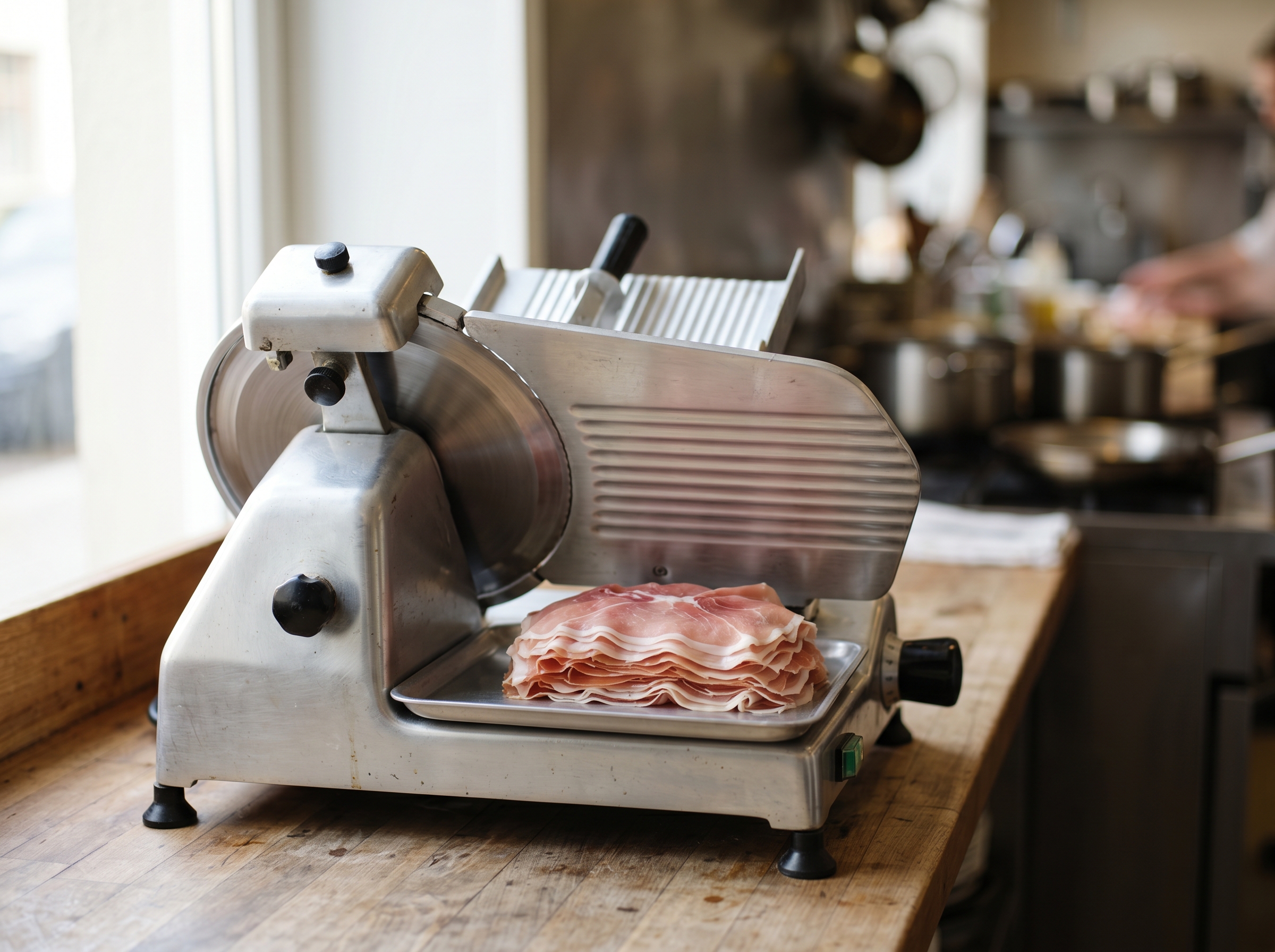
Bread Slicers

This high-performance machine has a small countertop footprint and is ideal for bakeries and food service providers. The cutting widths vary from 1/2” to “5/8” and come with a stainless-steel bagger attachment.

Racks

It goes without saying that you will need racks and depending on your output, you’ll probably need more than one. From 10 shelves to 30, or half tier to pan trucks, we have racks to suit all needs and quantities.

Finding the Best Baking Equipment in Toronto

Knowing the best baking equipment is crucial for your bakery business. Keeping abreast of all the latest technology will help you stand out from your competitors.

Big or small, new or old, we’ve got you covered. If you’re in the market for the best baking equipment in Toronto, contact our experts and let us know how we can help.

Commercial kitchen with commercial refrigerators.

Everything You Need to Know About Commercial Refrigerators

These days, almost everybody has easy access to refrigerators and freezers. As a result, people tend to overlook just how much value they provide for society. A lot of people could save a lot of money if they understood how to find the right commercial refrigerators for their situation.

So, what should you be looking for when you are choosing between different options for your business? Read on to learn all about the most important things to keep in mind when picking a commercial refrigerator!

Pick One of the Best Brands for a Restaurant Business

Sometimes, there is a big difference between the best refrigerator in the world and the best refrigerator for your particular situation. The kind of food equipment that restaurants work with often requires specific types of refrigerators.

When you are looking for the best commercial refrigerator Toronto has available, you want to stick with proven brands. There are brands that work especially well for the commercial refrigerators used by restaurants.

Plenty of restaurants rely on brands like Turbo Air, Canada Food Equipment, or True Refrigeration. However, the important thing to keep in mind is to look for a brand that is a tried and true choice for the restaurant industry.

Find a Commercial Kitchen Refrigerator With a Great Warranty

Don’t underestimate the importance of a great warranty. Warranties indicate confidence in a product, as it will get fixed if anything goes wrong. If a company doesn’t put a warranty on a refrigerator, they may not be confident it will last very long.

Choose a Size That Makes Sense for Running a Restaurant

It is always essential to figure out what refrigerator size will make sense for your restaurant. You might also want to plan for future growth. Either way, you don’t want to end up with a refrigerator that is too small.

Make Sure the Condenser Is in the Right Place

Make sure you know where you will put your refrigerator. And then pay attention to where the condenser is on different refrigerators.

If it works for your restaurant to have the condenser on the bottom of the unit, then great. But make sure you understand where the condenser will relate to your building before you buy the refrigerator.

Understand How to Buy the Right Commercial Refrigerators for You

We hope that some of the ideas in this article are helpful for you. Many people learn about the commercial refrigerator industry through a lot of trial and error.

Although this eventually turns them into something like amateur experts, it takes a lot of time and money to get there.

In most cases, it is more efficient to learn from the mistakes of others. The more you understand about the industry before you invest in a great commercial refrigerator, the less likely you are to regret your decision.

To learn more about commercial refrigerators and how to find the right one for your situation in Toronto, feel free to reach out and get in touch with us here at any time!