

If you are speccing a new line, a pizza prep table and a sandwich prep table can look almost identical in a catalogue: both are a refrigerated base with a rail of pans on top. The difference is real, though, and buying the wrong one slows your line every shift. Our refrigerated pizza prep tables and sandwich and cold prep tables are built around two different jobs, and this guide shows you which job matches your menu.
Short answer first. Choose a pizza prep table when your menu is built on dough and you need a wide board plus deeper topping pans. Choose a sandwich prep table when you build subs, wraps, and salads and want more shallow pans in reach for fast assembly. The rest of this guide breaks down why.
What a pizza prep table is built to do
A pizza prep table is designed around one thing: stretching and dressing dough. The giveaway is the wide cutting board across the front, usually deeper than what you see on other prep units, because you need real estate to work a crust. Behind that board sits a raised rail of refrigerated pans, and those pans tend to be deeper so they can hold a full service of sauce, shredded cheese, and chunky toppings without constant refills.
The base matters just as much. Pizza prep tables are commonly sized to store dough boxes and bulk cheese in the refrigerated cabinet below, so your whole pizza station lives in one footprint. If you run a dedicated pizza program, that combination of a big board, deep pans, and dough-friendly storage is exactly why the unit exists. Pair it with the right oven from our commercial pizza ovens and the station almost builds itself.
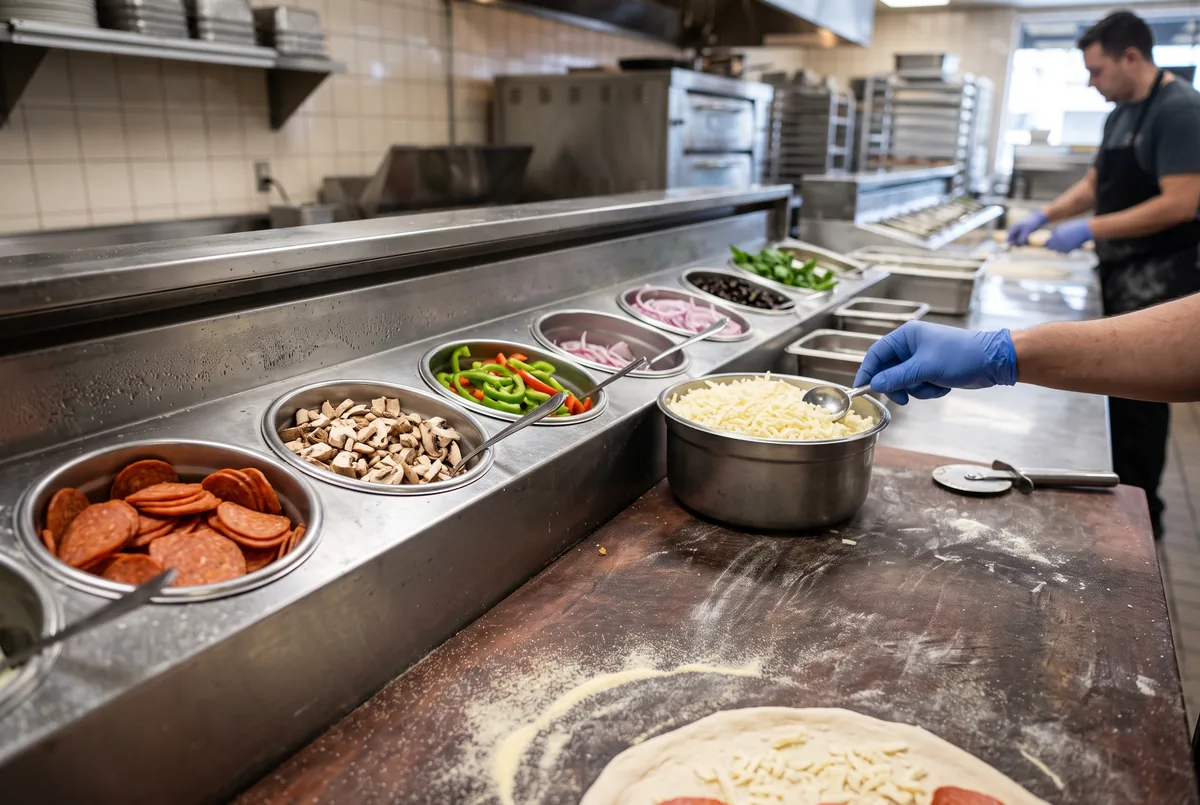
People often ask: do I need a special pizza table, or will any prep table work?
If pizza is a core part of your menu, the answer is usually yes. The wide board and the deeper pan wells are hard to fake on a standard sandwich unit, and a cramped board slows every pie. If pizza is a small side item, a general prep table with the right pans can get you by until volume grows.
What a sandwich prep table does differently
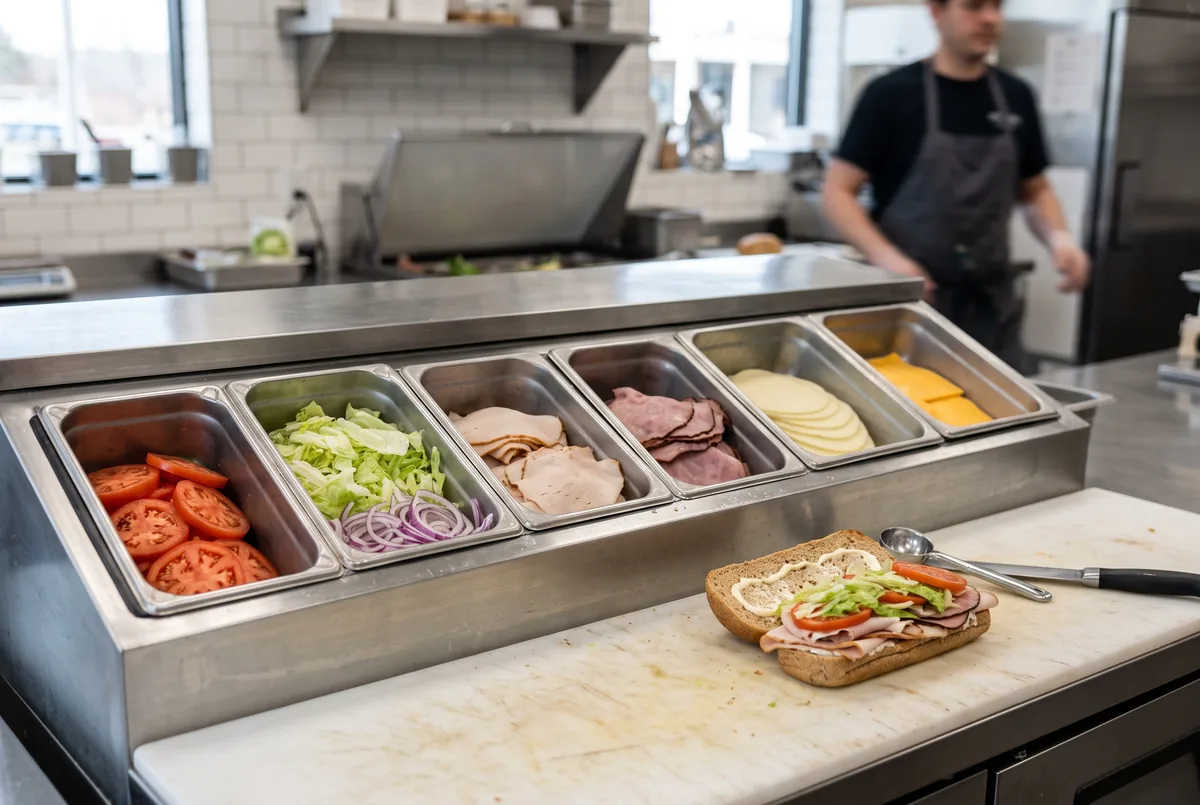
A sandwich prep table, sometimes called a cold table or a sandwich and salad unit, is tuned for speed and variety rather than dough. Instead of one big board, it gives you a narrow assembly strip along the front and a flat rail that holds more pans across the top. Those pans are usually shallow and rectangular, which is perfect when you need lettuce, tomato, three deli meats, two cheeses, and a few spreads all within one arm’s reach.
Because the rail carries the workload, sandwich tables often run shorter and shallower than pizza units, which helps them slot into a tight deli or cafe line. The refrigerated base below still holds backup pans and trays, so your line cook can restock without leaving the station. If your day is built on subs, wraps, burgers, and salads, this layout keeps assembly fast and keeps every cold ingredient at the point of use.
Did you know?
Some units are sold as mega-top or dual-purpose tables that widen the pan rail so you can carry a big ingredient count. They blur the line between the two styles, which is handy for a mixed menu, but they still favour either dough work or deli assembly depending on the board width and pan depth. Read the pan chart, not just the name.
Pizza prep table vs sandwich prep table at a glance
Here is the quick comparison most buyers want. Treat it as a starting point, then confirm the exact pan layout and dimensions on the model you like, since manufacturers vary.
| What you are comparing | Pizza prep table | Sandwich prep table |
|---|---|---|
| Work surface | Wide, deep cutting board for stretching dough | Narrow front board for quick assembly |
| Topping pans | Deeper round or square inserts on a raised rail | More shallow rectangular pans across a flat rail |
| Base storage | Sized for dough boxes and bulk cheese | Sized for deli trays and backup pans |
| Best menu fit | Pizza, calzones, flatbreads | Subs, wraps, burgers, salads |
| Footprint | Often deeper front to back for the board | Often shorter, fits a tight line |
Pro tip
Before you fall for a spec sheet, walk your line with a tape measure and count your busiest pan set. Nine times out of ten the right table is decided by two things: how many pans you need in reach and how much room the board needs. Everything else is a detail.
Which one fits your menu
Run your menu through the quick selector below. It points you toward the style that usually fits, then you can narrow down the size and pan setup from there or ask us to spec it with you.
Which prep table fits my menu?
A quick pointer, not a final spec. Pan sizes and line layout still matter, so ask for a quote.

Please note: This guide is general buying information for foodservice operators, not a food safety or engineering ruling. Pan sizes, capacities, and refrigeration performance vary by model. Confirm the specs, the pan configuration, and local health rules for cold holding before you commit to an order.
Download the free spec checklist
Take the pizza vs sandwich prep table checklist with you when you compare models.
Prep Table Spec Checklist – Free PDFCanada Food Equipment ships new commercial refrigeration to restaurants, delis, pizzerias, and cafes right across Canada. If you are still weighing a pizza prep table against a sandwich prep table, browse the full range in our commercial refrigeration category or contact our team for a quote and we will match a unit to your menu, your line, and your budget.
Frequently asked questions
What is the main difference between a pizza prep table and a sandwich prep table?
The difference comes down to the work surface and the pans. A pizza prep table gives you a wide, deep cutting board across the front so you have room to stretch dough and dress a pie, and it uses a raised rail of deeper topping pans behind it. A sandwich prep table trades that big board for a narrow assembly strip and packs more shallow rectangular pans across a flat rail. Both keep ingredients cold at the point of use, but the pizza unit is shaped around dough work while the sandwich unit is shaped around fast, high-count assembly.
Can I make sandwiches on a pizza prep table, or pizza on a sandwich table?
You can, within reason. A pizza prep table will handle sandwich building if you swap in shallower pans, and many kitchens run a mixed menu off one. Going the other way is harder: a sandwich prep table usually lacks the wide board and the deeper pan wells that pizza work wants, so dough stretching feels cramped. If your menu leans one way, buy for that side. If you are truly split, a pizza table with a large mega-top rail tends to adapt better than forcing a sandwich unit to do pizza.
What food temperature should a prep table hold?
A commercial prep table is a cold-holding unit, so the goal is to keep ingredients out of the temperature danger zone. In Canada that means keeping cold food at or below 4C. Well-designed units hold the base and the pan rail cold, but a busy line, a warm kitchen, or overfilled pans can let the top pans drift warmer than the base. Keep pan lids on when you can, do not overfill, and check pan temperatures during service. You can review the general food safety standards from the Canadian Food Inspection Agency for your operation.
How do I know what size prep table to order?
Start with two numbers: how many pans you need in reach during a rush, and how much line space you actually have. Count your busiest topping or filling set, add a little room to grow, and that tells you the rail length. Then measure the gap on your line, front to back and side to side, including door swing and walk space. Pizza tables often run deeper because of the board, so a unit that fits a deli line may crowd a pizza station. When the two numbers pull against each other, share them with our team and we will point you to models that fit both.