
In this article
It is the middle of a Saturday lunch rush, the line is six deep, and the roast chicken you plated twenty minutes ago is now lukewarm. That single weak link, holding cooked food at the wrong temperature, sends plates back, drags out tickets, and quietly puts your guests at risk. The fix is the right commercial food warmer for the way your kitchen actually runs, and choosing one is less about price and more about matching the unit to your menu and your volume.
This guide walks through the real choices in front of you in 2026: the main warmer types, how to pick by what you serve, the specs that separate a unit that holds steady from one that fights you all shift, and the buying mistakes that cost operators money. By the end you should be able to read a product page and know exactly which warmer belongs in your kitchen.
Start here: what a warmer is actually for
A food warmer has one job: keep food that is already cooked and already hot at a safe serving temperature until it reaches the plate. In Canada that safe line is 60 degrees Celsius, or 140 degrees Fahrenheit. Below it, you are in the temperature danger zone where bacteria multiply fast, which is why provincial guidance like Quebec public health and Alberta Health Services both draw the same line for hot holding.
Here is the part that trips up new operators. A warmer holds heat, it does not make it. It does not have the power to bring cold food up through the danger zone, so it should never be used to cook or to slowly reheat. Cook or reheat the food properly first, get it piping hot, then move it into the warmer to hold. Get that order right and a warmer becomes one of the most reliable tools on your line.
People often ask: is a warmer the same as a holding cabinet?
They overlap. A holding cabinet is a fully enclosed warmer, usually on wheels, built to hold large quantities of plated or panned food for catering and banquet service. A steam table, heat lamp, or countertop display is a warmer too, just open or partly open for grab-and-go service. Same goal, different format. Pick the format that fits how the food gets to the guest.
The main types of commercial food warmer
Walk the warmer aisle and the choices sort into a handful of families. Each one is built around a different kind of food and a different style of service, so the names tell you most of what you need to know.
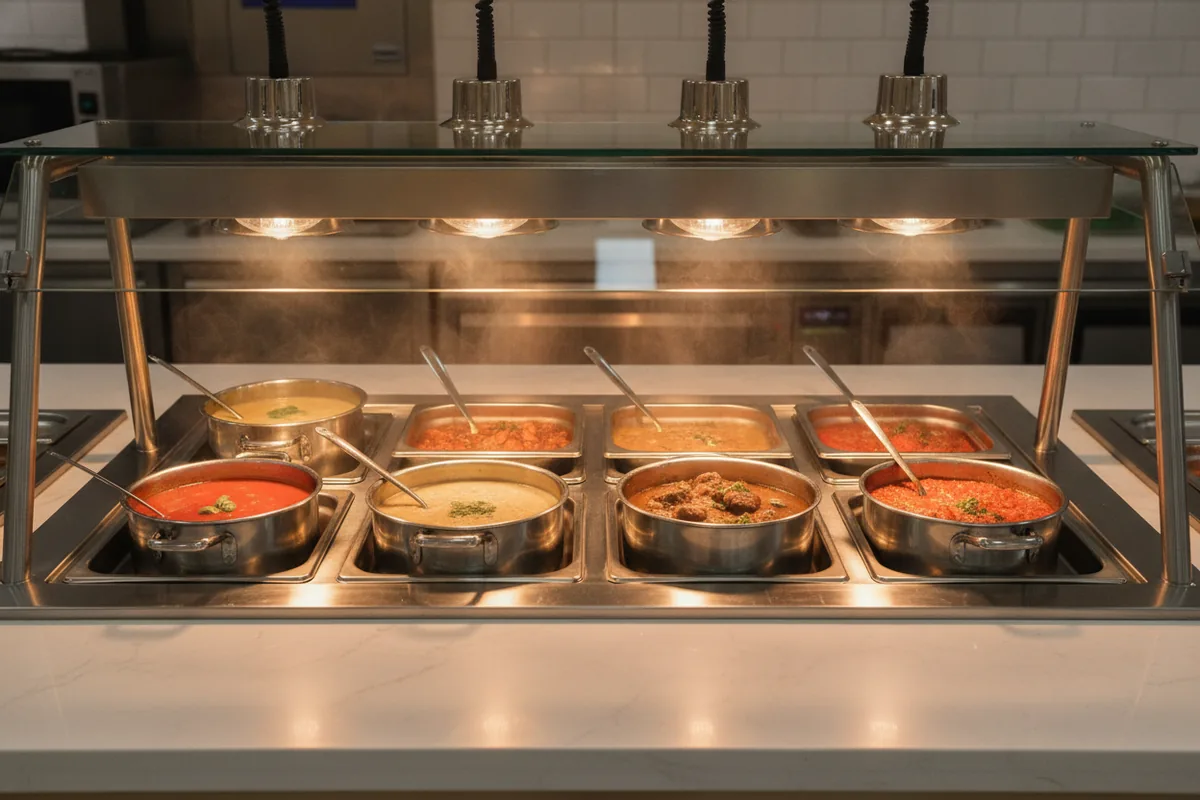
Steam tables and bain-marie units
These hold moist foods over a heated water bath, which keeps soups, sauces, gravies, and saucy mains hot without drying them out. They are the backbone of buffets, cafeteria lines, and catering setups. If your menu leans wet, a commercial steam table or a stand-alone soup kettle is usually your first buy.
Heated display and merchandising warmers
When you want guests to see the food and grab it, a heated display warmer keeps roast chickens, pastries, and hot grab-and-go items at temperature behind glass. Pizza-by-the-slice counters lean on countertop pizza warmers that show the product and hold it crisp.
Heat lamps and infrared strip warmers
For the pass, where plated food waits seconds or a couple of minutes before a server grabs it, radiant heat is the answer. Infrared strip warmers mounted over the line keep fries, fried chicken, and plated entrees hot and crisp without the sogginess that steam would cause.
Specialty and countertop warmers
Then there is the targeted gear: rice cookers and warmers that hold rice fluffy for hours, and catering supplies like chafers and induction setups for off-site events. Small footprints, focused jobs, standard outlets.
Matching the warmer to your menu
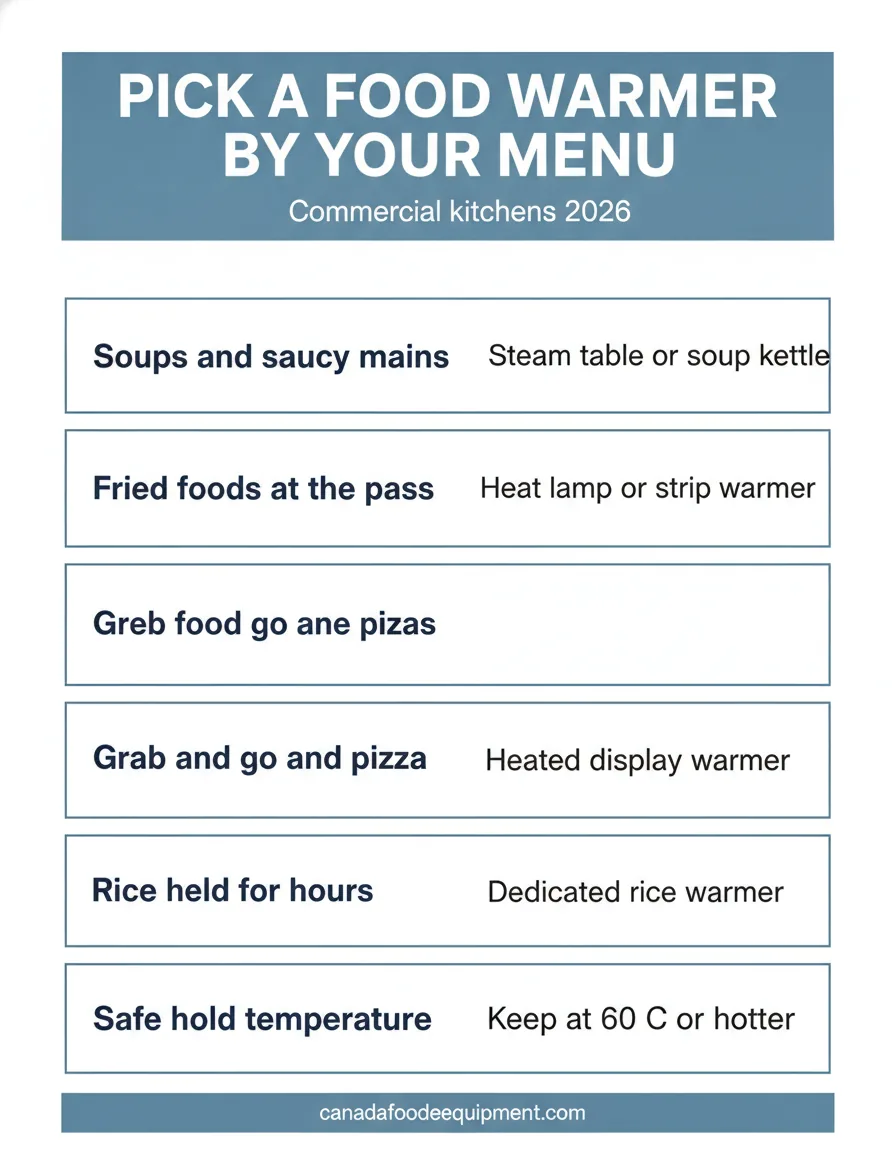
Forget the spec sheet for a second. The first question is what you serve, because wet food and dry food want opposite things from a warmer. Steam keeps a stew perfect and turns fried chicken to mush. Radiant heat keeps that chicken crisp and dries a sauce into a skin. Sort your menu into wet and dry, and the warmer family almost picks itself.
- Soups, sauces, saucy mains, vegetables in liquid. Steam table or soup kettle.
- Fried foods, breads, plated entrees at the pass. Heat lamp or infrared strip warmer.
- Grab-and-go, rotisserie, pastries, pizza slices. Heated display or pizza warmer.
- Rice, grains, dumplings held for hours. Dedicated rice warmer.
- Off-site catering and banquets. Chafers, induction, and holding cabinets.
The second question is volume. A cafe holding two trays at lunch and a banquet hall plating three hundred covers need very different units, even for the same dish. Size to your busiest service, not your average one. A warmer that just keeps up on a normal Tuesday will fall behind the moment you get slammed.
Did you know?
Open the lid on a steam table during a rush and the water bath loses heat fast, then has to claw it back. That recovery time is where cheap, underpowered units fail. The food creeps down toward the danger zone every time the line gets busy, which is exactly when you need it holding steady. Recovery speed, not just top temperature, is what separates a pro unit from a frustrating one.

Specs that actually matter
Product pages throw a lot of numbers at you. Most are noise. A short list does the real work of telling you whether a warmer will hold up in your kitchen.
- Holding temperature range. It has to comfortably reach and hold 60 degrees Celsius with the lid coming on and off, not just on paper.
- Wattage and recovery. Higher wattage means faster recovery after the pan is opened. For busy lines this is the spec that matters most.
- Wet versus dry capability. Confirm whether the unit runs as a wet steam well, a dry well, or both, and match it to your food.
- Pan configuration. Count the full-size and fractional pans it takes, and check it fits your standard inserts.
- Footprint and power. Countertop units run on a standard outlet; large floor units may need a dedicated circuit. Measure your line first.
- Controls and build. Stainless construction, sealed controls, and a probe-friendly design make daily cleaning and temperature checks easier.
Holding food correctly is one leg of the basics that food safety educators call the core practices, alongside cleaning, separating, and cooking properly. The Partnership for Food Safety Education frames the whole thing simply: keep hot food hot and cold food cold. The right warmer is how you keep your end of that promise during a rush.
Pro tip from the sales floor
Buy one size up from what your menu needs today, not two. A slightly larger warmer holds temperature more easily and gives you room to add a dish or a station without buying again. Going too big, though, wastes energy and counter space holding empty pans hot all day. The sweet spot is comfortable headroom over your busiest current service.
Mistakes that cost you money and health scores
Most warmer regret comes down to a few avoidable errors. Knowing them before you buy saves you a return, a failed inspection, or a unit that quietly underperforms for years.
- Using the warmer to reheat. It cannot bring food safely through the danger zone. Reheat first, then hold.
- Trusting the dial. The dial shows the setting, not the food. Check the food itself with a probe thermometer.
- Buying wet when you needed dry. A steam table will ruin your fried items. Match the heat type to the food.
- Undersizing for the rush. A warmer that keeps up at noon Tuesday can fail at Saturday peak. Size to peak.
- Skipping cleaning access. Sealed, stainless, easy-drain units stay sanitary; awkward ones invite buildup and inspector flags.
None of this is complicated once you have seen it on a real line. If you are unsure which unit fits your space and menu, our team is happy to talk it through before you spend a dollar. Browse the full food warmer range or the wider equipment shop to see what is in stock.
Please note: This article is general buying and food-handling information only. Hot-holding temperatures, time limits, and food safety rules vary by province and municipality. Always confirm current requirements with your local public health authority and follow the manufacturer instructions for your equipment. Canada Food Equipment is not liable for outcomes from actions taken based on this content.
Download the free quick guide
Save this as a PDF to keep on hand.
Commercial Food Warmer Buying Checklist (PDF)Frequently asked questions
Sources and references
- Government of Quebec – Food storage temperatures
- Alberta Health Services – Important Temperatures for Safe Food Handling (PDF)
- Partnership for Food Safety Education – The Core Four Practices
Your next step: sort your menu into wet and dry, size to your busiest service, and shortlist by warmer type before you compare prices. If you want a second opinion on which unit fits your kitchen, get in touch with Canada Food Equipment and we will help you match the right warmer to your menu, your space, and your volume.

Written by
Dave M.
Commercial Kitchen Equipment Specialist with 18 years on the floor
Dave M. has spent the better part of two decades helping Canadian restaurants, delis, and grocery kitchens spec, install, and run their cooking line. He started as a line cook, moved into equipment sales and service, and now writes practical buying and maintenance guides for foodservice operators. His focus is matching the right fryer, range, or oven to the volume a kitchen actually does, not the volume the brochure promises.