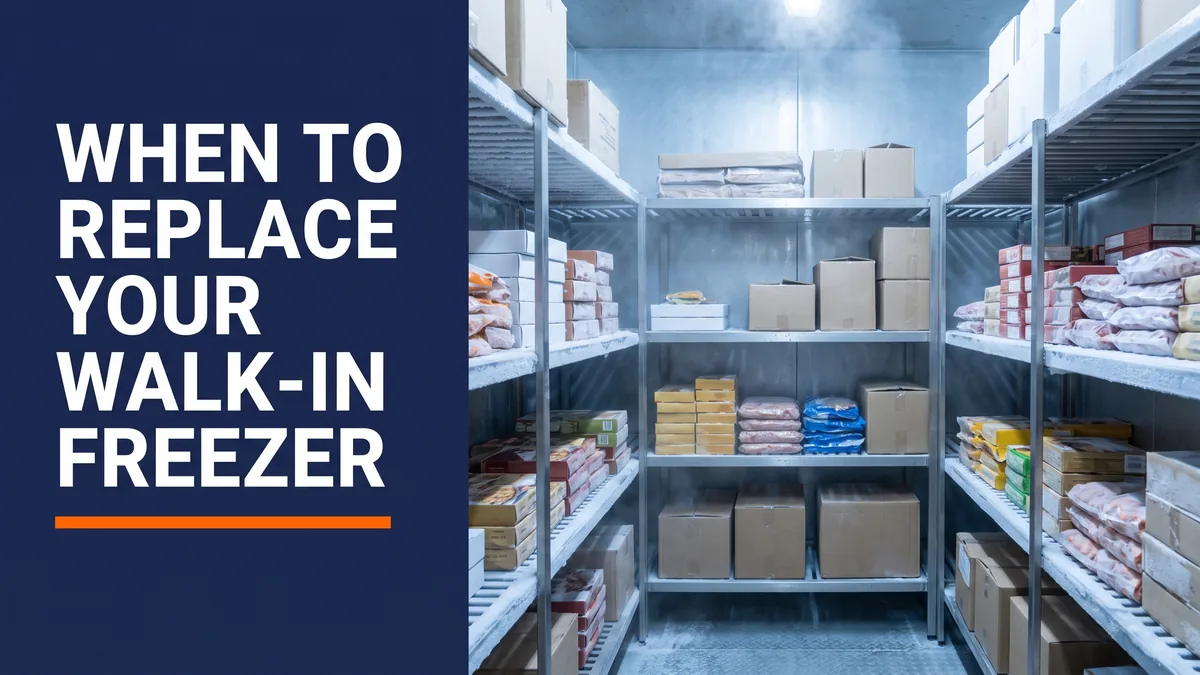
Deciding when to replace your walk in freezer units comes down to a clear financial calculation. When repair bills on a box past the 15-year mark approach half the cost of a new unit, or when it can no longer maintain safe temperatures, continuing to fix it wastes capital. Upgrading to a new model from our selection of commercial walk-in freezers helps lower energy bills and prevents costly emergency service calls.
Many restaurant operators delay replacement until inventory spoils or a health inspection issues a citation. This guide outlines key failure signs, repair-versus-replace math, and equipment specifications to help you plan your next upgrade efficiently.
When to Replace a Walk-In Freezer, Not Just Repair It
A well-maintained walk in freezer is built to last. While insulated wall panels often remain structural for 20 years or more, the internal refrigeration system, including the compressor, evaporator, condenser, and control board, typically reaches the end of its reliable operational life within 10 to 15 years.
When evaluating your equipment, follow this guideline: if your freezer is under 10 years old and experiences a single component failure, repair it. If it is over 15 years old, has failing insulation panels, or requires repeated service calls, price a full replacement instead.
Quick take
Repair a walk in freezer under 10 years old that experiences isolated part failures. Replace units over 15 years old that leak cold air through soft panels or require frequent compressor repairs.
Seven Signs Your Walk-In Freezer Is Near the End
Look out for these recurring technical signs that indicate your freezer requires replacement:
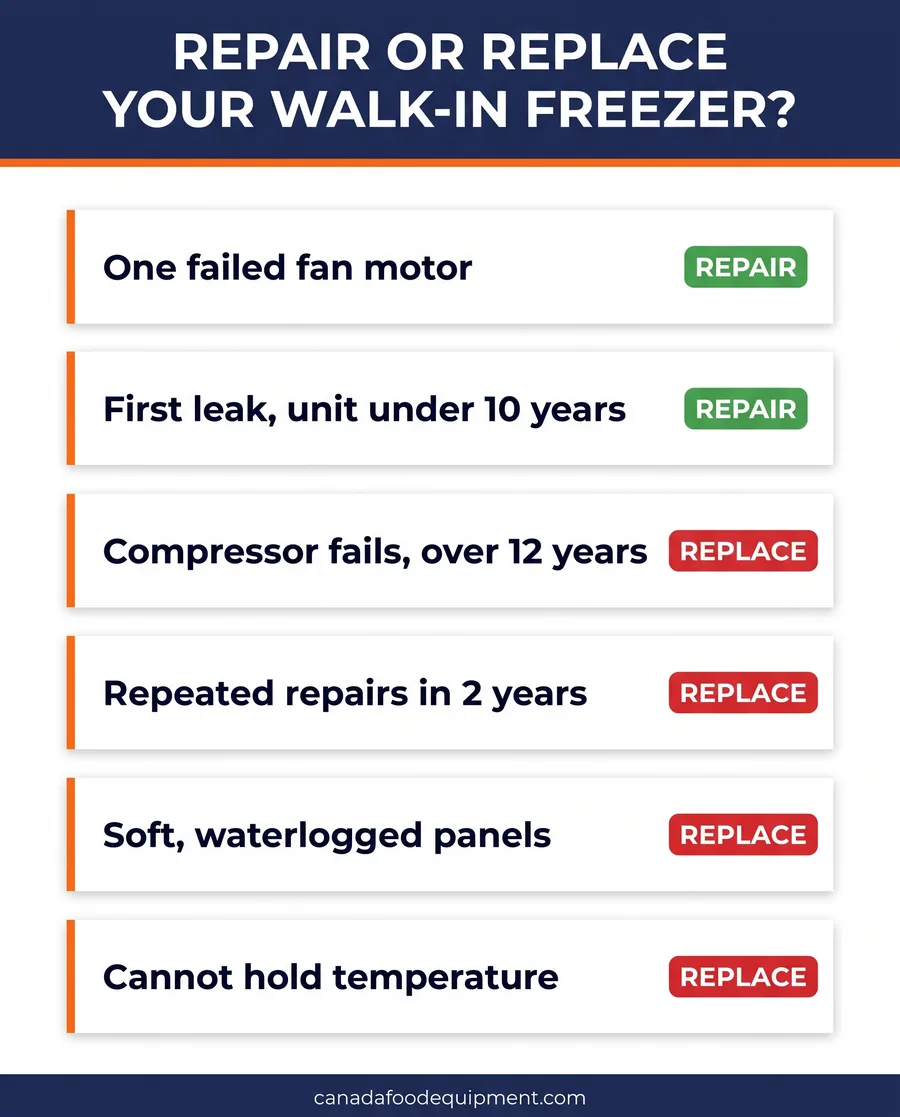
- Inability to hold temperature: If frozen inventory softens or ambient temperatures drift above -18°C despite technician adjustments, the system is failing.
- Compressor short-cycling: A compressor that turns on and off every few minutes strains the electrical system and indicates impending motor failure.
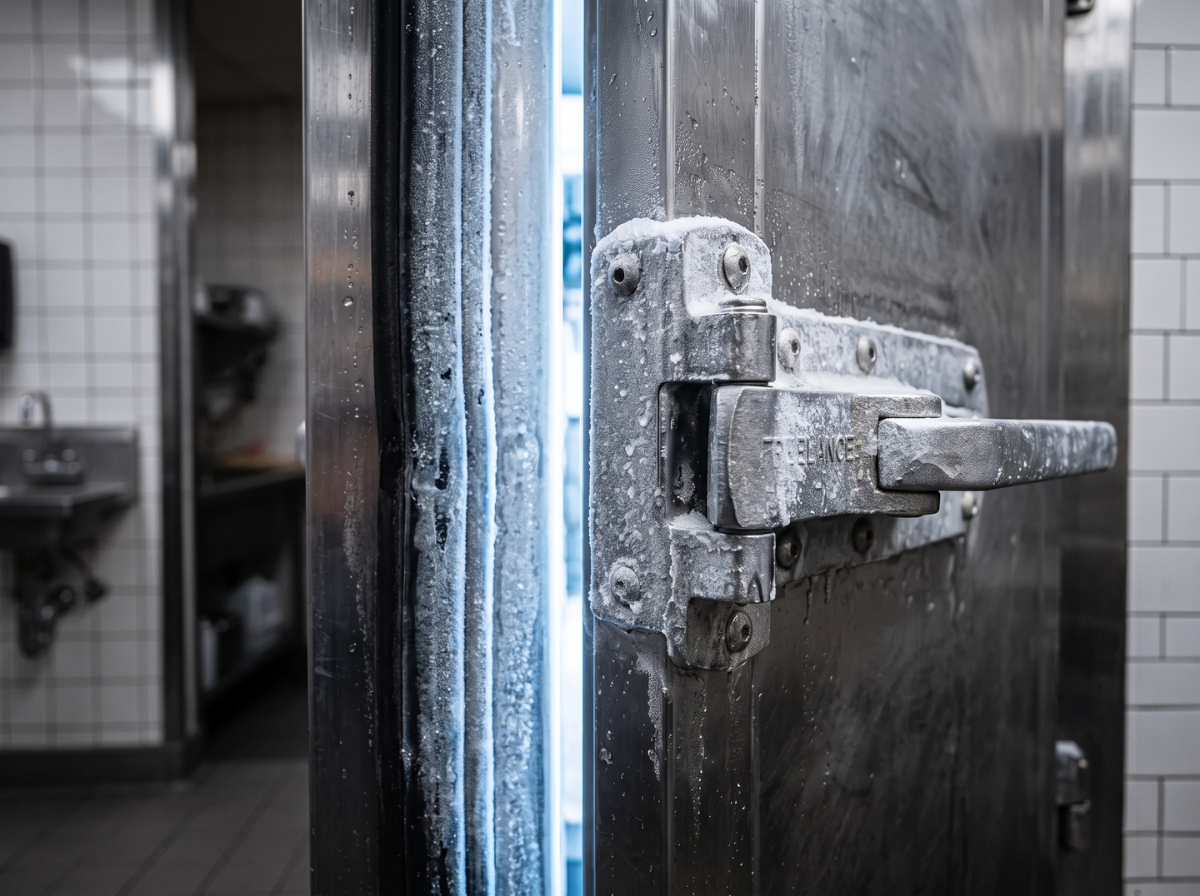
- Persistent interior frost buildup: Heavy ice accumulation typically points to broken door gaskets or failing defrost cycles, reducing storage space and airflow efficiency.
- Moisture on exterior walls or soft panels: Wall condensation or spongy panels indicate waterlogged insulation that can no longer retain thermal boundaries.
- Rising utility bills: An inefficient unit runs continuously to maintain set points, steadily driving up monthly utility costs.
- Frequent service calls: Multiple repairs over a short period indicate widespread system fatigue rather than isolated issues.
- Discontinued replacement parts: As older refrigeration models are phased out, sourcing compatible replacement parts becomes slow and expensive.
Did you know
Every millimeter of frost buildup on evaporator coils acts as thermal insulation, forcing the refrigeration system to run significantly longer to achieve the same cooling output. A failing defrost system can quietly add hundreds of dollars in energy costs each year.
Repair or Replace: How to Run the Numbers
If a single repair quote exceeds half the cost of a new replacement unit, purchasing a new model is usually the most cost-effective choice. Installing a new compressor into an aging box with degraded insulation only addresses part of the equipment’s overall wear.
| Situation | Freezer Age | Recommended Action |
|---|---|---|
| Failed fan motor or control board | Any age | Repair (minor repair) |
| Initial refrigerant leak sealed and recharged | Under 10 years | Repair and monitor |
| Compressor failure | Under 10 years | Repair if panels are intact |
| Compressor failure | Over 12 years | Request a replacement quote |
| Repeated refrigerant leaks over 2 years | Over 10 years | Replace unit |
| Waterlogged or soft insulated panels | Any age | Replace structural box |
Remember to calculate potential downtime expenses. Equipment failure during peak operation hours can cause thousands of dollars in lost food stock. Our full line of commercial refrigeration equipment offers reliable options tailored for restaurants, production kitchens, and grocery stores.
Save your money
Before committing to an expensive repair on an older system, request a full replacement estimate. Factoring in future energy savings and ongoing maintenance costs often shows that upgrading to a modern, energy-efficient model provides better long-term value.
What a New Walk-In Freezer Costs in 2026
Overall replacement costs depend on size, panel structural integrity, and refrigeration configuration. Upgrading the internal refrigeration system while preserving a sound structural box is the most economical approach. Installing a complete custom assembly sits at the top of the price scale.
| Equipment Type | Estimated Cost Range (CAD) | Ideal Application |
|---|---|---|
| New refrigeration system for an existing box | $4,000 to $9,000 | Intact panels, failing compressor |
| Small pre-fab walk-in freezer (installed) | $9,000 to $16,000 | Cafes, delis, small bistros |
| Mid-size walk-in freezer (installed) | $16,000 to $28,000 | Full-service restaurants, grocers |
| Large or custom walk-in freezer | $28,000+ | Production facilities, distributors |
Is it worth keeping an existing walk-in structural box?
If the insulation panels remain dry, structural, and sealed, installing a modern refrigeration system into an existing enclosure can save thousands of dollars. However, if the panels are waterlogged or delaminated, replacing the entire box is necessary to avoid energy loss and moisture damage.
What to Look for When You Buy a Replacement
When selecting a new commercial walk in freezer, consider these essential specifications before finalizing your purchase:
- Storage capacity: Size the enclosure for current inventory needs while allowing space for future business growth. Oversized units unnecessarily increase utility costs.
- Energy efficiency ratings: Select high-efficiency compressors, digital controllers, and interior LED lighting to lower operational costs over time.
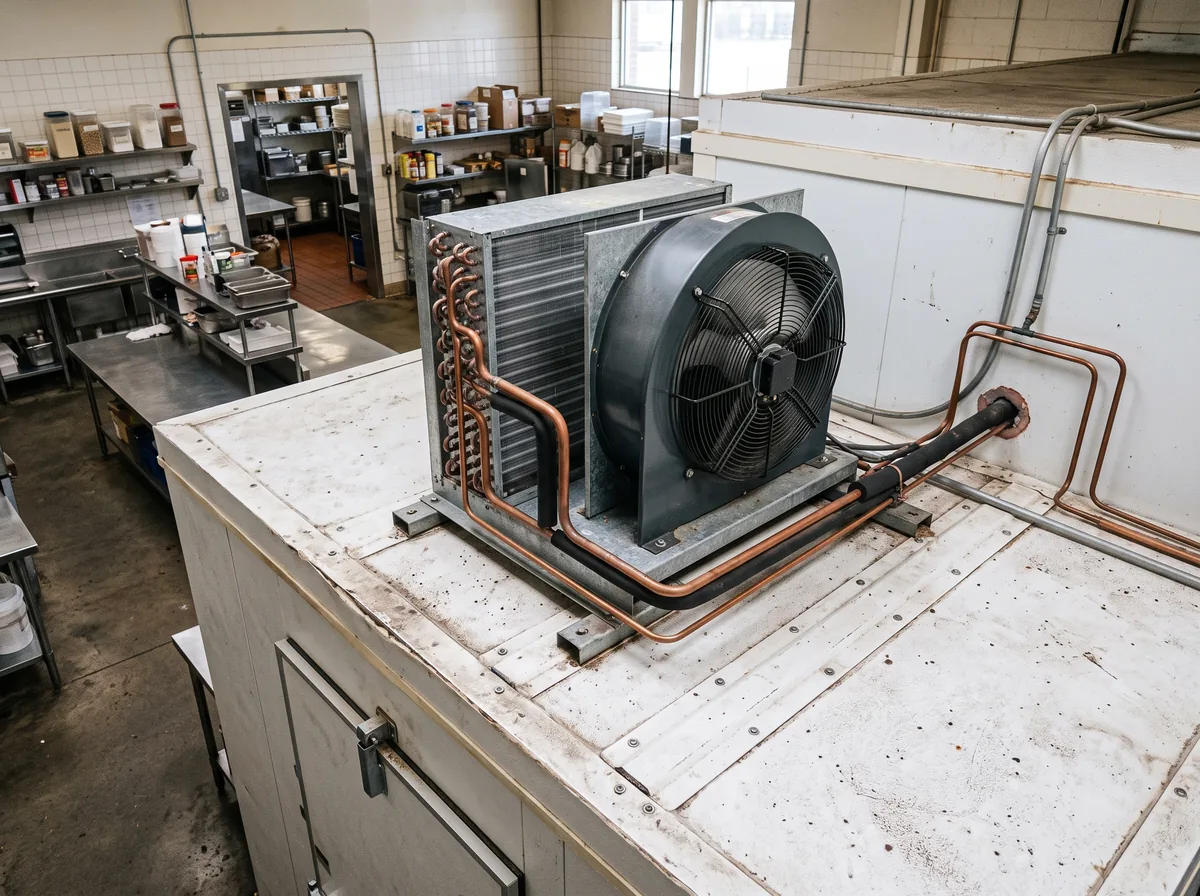
- Compressor placement: Choose between self-contained top-mount units and remote condensing systems. Remote compressors vent heat outdoors and operate quietly, but carry higher installation costs.
- Door hardware and seals: Durable hinges, automatic closers, and magnetic door gaskets prevent air infiltration that leads to heavy frost buildup.
- Parts availability: Select commercial brands with established domestic distributor networks to ensure quick access to replacement components when needed.
To evaluate potential energy savings, consult ENERGY STAR Canada through Natural Resources Canada for data on certified commercial equipment standards.
Download the free quick guide
Use our printable one-page checklist to compare repair versus replacement costs and review specifications for your kitchen equipment.
Download the free walk-in freezer replacement checklist (PDF)
Frequently Asked Questions
Canada Food Equipment provides commercial refrigeration solutions to restaurants, bakeries, butcher shops, and food retailers across Canada, including major hubs like Montreal, Ottawa, and Vancouver. Contact our team today for expert guidance on selecting the right commercial walk in freezer for your business.