
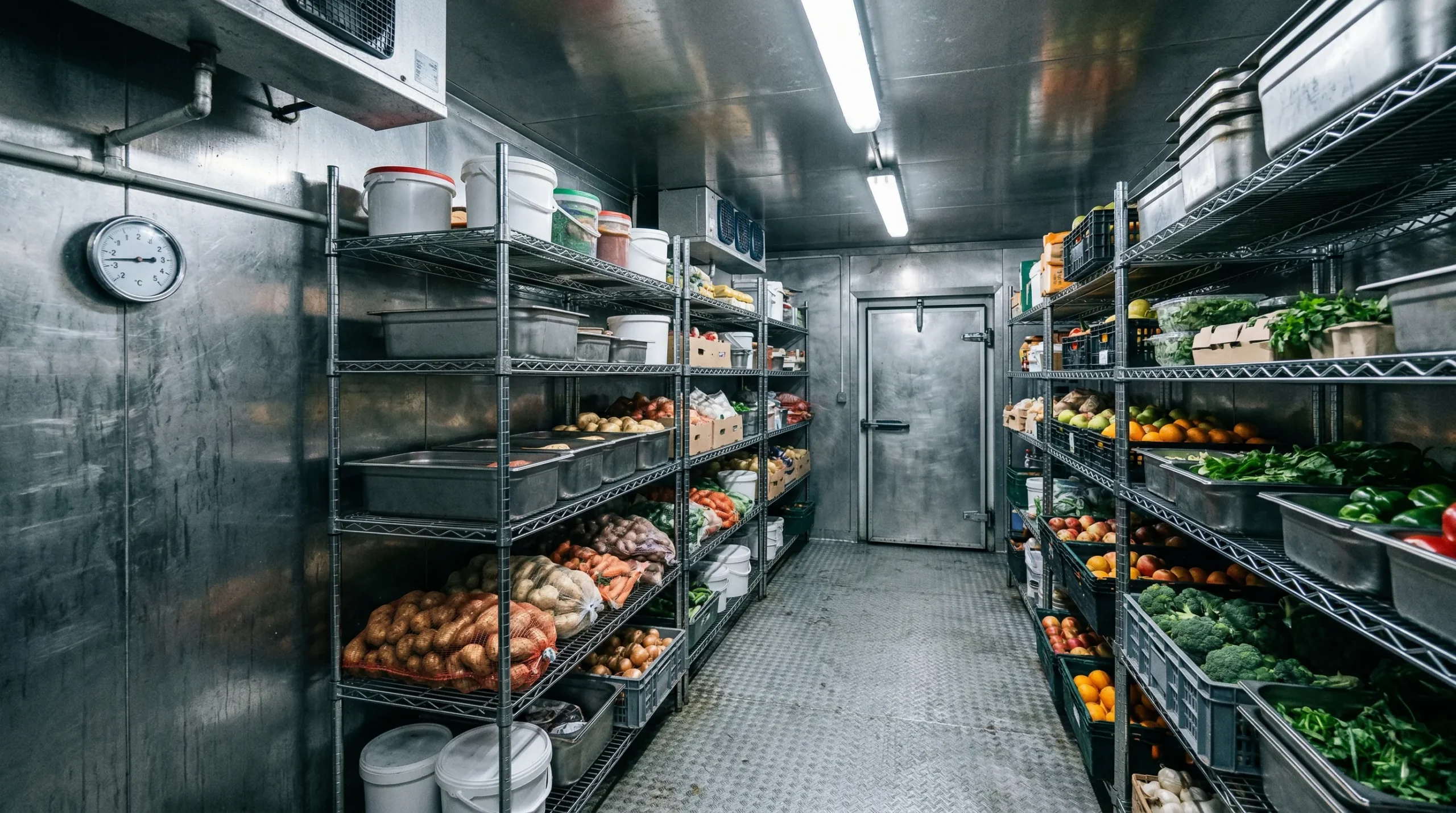
What Health Canada requires for refrigerated food storage
Health Canada establishes the national baseline: refrigerators and cold storage units must hold potentially hazardous foods at 4 C (40 F) or below. The danger zone in Canadian food safety code is 4 C to 60 C (40 F to 140 F). In that range, bacteria double roughly every 20 minutes under ideal conditions.
In practice, 4 C is the ceiling, not the target. Most food safety professionals recommend setting your walk-in thermostat to 1-2 C (34-35 F) to give yourself a buffer. Walk-in coolers are opened repeatedly during service, and every door opening lets warm air in. If the thermostat is set exactly at 4 C, the ambient temperature regularly spikes above it during busy periods. Setting the unit to run colder means the average temperature stays comfortably below the limit even with frequent access.
Provincial codes in Ontario (Ontario Food Premises Regulation O. Reg. 493/17), British Columbia, Alberta, and Quebec all align with the federal 4 C standard, though some provinces have additional specifics around monitoring and logging requirements. The Canadian Food Inspection Agency (CFIA) provides guidance specifically for food businesses and is the authority referenced during commercial inspections.
Required temperatures by food category
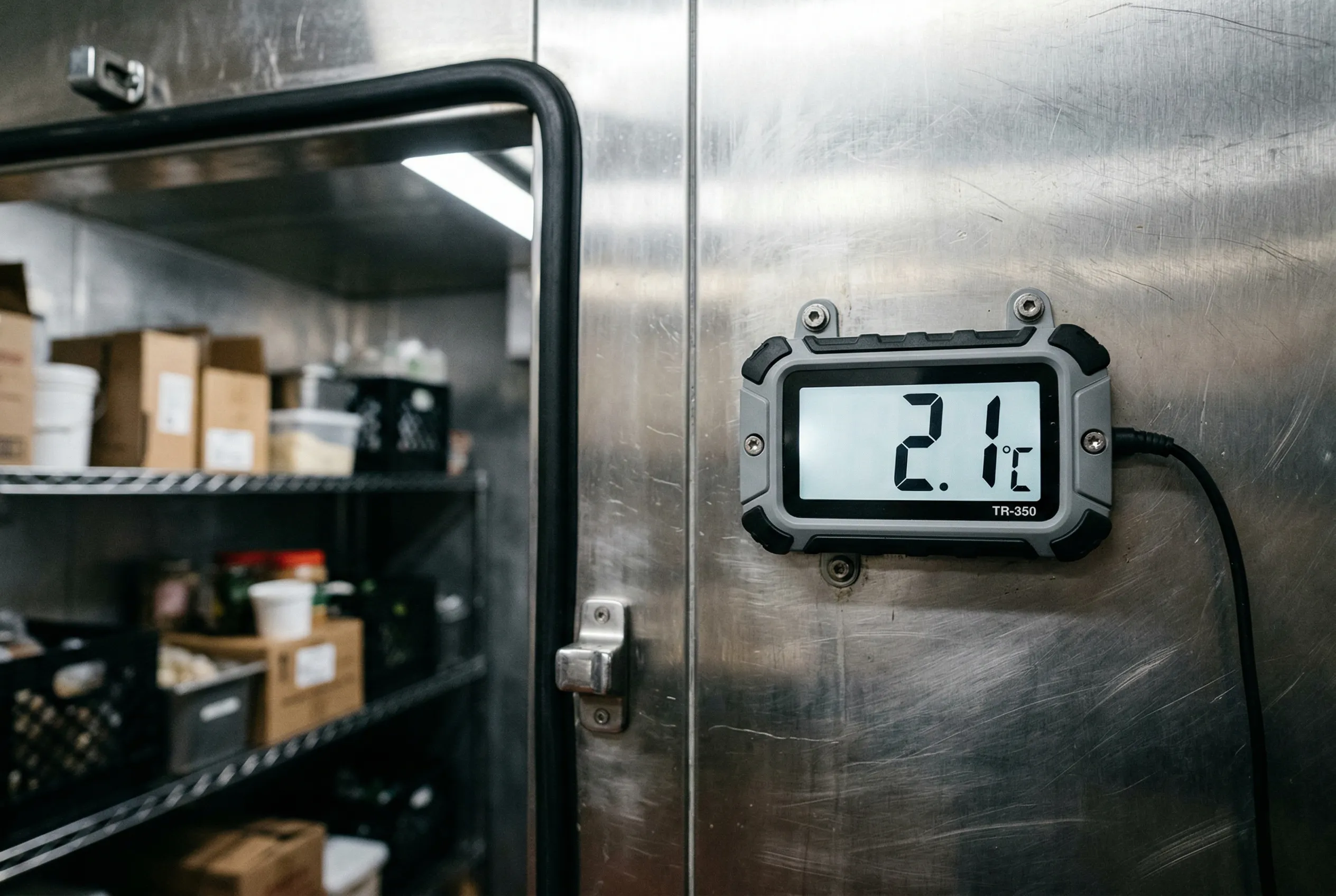
Not all refrigerated foods need the same temperature. This matters both for food safety and for food quality. Storing delicate produce at meat temperatures causes damage; storing raw proteins at produce temperatures risks pathogen growth.
| Food Category | Celsius | Fahrenheit | Storage notes |
|---|---|---|---|
| Raw meat (beef, pork, lamb) | 0 to 2 C | 32-35 F | Lowest shelf, away from produce |
| Raw poultry | 0 to 2 C | 32-35 F | Lowest shelf, dedicated pan |
| Raw fish and seafood | 0 to 2 C | 32-35 F | Separate from meat; on ice preferred |
| Dairy (milk, cream, cheese) | 1 to 4 C | 34-40 F | Away from door; minimize temperature swings |
| Eggs (in shell) | 4 C | 40 F | Store in original carton |
| Cooked and prepared foods | Below 4 C | Below 40 F | Covered; labelled with date |
| Fresh produce (general) | 1 to 7 C | 34-45 F | Varies significantly by item |
| Produce (cold-sensitive) | 7 to 13 C | 45-55 F | Tomatoes, cucumbers, peppers, tropical fruits |
| Walk-in freezer (all frozen) | -18 C or below | 0 F or below | Health Canada minimum for frozen storage |
The vertical organization of your walk-in matters for safety, not just tidiness. The standard rule from the CFIA and provincial food safety codes: store raw proteins below ready-to-eat foods, always. Raw chicken on the top shelf above prepared salads is a textbook cross-contamination scenario that shows up in inspection reports regularly.
Common walk-in cooler problems that lead to temperature failure
Most walk-in temperature failures are mechanical problems that develop gradually. The first sign is usually inconsistent temperature: the unit reads correctly in the morning but runs warm by the afternoon. Here’s where to look.
Door gaskets: the foam and rubber seal around the door frame is the first thing to fail on most walk-ins. A leaking gasket lets warm, humid air in continuously, which forces the refrigeration system to work harder and may still not maintain temperature during peak hours. Check the gasket by placing a piece of paper between the door and frame and pulling: you should feel resistance. If the paper slides out easily, the gasket needs replacing. This is a low-cost fix that significantly impacts performance.
Evaporator coil frost buildup: the evaporator coil inside the walk-in removes heat from the air. If the defrost cycle fails or isn’t scheduled frequently enough, frost accumulates on the coil and insulates it, reducing its capacity to cool. You’ll notice this as a gradual temperature rise over days or weeks. The fix is either a manual defrost or a service call to check the defrost heater and timer.
Condenser coil contamination: the condenser unit (usually mounted outside or on the roof) exchanges heat with the outside air. In a restaurant kitchen environment, grease and dust accumulate on the condenser coil and block airflow. A dirty condenser works harder, runs hotter, and eventually fails. Cleaning the condenser coil is a quarterly maintenance task that most operators skip until something breaks.
Low refrigerant: a slow refrigerant leak causes the unit to lose cooling capacity gradually. This requires a licensed refrigeration technician to diagnose and repair, as handling refrigerants is regulated in Canada under the Canadian Environmental Protection Act.
Low-ambient operation in Canadian winters: this one is specific to Canada. Many walk-in condensing units are designed to operate in ambient temperatures above 4-7 C. If your condensing unit is mounted outside or in an unheated space (a common setup in many Ontario and Quebec restaurants), it may fail to operate correctly during cold months. A low-ambient kit or a head pressure control valve solves this problem, but it needs to be installed by a qualified refrigeration technician.
Temperature monitoring and logging requirements
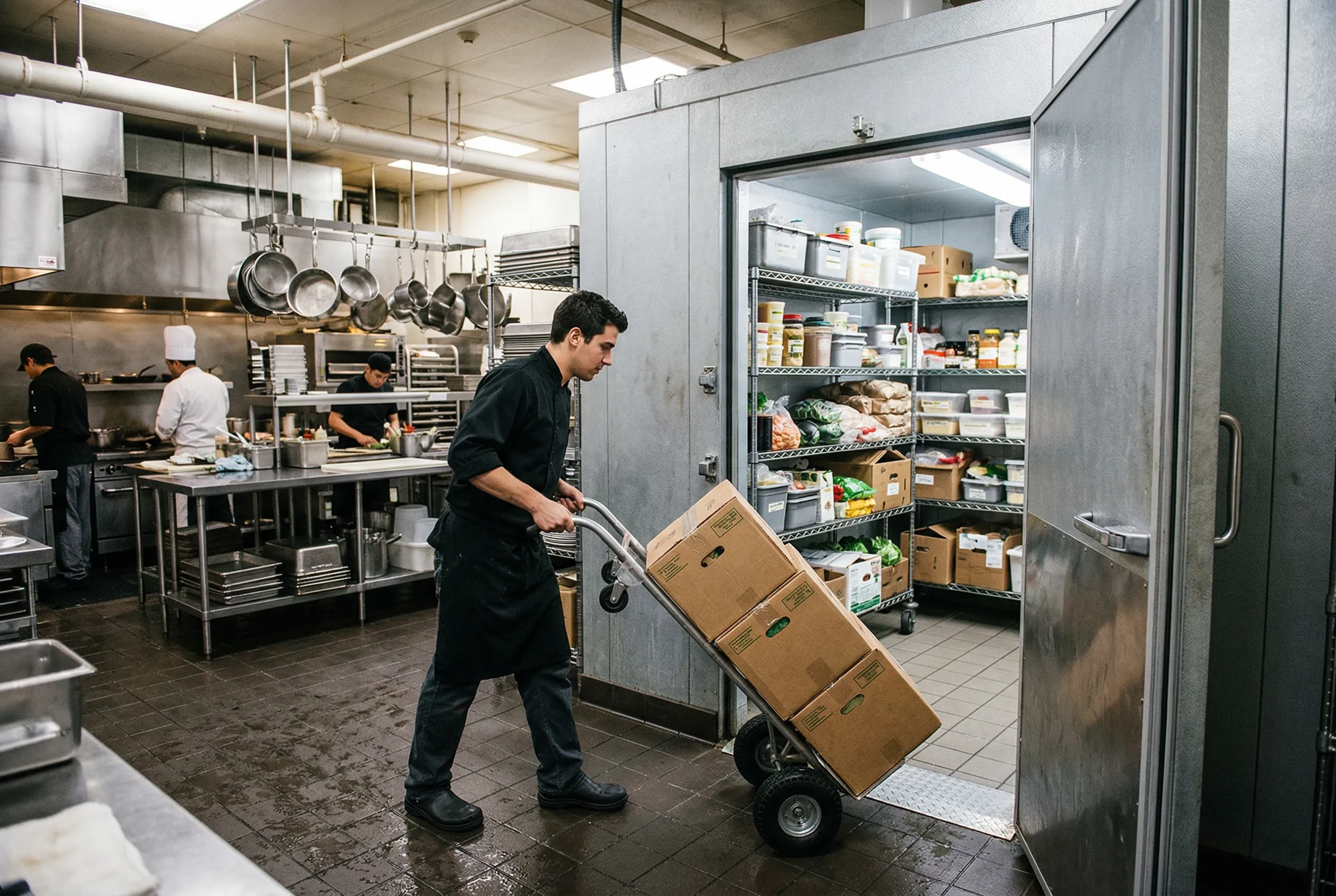
Knowing your cooler’s temperature in real time is different from having a record of what it was. Inspection bodies in Ontario, BC, and other provinces increasingly expect food operators to maintain written or digital temperature logs as part of their food safety plan.
At minimum, log walk-in temperatures twice daily: once at opening and once at the end of the service day. Record the date, time, temperature, and the name of the person checking. This creates a paper trail that demonstrates due diligence if a food safety incident is ever investigated.
Digital options have gotten affordable. Wireless temperature sensors with cloud logging can monitor your walk-in 24 hours a day and send alerts if the temperature rises above a set threshold. For a multi-location operation, remote monitoring is essentially table stakes now. For a single-location restaurant, even a simple USB temperature logger that records hourly and downloads to a spreadsheet is a worthwhile investment.
FAQ: walk-in cooler temperature and compliance in Canada
What temperature does a walk-in cooler need to be in Canada?
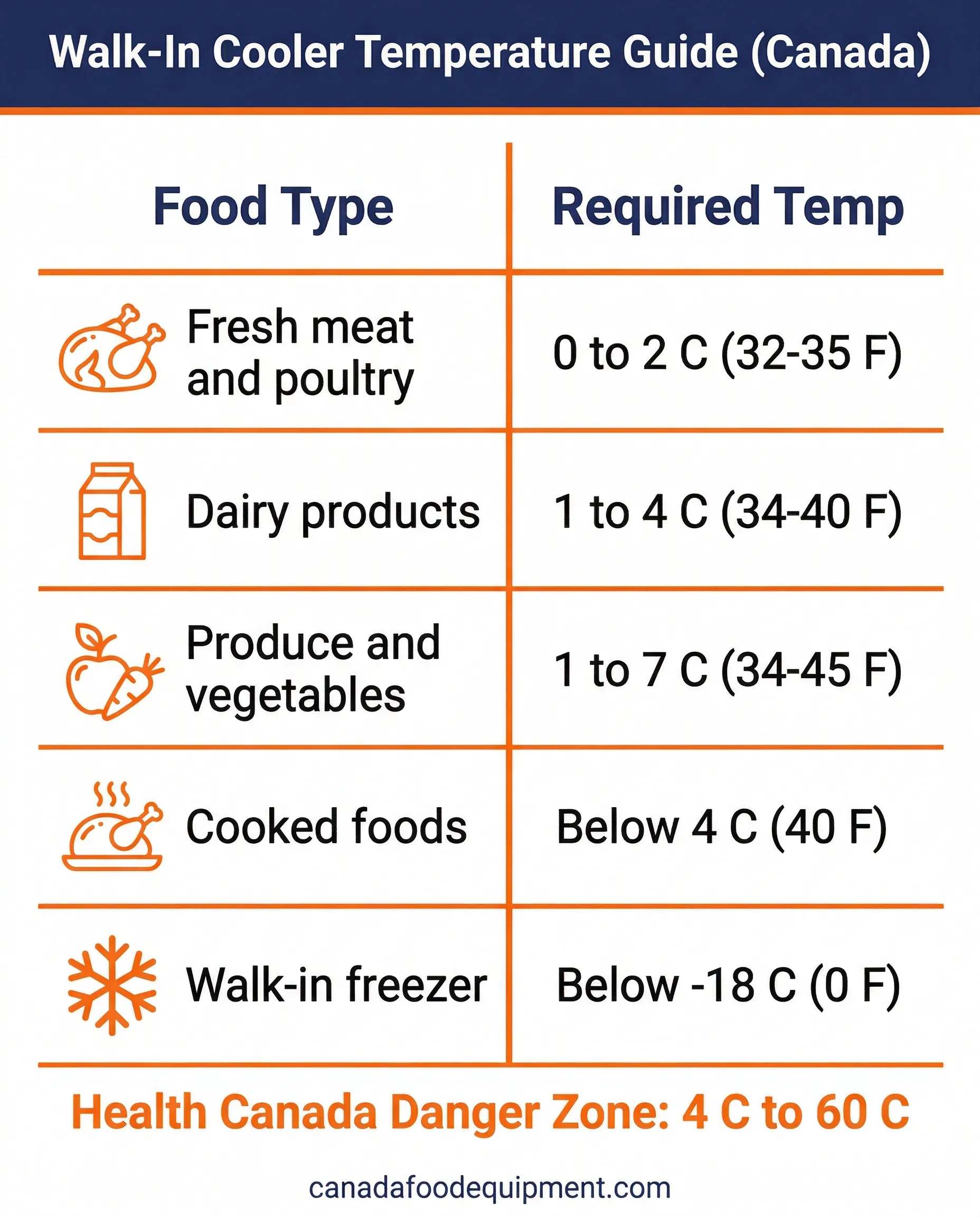
Health Canada requires potentially hazardous foods to be stored at 4 C (40 F) or below. For walk-in coolers, most health inspectors want to see the ambient temperature at 4 C or colder during an inspection. Setting your thermostat to 1-2 C (34-35 F) gives you a practical buffer. Walk-in freezers must maintain -18 C (0 F) or colder.
How often do health inspectors check walk-in cooler temperatures in Ontario?
In Ontario, public health units conduct routine inspections of restaurants and food service operations at least once or twice per year, with additional inspections triggered by complaints. Temperature checks of all refrigeration units, including walk-ins, are standard during every inspection. Inspectors use calibrated probe thermometers to take actual food temperatures, not just ambient air readings.
What happens if my walk-in cooler fails during service?
You have a limited window. Food that has been above 4 C for less than 2 hours can generally be transferred to a functioning unit. Food above 4 C for more than 2 hours should be discarded if it’s a potentially hazardous food (meat, dairy, cooked foods). Document what was discarded and when. If you’re unsure, consult your provincial food safety authority before serving the food. The cost of discarding product is far lower than the liability of a foodborne illness incident.
Do I need a separate walk-in for meat and produce?
Separate walk-ins for different food categories are best practice in high-volume operations, but most restaurants operate with a single walk-in divided by shelving and organization protocols. What matters is consistent separation: raw proteins on the lowest shelves, ready-to-eat and produce on upper shelves, and clear labelling of everything. Some operations use a dedicated reach-in for raw proteins and the walk-in for everything else.
How do I know if my walk-in cooler is the right size?
A standard rule is 1 to 1.5 cubic feet of walk-in storage per meal served per day. A restaurant doing 200 covers daily needs roughly 200-300 cubic feet of walk-in space, accounting for shelving and circulation space. This is a starting point; if you receive large produce orders once or twice per week, you need more. If you order daily with tight par levels, you can work with less. Walk-in sizing is also influenced by your delivery schedule and menu complexity.
Walk-in cooler compliance in Canada is fairly straightforward as long as the equipment works properly and the temperature monitoring is consistent. The problems show up when maintenance gets deferred. Gaskets that don’t get replaced, condenser coils that don’t get cleaned, and thermometers that drift unnoticed are the most common reasons a walk-in fails an inspection. If your current walk-in is aging or struggling to hold temperature, or you’re outfitting a new location, consulting with a certified commercial kitchen planner or equipment dealer can help you size the right unit for your volume and building setup.