
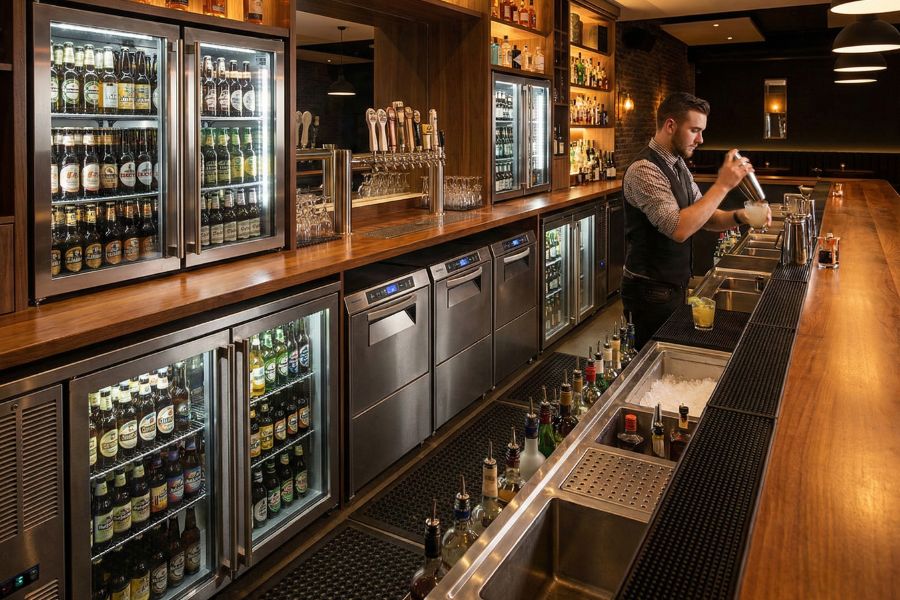
Opening a bar in Canada is about 20% inspiration and 80% pure logistics. You might have the best cocktail recipes in the city or the most perfect location downtown, but none of that matters if your ice machine dies at 10 PM on a Friday or your glasses come out of the washer looking cloudy. We have seen it happen too many times. New owners get excited about the decor and the menu but forget the heavy-duty workhorses that actually keep the business running.
At Canada Food Equipment, we have helped supply countless pubs, nightclubs, and cocktail lounges across the country. We know that the difference between a profitable night and a disaster often comes down to your gear. You need equipment that can handle the slam of a busy shift without quitting. This is not just a list of things to buy. It is a strategic guide to setting up your workspace for speed, safety, and sales.
Whether you are retrofitting an old pub or building a modern lounge from scratch, this bar equipment checklist covers every zone of your bar. We will walk you through the cooling systems, the washing stations, and the small tools that make your bartenders faster. Let’s get your bar ready for opening night.
What Commercial Refrigeration Equipment Do You Need for a Bar?
The heartbeat of any bar is its refrigeration. If the beer is warm, the customers leave. It is really that simple. When you are looking for bar equipment related to cooling, you cannot rely on residential units. They are not built to have their doors opened and closed 500 times a night. You need commercial-grade systems that recover temperature quickly. This ensures your draft lines stay cold and your bottled products remain at the perfect serving temperature even when the ambient temperature in the room rises during a packed service.
Space is usually the biggest constraint in a bar. You need to balance storage capacity with the physical footprint of the unit. This often means choosing between sliding doors, which save aisle space for bartenders, or swing doors, which are easier to load. You also need to decide if you want glass doors to merchandise your bottled beers to customers or solid doors to hide messy storage areas.
Essential Cooling Units for Your Setup
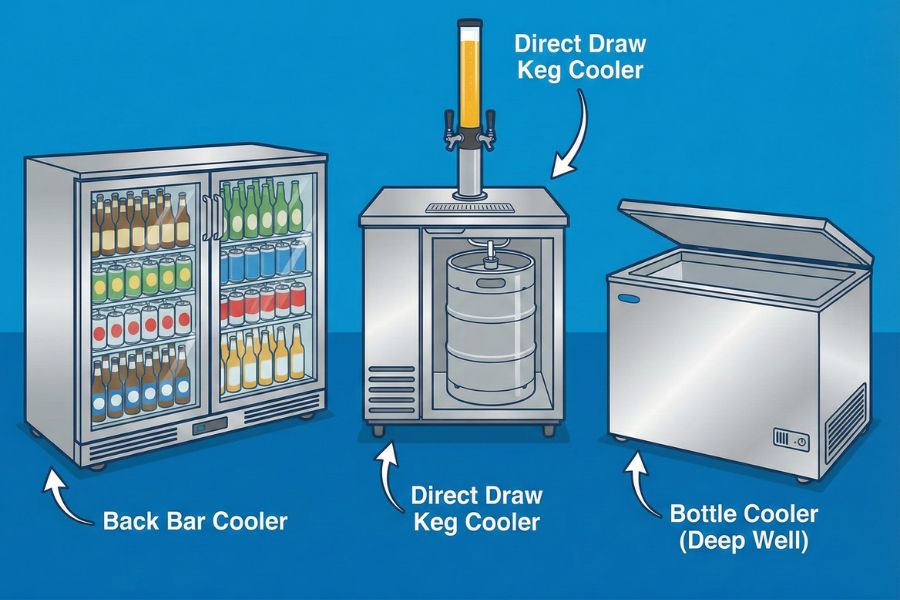
Here are the specific refrigeration units you should prioritize:
- Back Bar Coolers: These fit under your main counter and are the primary storage for bottled beer, white wine, and mixers. Look for LED lighting to make the labels pop.
- Direct Draw Keg Coolers: These are all-in-one units where the keg sits inside the fridge, and the tap tower is mounted on top. They are perfect for smaller bars that do not have a separate walk-in cooler for a long-draw glycol system.
- Bottle Coolers (Deep Wells): These are top-loading coolers. They are fantastic for high-volume domestic beers because they hold the temperature incredibly well. Cold air sinks, so when you slide the lid open, you do not lose as much energy as you do with a swinging door.
- Glass Chillers: Serving a frosty mug is a great way to upsell draft beer. These dedicated freezers chill glassware instantly.
- Wine Coolers: If you are running a wine bar, you need dual-zone coolers that keep reds at cellar temperature and whites perfectly chilled.
Comparison: Back Bar Coolers vs. Direct Draw Systems
| Feature | Glass Door Back Bar Cooler | Direct Draw Keg Cooler |
|---|---|---|
| Primary Use | Merchandising bottles and cans | Dispensing draft beer |
| Space Efficiency | High (sliding doors available) | Medium (requires clearance for taps) |
| Visual Appeal | Excellent for impulse buys | Standard industrial look |
| Maintenance | Clean glass daily, vacuum coils | Clean beer lines bi-weekly |
How much refrigeration capacity do I really need?
Answer: You should calculate your capacity based on your busiest projected night, plus 20%. A common mistake is buying for the “average” night. If you run out of cold space on St. Patrick’s Day or during a playoff game, you lose money instantly. For high-volume venues, we always recommend a separate commercial walk-in cooler in the back for bulk keg storage, while using your back bar coolers strictly for active service. This keeps your front-of-house workflow smooth and ensures you never serve a warm drink.
Choosing the Right Commercial Ice Machine for Your Bar
Ice is food. It is the most consumed ingredient in your entire establishment, yet it is often the last thing new owners think about. Finding the right commercial ice machine is critical because running out of ice shuts down your ability to make cocktails. When selecting ice equipment, you need to consider two main factors: the type of ice and the volume of ice.
High-end cocktail bars often prefer large “gourmet” cubes or spheres that melt slowly and do not dilute expensive whiskey. High-volume nightclubs usually want “half-dice” or “crescent” ice because it packs tightly into a glass, displacing more liquid and lowering your liquor cost per drink. You also need to think about where the heat goes. Ice machines generate a lot of hot air. If your bar is small and hot, you might need a remote-cooled machine where the condenser sits outside on the roof.
Types of Ice Machines and Bins
Consider which form factor fits your specific bar layout:
- Modular Heads: These are the heavy hitters. You buy the machine head separately from the storage bin. They can produce 500 to 2000 lbs of ice per day. These usually live in the back kitchen or a dedicated closet.
- Undercounter Machines: These are self-contained units that fit right under the bar. They are great for small pubs, but they dump heat onto the bartender’s legs and have limited storage capacity.
- Ice Bins: This is not the machine itself, but the insulated tub built into the bartender’s station. You must ensure your ice bin is large enough to get through a rush without needing a barback to refill it every 15 minutes.
- Ice Crushers: If you serve Mint Juleps or Tikis, you might need a dedicated crusher if your machine only makes cubes.
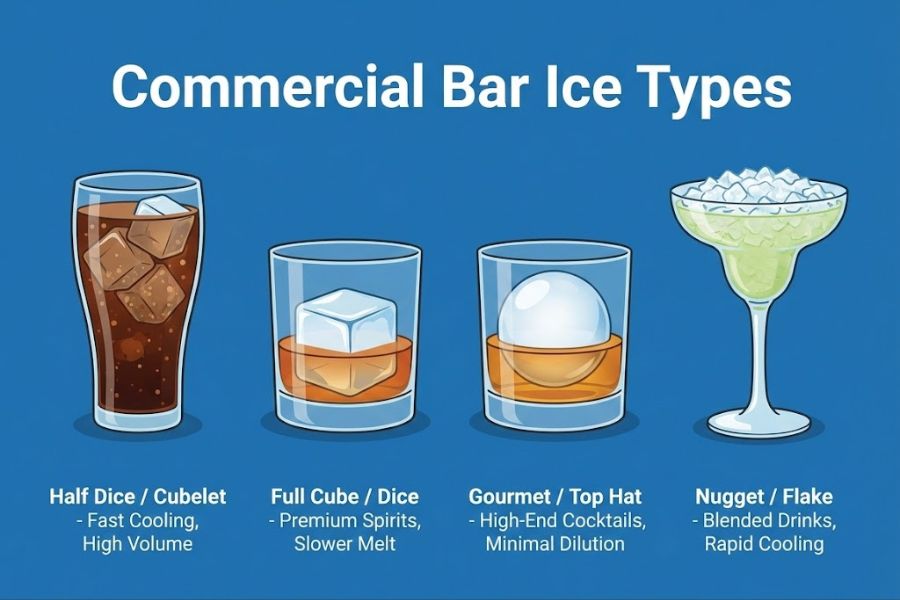
Ice Type Selection Guide
| Ice Shape | Best Application | Melt Rate |
|---|---|---|
| Half Dice / Cubelet | Mixed drinks, sodas, high volume | Fast (Cools drink quickly) |
| Full Cube / Dice | Rocks drinks, premium spirits | Medium |
| Gourmet / Top Hat | High-end cocktails, presentation | Slow (Low dilution) |
| Nugget / Flake | Blended drinks, margaritas | Very Fast (Easy to blend) |
What is the best ice machine brand for high-volume bars?
Answer: For high-volume environments, we highly recommend brands like Manitowoc or Scotsman. These brands are designed for easy cleaning and maintenance, which is vital for passing health inspections. If you are unsure which specific model fits your daily usage, check out our guide on the best commercial ice machines to match the output to your seat count. Generally, you should plan for about 3 lbs of ice per customer seat per day for a cocktail bar.
Why Are Commercial Glass Washers Essential Bar Equipment?
Nothing kills the vibe faster than a customer finding lipstick on their “clean” glass. In the bar industry, sanitation is marketing. You need a dedicated commercial dishwasher. Many new owners ask why they cannot just use the kitchen dishwasher. The answer is grease. If you wash your beer glasses in the same machine used for greasy burger plates, the animal fats will coat your glassware. This kills the “head” on a draft beer and makes the glass look flat and lifeless.
Glass washers are designed to be gentle on delicate stems but aggressive on sanitization. They use lower water pressure than a pot washer to prevent breakage. In Canada, you generally have the choice between high-temperature machines (which use heat to sanitize) and low-temperature chemical machines (which use chlorine or iodine). Your choice often depends on your available electrical power and your ventilation setup.

Sinks and Sanitation Requirements For Bars
Beyond the machine, your manual washing station must be up to code:
- 3-Compartment Sink: This is a non-negotiable legal requirement in most jurisdictions. You need separate compartments for Wash, Rinse, and Sanitize.
- Underbar Dump Sinks: These small sinks allow bartenders to dump leftover ice and drink dregs without walking to the main sink. It speeds up the turnover of glassware.
- Hand Sinks: You must have a dedicated hand-washing sink within easy reach of the bartender. It cannot be used for dumping drinks.
- Glass Racks: You need specific racks for stemware versus pint glasses to prevent them from banging together during the wash cycle.
High-Temp vs. Low-Temp Glass Washers
| Feature | High-Temp Washer | Low-Temp Chemical Washer |
|---|---|---|
| Sanitization Method | Hot Water (180°F+) | Chemicals (Chlorine/Iodine) |
| Drying Time | Fast (Flash dries) | Slow (Air dry needed) |
| Venting | Often requires a Type II hood | Usually no hood required |
| Operating Cost | Higher electricity | Higher chemical cost |
Can I use a regular commercial dishwasher for bar glasses?
Answer: Technically yes, but we strongly advise against it for quality reasons. As mentioned, food grease destroys beer foam. Furthermore, standard commercial dishwashers often take 90 seconds to 2 minutes per cycle. A dedicated undercounter glass washer can cycle in as little as 60 seconds. When you have a line of people waiting for drinks, that 30-second difference adds up. If you are struggling with rust on your current sinks due to harsh chemicals, read our tips on stainless steel sink maintenance.
Which Underbar Equipment for Bar Improves Bartender Speed?
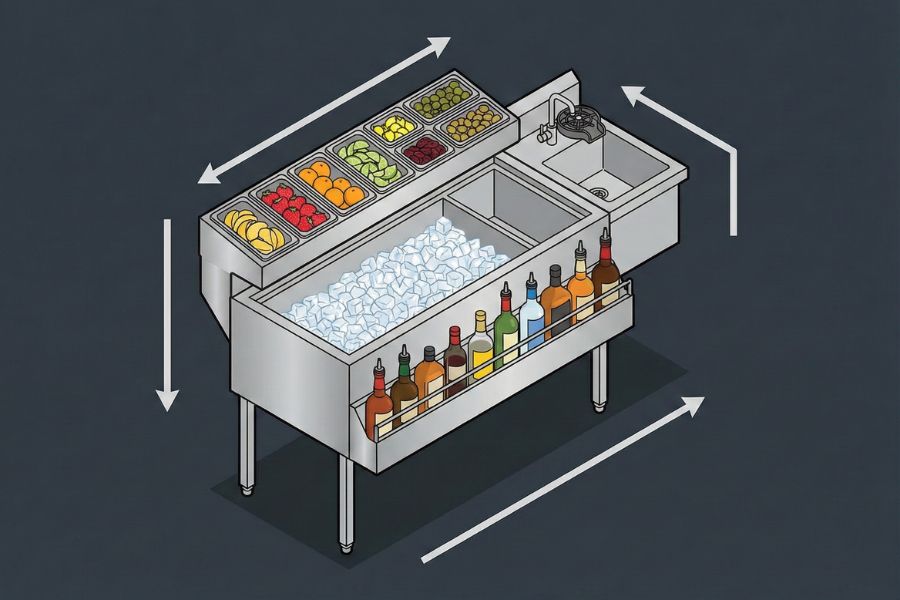
A bartender’s output is limited by their movement. If they have to take five steps to get a lime, you are losing money. Efficient underbar equipment is designed to create a “cocktail cockpit” where everything is within arm’s reach. This is often referred to as the “zero-step” setup. The goal is to allow the bartender to make 90% of the drinks on the menu without moving their feet.
When planning this section of your checklist, think about the flow of the drink. Glass, ice, spirit, mixer, garnish. Your equipment should follow this physical path. At Canada Food Equipment, we supply modular underbar systems that can be bolted together to create a custom flow that fits your specific menu requirements.
Must-Have Tools for the Well
Equip your stations with these efficiency boosters:
- Speed Rails: These stainless steel racks hang off the front of your ice bin or sink. They hold the “house” liquors (vodka, gin, rum, tequila, whiskey) for rapid pouring.
- Blender Stations: A recessed shelf for your blender keeps the noise down and prevents the machine from taking up valuable counter space. High-performance blenders are crucial if you plan on serving frozen margaritas.
- Garnish Centers: These are insulated trays that hold your lemons, limes, cherries, and olives. They usually sit directly over the ice bin.
- Glass Rimmers: A simple multi-tier tray for salt, sugar, and lime juice. Essential for Caesars and Margaritas.
- Bar Mats: Heavy rubber mats are vital for the service rail. They catch spills so the bar top doesn’t get sticky, and they provide a non-slip surface for glass preparation.
Essential Smallwares Checklist
| Item | Quantity Recommendation | Purpose |
|---|---|---|
| Shakers (Boston) | 2 per bartender | Mixing cocktails |
| Jiggers | 3 per bartender | Accurate measuring (Inventory control) |
| Bar Spoons | 2 per bartender | Stirring and layering drinks |
| Muddlers | 1 per station | Crushing herbs and fruit |
How do I organize my bar station for maximum efficiency?
Answer: Use the “mise en place” philosophy. Your ice bin should be in the center. The speed rail goes in front of the ice. The garnish tray goes above the ice. Glassware should be on shelves directly behind or above the station. The dump sink should be immediately to the right or left. This setup ensures the bartender creates a pivot motion rather than a walking motion. If you need more niche items, check our guide on extra restaurant equipment to see what specialized tools might fit your concept.
What Glassware and Merchandising Equipment Boosts Sales?
Your bar equipment checklist isn’t complete without the vessels that actually hold the product. Glassware is part of the presentation and the perceived value of the drink. A martini served in a plastic cup is worth $5. The same liquid in a chilled crystal coupe is worth $16. Beyond the glass itself, how you display your products drives impulse buys. People buy with their eyes.
Merchandising coolers, lighted shelves, and even the type of tap handles you use all contribute to sales. If you have a great selection of craft beers, you want a cooler with excellent LED lighting and wire shelving that allows the labels to be read easily from across the room.
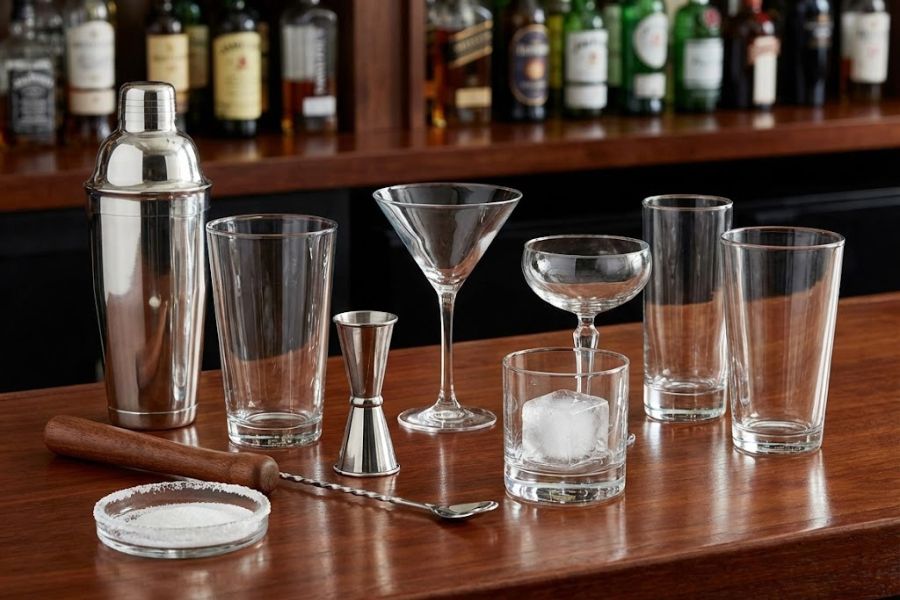
Selecting the Right Vessels For Your Restaurant Bar
Every bar needs a mix of durable and specialty glass:
- Standard Pints/Sleeves: Look for tempered glass. It is heat-treated to resist shattering when stacked.
- Stemware: If you are a high-volume venue, look for “sheer rim” glasses that are reinforced with titanium or other minerals for durability.
- Specialty Rocks Glasses: A heavy bottom on a rocks glass feels premium in the customer’s hand.
- Shot Glasses: You will go through these fast. Buy in bulk.
- Pitchers: Essential for beer halls and sports bars.
Glassware Types & Capacities
| Glass Style | Typical Capacity | Key Beverage |
|---|---|---|
| Highball / Collins | 10 – 12 oz | Gin & Tonic, Mojito |
| Rocks / Old Fashioned | 8 – 10 oz | Whiskey, Negroni |
| Coupe | 5 – 7 oz | Cocktails served “up” |
| Snifter | 12 – 16 oz | Brandy, Stout, Aromatic Beers |
How many glasses do I need per seat?
Answer: The industry standard rule of thumb is 3 to 4 glasses per seat for your most popular items. If you have 100 seats and sell mostly beer, you should have at least 300 to 400 pint glasses. This buffer accounts for glasses that are currently in use by customers, glasses sitting in the dirty bin, and glasses currently being washed. It also accounts for the inevitable breakage. Never aim for a 1:1 ratio, or you will be washing dishes mid-service while customers wait. For help planning your food truck kitchen needs alongside the bar, you can refer to our tips on food truck kitchen requirements, which shares similar logic on volume planning.
How To Source Your Bar Equipment Supply
Compiling your bar equipment checklist can feel daunting, but breaking it down by zone makes it manageable. Start with the heavy equipment, like refrigeration and plumbing, because those require installation and specific utility connections. Once those are in place, move on to the smaller efficiency tools and glassware.
Remember that local regulations in your province regarding liquor service and sanitation are strict. Always verify your equipment choices with local health codes. For more detailed regulations, you can check resources like the Canadian Food Inspection Agency or your provincial alcohol and gaming commission.
At Canada Food Equipment, we are more than just a catalog. We are partners in your success. If you are unsure if a specific ice machine will fit your plumbing or if a glass washer meets your electrical specs, reach out to us. We have the expertise to ensure your bar opens on time and stays open for years to come.

Written by