
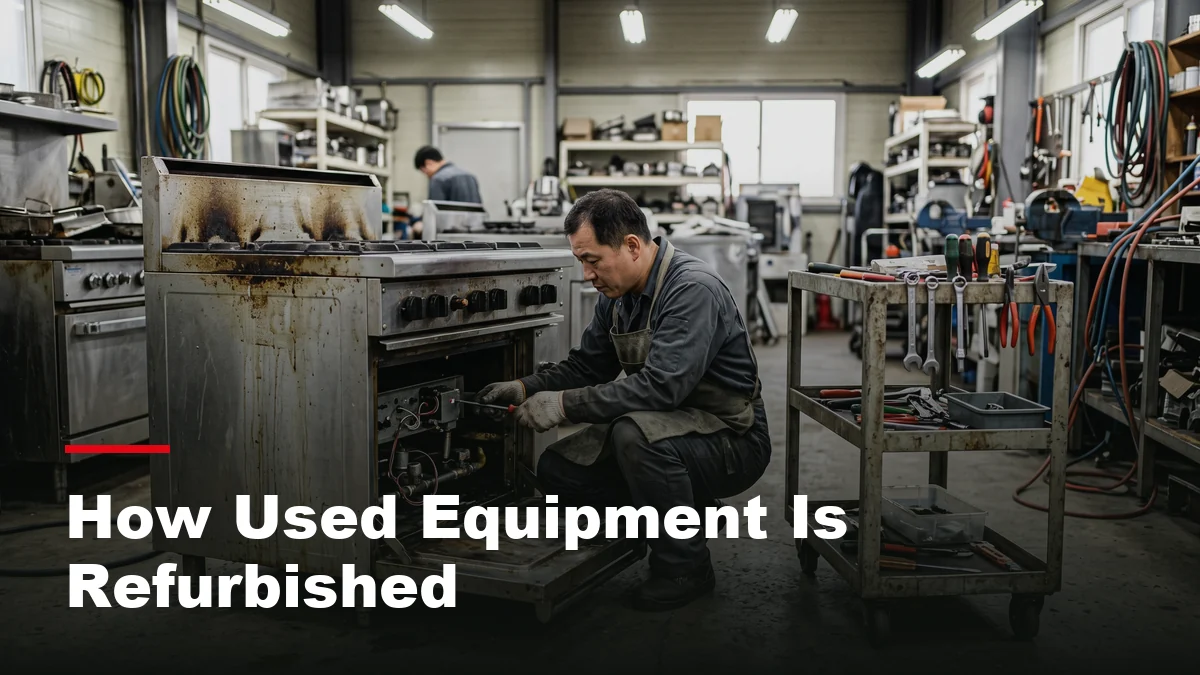
A used commercial range arrives at the shop looking exactly like what it is: eight years of nightly service, grease built up in corners nobody wipes during a rush, a loose knob, and a pilot assembly that has seen better winters. Six days later, it leaves on a delivery truck looking like a completely different piece of equipment. Understanding what happens in between is the key to trusting used kitchen equipment refurbished by experienced professionals. Our team follows a structured process long before any unit is listed for sale.
Proper refurbishing is never just a quick wipe-down or a fresh coat of paint. It is a strict sequence of inspection, deep cleaning, parts replacement, and operational testing. Walking through this process reveals exactly what you are paying for when a listing claims an item is fully refurbished.
How Equipment Is Refurbished
This walkthrough breaks down how used kitchen equipment refurbished in our facility goes from intake to the showroom floor. Every unit undergoes a rigorous multi-point evaluation. If a piece of equipment is damaged beyond the point where safe, reliable operation can be restored, it is decommissioned immediately. Only units that pass initial intake move forward into the refurbishing pipeline.

Step One: Inspection
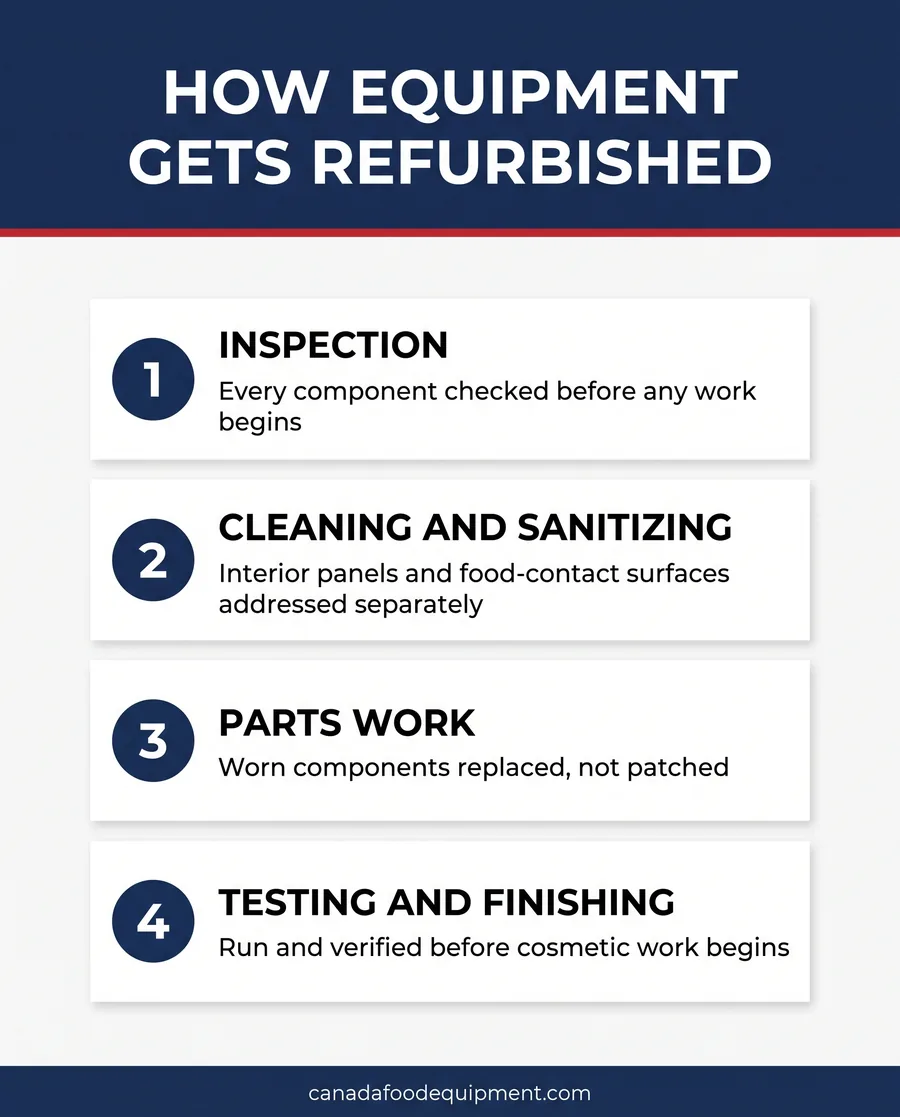
First, a certified technician systematically evaluates the entire unit. They inspect burners and ignition components, door seals, hinges, refrigeration compressors, coils, electrical wiring, and structural frames for deep rust or internal damage. This step produces a comprehensive repair order detailing exactly which components need repair, replacement, or approval.
Technicians evaluate components individually rather than applying blanket fixes. For instance, worn door gaskets or frayed wiring are always replaced with new OEM parts rather than patched, preventing premature failure down the road.
Did You Know?
The inspection phase often takes longer than the actual repairs. For commercial refrigeration, technicians must run compressors through complete cooling cycles under load to evaluate real-world performance.
Step Two: Cleaning & Repairs
Cleaning commercial cooking and cooling units for resale goes far beyond surface wiping. Interior panels are removed, grease traps and drip pans are soaked and degreased, and food-contact surfaces undergo full commercial sanitization. Ensuring that kitchen operations maintain high standards begins with sourcing quality used restaurant equipment that has been thoroughly disinfected.
Necessary parts replacements happen alongside deep cleaning. Worn knobs, cracked handles, damaged seals, and weak igniters are swapped out. For cooling units, technicians perform detailed diagnostic checks to ensure thermostats and fans function reliably.
Pro Tip
When comparing refurbished items from different vendors, ask for an itemized list of what parts were replaced versus what was simply cleaned. Reputable sellers can outline the exact work performed component by component.
Step Three: Testing and Finishing
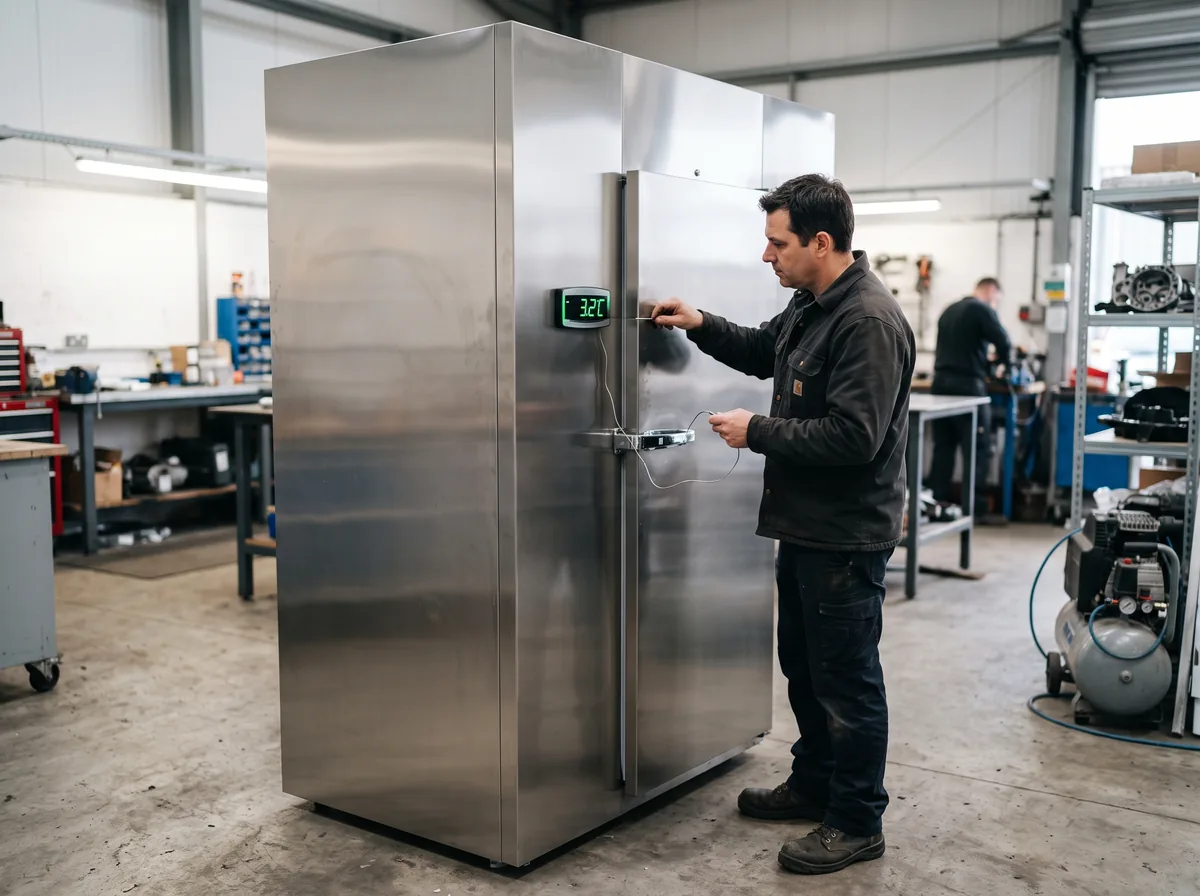
Once reassembled, every unit undergoes stress testing. Cooking ranges are monitored across all temperature settings, refrigerators and freezers are benchmarked for temperature hold time, and electrical assemblies are verified against CSA Group safety standards. At Canada Food Equipment, this rigorous testing phase is what separates truly refurbished equipment from items that are merely cosmetically cleaned.
Cosmetic touch-ups are performed last: buffing stainless steel panels, replacing scuffed exterior handles, and applying touch-up paint to structural frames. Exterior appearance is only finalized after full operational performance is confirmed.
What Refurbished Means
Refurbished equipment offers significant cost savings, but it is important to understand what the label means. It does not guarantee brand-new status, which is why asking sellers about their specific process, service history, and replacement parts is essential before buying.
If you are weighing refurbished units against new ones, compare both options using real operational math. Reviewing equipment financing options or comparing new versus used models can help you make an informed investment decision for your kitchen budget.
Good to Know
Refurbishing procedures vary by equipment type, initial condition, and vendor standards. This guide outlines general industry practices and does not constitute a formal warranty. Canada Food Equipment is not liable for purchasing decisions made solely based on this article.
Download the Free Checklist
A practical guide featuring key questions to ask sellers regarding inspection, parts replacement, and testing history before purchasing refurbished commercial units.
Frequently Asked Questions
Does used kitchen equipment refurbished by dealers come with warranty coverage?
Coverage policies vary by vendor and specific item, so always confirm warranty terms before finalizing a purchase. When purchasing used kitchen equipment refurbished through a documented inspection process, sellers can easily confirm which components are covered under warranty.
How does refurbished equipment differ from standard used equipment?
Standard used equipment is generally sold “as-is” in its current condition. Refurbished equipment undergoes a structured process involving professional inspection, deep cleaning, parts replacement, and performance testing before being re-listed.
Can I request a record of replaced parts on a refurbished unit?
Yes, asking for service records is recommended. Reputable dealers track inspection and repair notes for each unit and can provide details on replaced parts and diagnostic test results.
Is refurbished equipment tested the same way as new equipment?
Testing standards aim for similar goals: ensuring the unit reaches operating temperatures and functions safely. However, refurbished units undergo additional diagnostic testing to evaluate wear on pre-existing mechanical components.
Should I choose refurbished equipment over new for every purchase?
Not necessarily. The choice depends on your operational budget, kitchen layout, and equipment needs. Many commercial kitchens use a hybrid approach, purchasing refurbished models for high-durability items like ranges or racks while buying new for primary refrigeration units.
Not all refurbished equipment is created equal. The distinction lies in the process: complete inspection, component-level cleaning and repair, rigorous safety testing, and transparent communication. That is what buying used kitchen equipment refurbished to professional standards looks like, and it is the standard every buyer should demand.
If you are exploring commercial kitchen equipment options or want to learn more about available inventory, contact our restaurant equipment team today for guidance.