

A line cook at a busy pizzeria noticed the crust sticking harder than usual on a Friday night, then saw tiny dark flecks on the underside of a finished pie. Nobody had changed the dough, the oven, or the flour. What had changed was the screen underneath the pizza, worn thin enough after two years of nightly use that the coating had started to give out. Knowing when to replace commercial pizza screens is not something most kitchens think about until a moment like that, and by then the screen has usually been past its useful life for weeks.
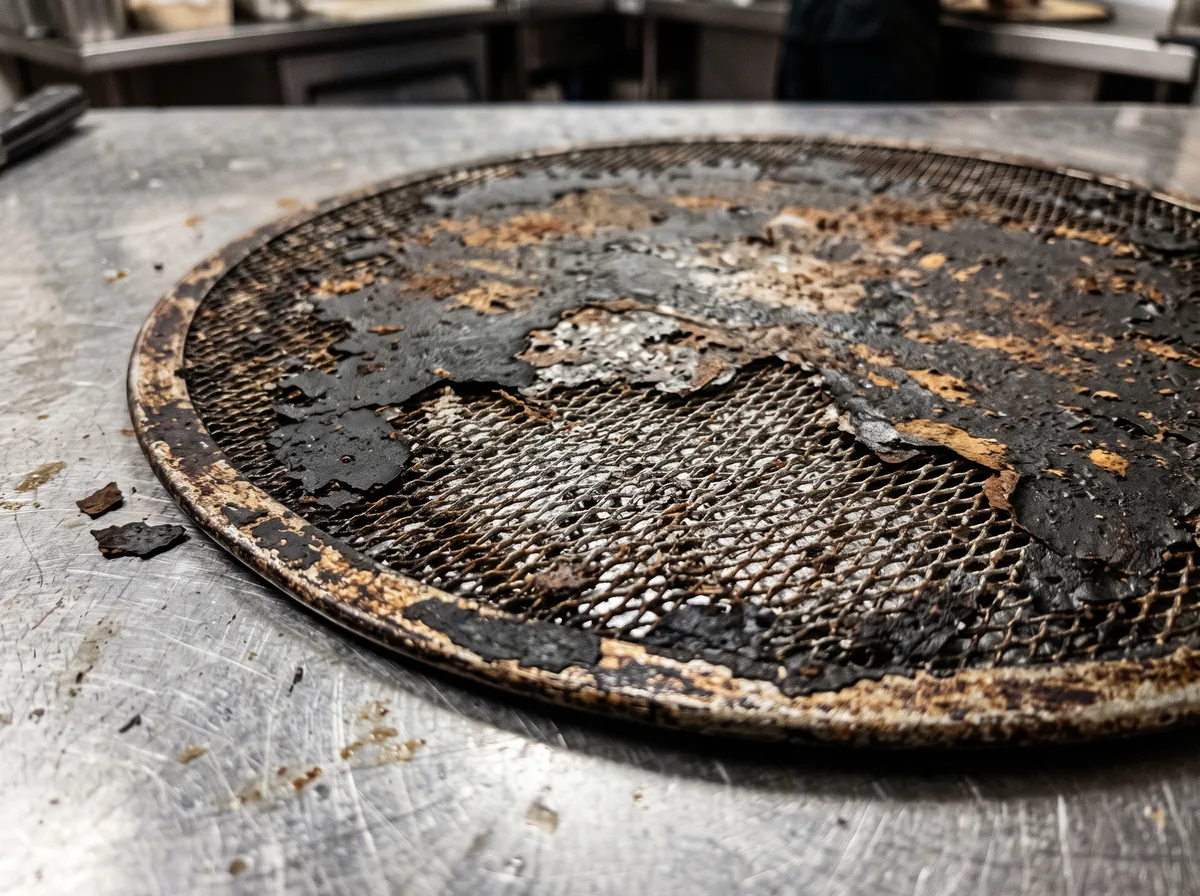
Screens take more direct heat and abrasion than almost anything else in a pizza kitchen. They flex under a peel, scrape against an oven deck, and go through intense wash cycles every night. Because they are relatively low-cost smallwares, screens are easy to overlook until performance drops. Here is what severe wear looks like, listed in the order it usually appears.
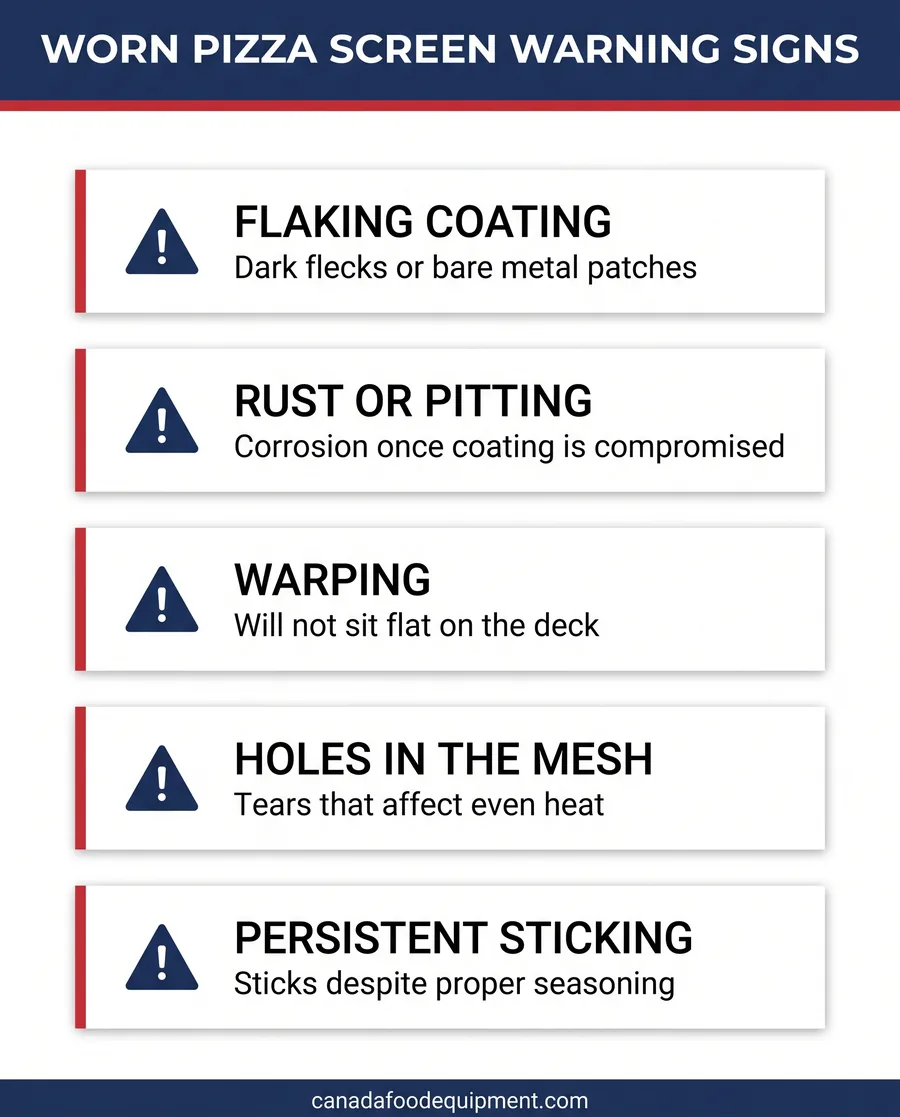
Signs to Replace Commercial Pizza Screens
Work through this list from most urgent to least. Not every worn mark means it is time to replace commercial pizza screens across your entire kitchen, but any screen showing the first two signs should be pulled from rotation immediately.
- Flaking or peeling coating: Dark flecks on the crust or visible bare metal patches mean the non-stick coating is failing on a food-contact surface. Pull the screen immediately.
- Rust spots or pitting: Once the protective layer is compromised, bare metal corrodes rapidly during washing, and rust cannot be scrubbed off without further damaging the mesh.
- Warping or uneven balance: A screen that rocks on the oven deck or peel bakes unevenly and makes sliding pies difficult, leading to torn crusts.
- Holes or tears in the mesh: Even tiny tears disrupt heat distribution across the dough and expand larger with every dish machine cycle.
- Permanent discoloration: A heavily darkened screen that remains stained after washing indicates the surface is near the end of its functional life.
- Persistent sticking: If a properly seasoned screen continues to stick, the non-stick surface itself has degraded beyond repair.
Red flag
Flaking coating and exposed metal patches on a food-contact surface are serious sanitary hazards. Pull damaged screens from rotation right away. If you are unsure whether it is time to replace commercial pizza screens in your kitchen, consult your equipment supplier or local health inspector.
What a Pizza Screen Actually Does
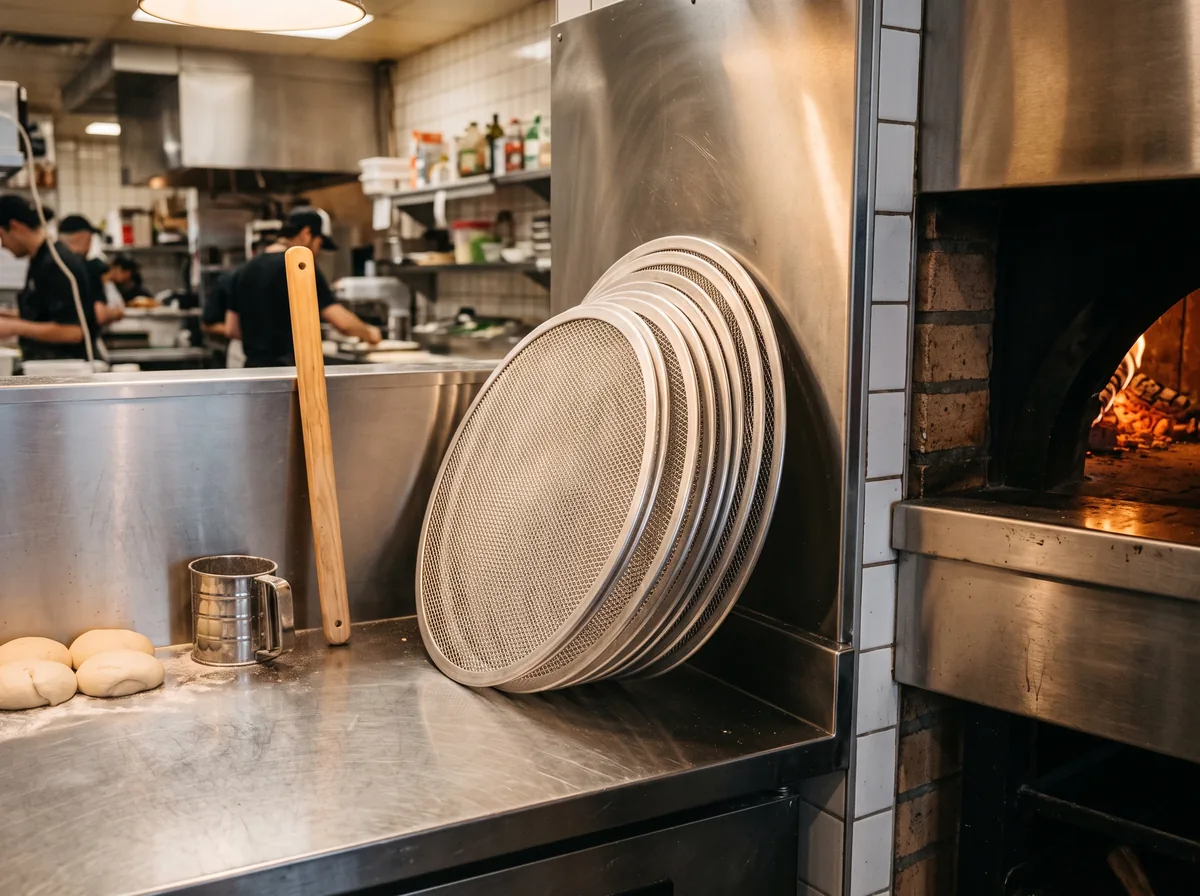
A pizza screen’s open mesh lets hot air circulate beneath the dough instead of trapping moisture like a solid pan, delivering a crispier crust. The coating on commercial aluminum screens ensures dough releases cleanly without requiring excessive oil or cornmeal. Once that coating degrades, bare metal causes sticking, burning, and flaking.
Commercial models, such as American Metalcraft’s pizza screen lineup, are constructed to NSF/ANSI food-equipment standards when new. Replacing damaged screens maintains compliance with health safety standards. You can verify certifications directly with NSF International prior to ordering replacements.
Pro tip
Rotate your pizza screens systematically: keep extra screens in circulation to reduce individual wear, and inspect the entire batch weekly. Catching flaking early allows you to replace single units before whole sets fail at once.
What Happens If You Keep Using a Worn Screen
Continuing to use damaged screens slows kitchen operations. Worn mesh leads to torn crusts, unevenly baked pies, and potential health inspection violations. The low cost of new screens makes it practical to replace commercial pizza screens as soon as flaking or structural wear appears.
If you are currently outfitting a high-volume pizza operation or upgrading existing lines, replacing worn smallwares like screens is one of the quickest ways to keep your kitchen running efficiently without unnecessary downtime.
Good to know
Food-contact safety requirements vary by province and municipality. Check your local public health standards regularly. Canada Food Equipment provides these guidelines for general operational advice.
Download the free quick guide
A printable guide detailing screen wear stages and essential inspection checklists for commercial kitchens.
Frequently Asked Questions
How long do commercial pizza screens typically hold up before needing replacement?
Lifespan depends on volume, oven temperature, and washing methods. High-volume kitchens using dishwashers daily will wear out coatings faster than lower-volume kitchens that hand-wash and season carefully. Inspect coating condition regularly and replace screens at the first sign of flaking or bare metal.
Can a commercial pizza screen be recoated instead of replaced?
Recoating worn screens in-house is not recommended, as applying an even, food-safe coating to mesh requires specialized equipment. Given the low cost of replacement screens, buying new units is safer and more economical.
Does washing pizza screens in a commercial dishwasher wear them out faster?
Yes, repeated high-heat dishwashing cycles accelerate coating wear compared to gentle hand washing. If screens show premature degradation, review your cleaning process and handling procedures.
Is a pizza screen with minor discoloration still safe to use?
Discoloration without surface roughness, flaking, or bare metal is typically harmless cosmetic staining. However, if the surface becomes rough or begins to peel, remove the screen from service.
Should we replace all our pizza screens at once or one at a time?
Replacing screens as needed is generally most practical. Keep spare screens on hand to swap out damaged units individually without incurring major bulk costs.
Taking time to inspect your inventory under bright light makes it easy to replace commercial pizza screens before damaged mesh affects food quality. Before your next busy shift:
- Examine every screen in rotation for flaking, bare metal, rust, or warping.
- Retire any screen showing compromised non-stick coating immediately.
- Order matching replacement screens to maintain proper inventory levels.
If you need help selecting replacement supplies, contact our restaurant equipment team to get expert advice on your pizzeria setup.