
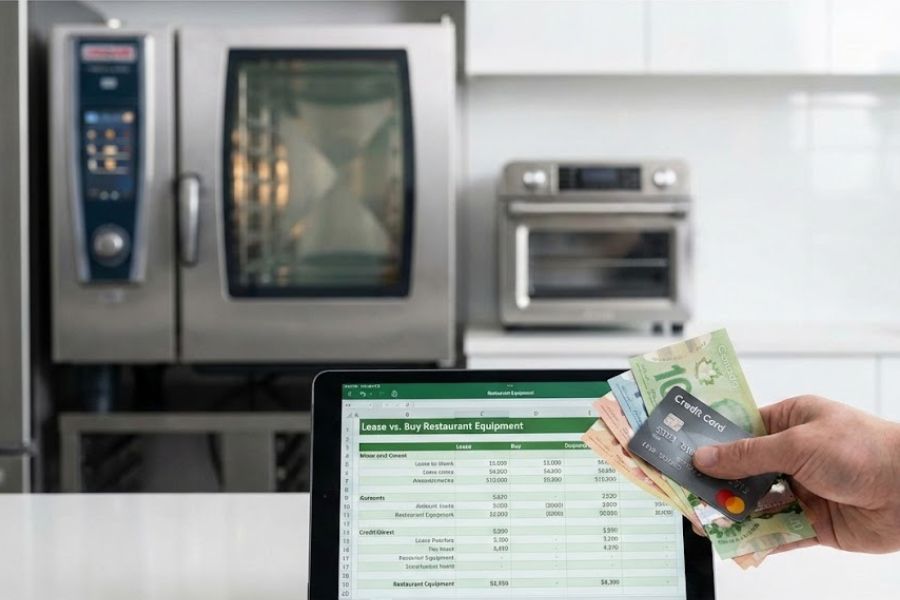
Opening a food business or upgrading an existing kitchen involves making some massive financial choices. You have to secure your location, hire your staff, and figure out your menu. But before you can cook a single meal, you need the right tools in your back-of-house. This brings up the biggest financial hurdle for many owners: figuring out if they should buy their gear outright or look into leasing restaurant equipment instead. At Canada Food Equipment, we talk to chefs, owners, and operations managers every single day who are trying to navigate this exact problem. They want to know the absolute best way to stretch their startup capital without sacrificing the quality of their gear.
There is no single correct answer that applies to every single kitchen. A bustling downtown bakery has completely different financial needs compared to a seasonal catering company or a brand-new mobile food business. The choice between purchasing and leasing restaurant equipment comes down to understanding your specific business model, your available cash reserves, and how long you plan to keep the items.
What Are The Main Differences Between Buying And Leasing Restaurant Equipment?
When you buy your kitchen gear outright, you own the asset from day one. You pay the full price, and it immediately goes onto your balance sheet. Once the manufacturer’s warranty expires, every single repair and maintenance task becomes your financial responsibility.
If a burner stops working or a compressor fails, you have to pay out of pocket to get it fixed. However, you never have to worry about monthly payments eating into your profits. On the other hand, leasing restaurant equipment means you are essentially renting the items for a specific period, usually between one and five years. The leasing company retains ownership. You make a fixed monthly payment to use the ovens, fryers, or refrigerators.
At the end of the contract term, you usually have the option to return the items, renew the contract, or buy the gear for a buyout price. This fundamental difference dictates how your money flows out of your bank account each month.

What Are The Core Pointers For Leasing Restaurant Equipment?
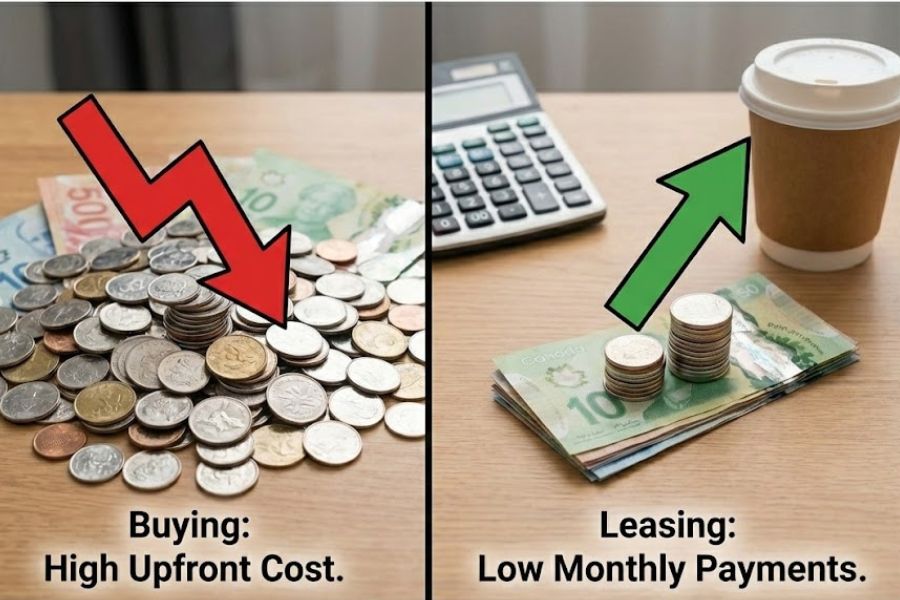
- Leasing requires significantly less upfront capital compared to buying outright.
- Monthly payments are predictable and easy to budget for over the contract term.
- Upgrading to newer technology is much easier when your contract expires.
- You do not build any ownership equity during a standard operating lease.
- The total amount paid over the years will be higher than the outright purchase price due to interest and administrative fees.
How Do Buying And Leasing Restaurant Equipment Compare?
| Feature | Buying Equipment | Leasing Restaurant Equipment |
|---|---|---|
| Upfront Cost | Very high, requires large capital. | Very low, usually just first and last month. |
| Ownership | 100 percent owned by the restaurant. | Owned by the leasing company until bought out. |
| Maintenance | Owner is fully responsible after warranty. | Often included or shared depending on the contract. |
| Technology Upgrades | Difficult, requires selling old gear first. | Simple, just start a new contract with new gear. |
Is Leasing Restaurant Equipment Better For A Brand New Setup?
Yes, in many cases, leasing restaurant equipment is much better for a brand-new setup. The number one reason new restaurants fail is a lack of working cash flow during their first year. By choosing to lease, new owners keep their cash in the bank to pay for unexpected expenses, marketing campaigns, and staff payroll while they build a steady customer base.
How Does Leasing Restaurant Equipment Impact Your Daily Cash Flow?
Cash flow is the most critical metric for any business in the hospitality sector. When you drop twenty thousand dollars on a brand new walk-in cooler, that is twenty thousand dollars you can no longer use to buy ingredients or handle an emergency plumbing issue. Leasing restaurant equipment completely changes your cash flow dynamic.
Instead of a massive initial drain on your bank account, you pay a manageable, fixed amount every thirty days. This allows you to match your equipment costs with the revenue that the equipment generates. For example, your new pizza oven helps you sell five hundred pizzas a month, and the revenue from those pizzas easily covers the monthly lease payment with plenty of profit left over.
Additionally, understanding the tax implications is vital. Depending on your situation, lease payments can be highly beneficial come tax season. It is always wise to consult the Canada Revenue Agency guidelines on operating expenses to understand exactly how you can write off these monthly costs against your income.

What Are The Top Financial Pointers When Leasing Restaurant Equipment?
- Monthly lease payments act as a predictable operating expense rather than a massive capital expenditure.
- Leasing allows you to hold onto emergency cash reserves for building repairs or sudden inventory needs.
- You avoid paying the full sales tax upfront, instead paying tax only on your smaller monthly payments.
- Approval for a lease is generally faster and requires less strict credit checks than a traditional small business bank loan.
- You can match your monthly payment schedule to your projected seasonal revenue spikes.
What Does The Monthly Cash Flow Look Like For Leasing Restaurant Equipment?
| Financial Aspect | Cash Flow Impact of Buying | Cash Flow Impact of Leasing Restaurant Equipment |
|---|---|---|
| Initial Capital Outlay | Depletes bank account immediately. | Preserves bank account for daily operations. |
| Monthly Budgeting | No monthly payments to worry about. | Fixed monthly payment to account for. |
| Tax Treatment | Depreciated over several years (Capital Cost Allowance). | Often fully deductible as a current operating expense. |
| Sales Tax Payment | Full GST and HST paid on day one. | Taxes spread out over the monthly payments. |
Is Leasing Restaurant Equipment Tax Deductible In Canada?
Yes, in most scenarios, the payments you make for leasing restaurant equipment are considered standard operating expenses by the Canada Revenue Agency. This means you can typically deduct the full amount of your lease payments from your taxable income for the year, which can provide a significant tax shield compared to the slower depreciation schedules used when you buy equipment outright.
When Should A Food Truck Or Caterer Consider Leasing Restaurant Equipment?
Different types of food service businesses have completely different requirements. If you are reading up on how to open a food truck, you already know that space is tight and budgets are even tighter. Food trucks require highly specific, compact gear. While leasing might sound great for cash flow, finding a leasing company willing to finance highly customized food truck layouts can sometimes be tricky.
However, for standard items like undercounter fridges or countertop fryers, leasing is a great way to get the truck on the road faster. Caterers, on the other hand, face massive seasonal fluctuations. A catering company might do eighty percent of its business during the summer wedding season and the December holiday rush.
For these businesses, taking on a short-term lease for extra holding cabinets or portable ovens makes perfect sense. They get the gear when they need it, generate revenue, and then return the equipment when the slow season hits.
What Are The Setup Pointers For Leasing Restaurant Equipment?
- Food trucks benefit from leasing standard countertop items to keep their initial build-out costs low.
- Seasonal caterers should look for short term leases to handle holiday volume without long term commitments.
- Fine dining restaurants often buy their stainless steel tables but lease their high-tech combi-ovens.
- Ghost kitchens can use leasing to scale up rapidly when taking on new delivery concepts.
- Coffee shops often lease expensive espresso machines because they require constant maintenance and fast replacements.
How Do Different Setups Approach Leasing Restaurant Equipment?
| Business Type | Best Strategy for Gear | Reasoning for Leasing Restaurant Equipment |
|---|---|---|
| Mobile Food Trucks | Mix of buying custom and leasing standard items. | Needs to preserve cash for permits and vehicle maintenance. |
| Event Caterers | Lease high-capacity gear during busy months. | Avoids storing and paying for unused gear during slow seasons. |
| Fine Dining | Lease high-tech items, buy durable basics. | Wants the newest technology to maintain extreme food quality. |
| Ghost Kitchens | Heavy leasing across the board. | Allows for rapid scaling and changing concepts quickly. |
Does Leasing Restaurant Equipment Make Sense For Seasonal Caterers?
Absolutely. Seasonal caterers are the perfect candidates for leasing restaurant equipment. By utilizing short term contracts, a caterer can acquire an extra ten hot holding cabinets just for the month of December. The revenue from the holiday parties pays for the lease, and the caterer does not have to worry about storing those massive cabinets in a warehouse from January through May.
How Does Buying Used Restaurant Equipment Compare To Leasing Restaurant Equipment?
Many owners who are trying to save money assume that leasing is their only option. However, purchasing refurbished items is an incredible alternative. We have an entire guide on buying branded restaurant equipment because it is such a popular choice in Canada. When you buy used, you get the benefit of ownership without the staggering price tag of brand-new gear. You avoid the heavy depreciation that happens the minute you unwrap a new stove.
But how does it compare to leasing? Leasing gets you brand new equipment with full warranties and zero upfront cost. Buying used requires some upfront capital, but it is a fraction of the cost of new, and you never have a monthly payment hanging over your head. For many independent restaurants, the smartest path is a hybrid approach.
They will buy a refurbished gas range because it is a simple machine that lasts decades, but they will lease their commercial dishwasher because it has sensitive electronics and requires constant professional servicing.
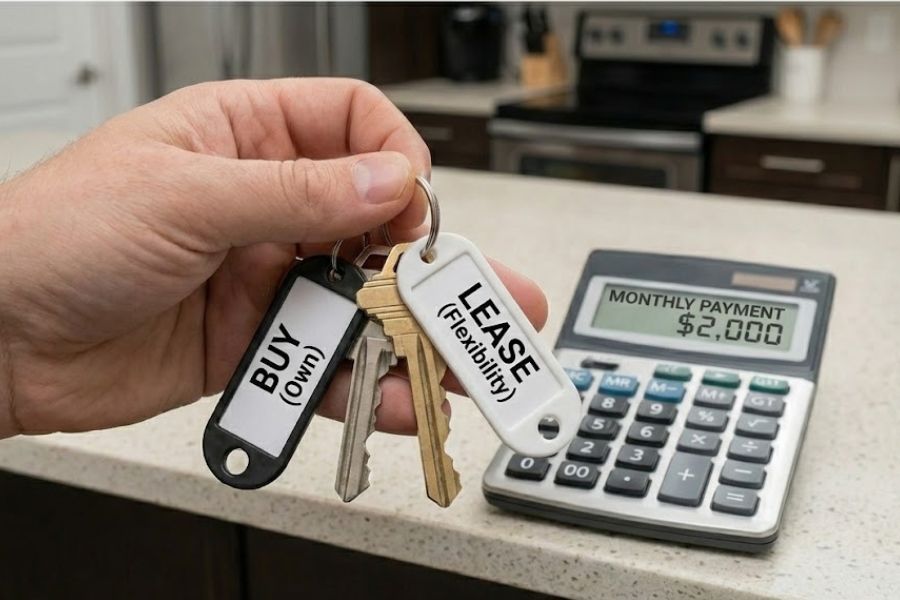
What Are The Key Pointers For Buying Used Versus Leasing Restaurant Equipment?
- Buying used requires upfront cash, but significantly less than buying new.
- Leasing provides brand new equipment, which looks better in open-kitchen concepts.
- Used equipment is yours forever, meaning no ongoing monthly payments.
- Leased equipment often comes with service plans, whereas used equipment requires you to handle repairs.
- A hybrid strategy of buying used durable goods and leasing high-tech goods is often the most profitable route.
What Is The Value Comparison For Used Versus Leasing Restaurant Equipment?
| Comparison Factor | Buying Used Gear | Leasing Restaurant Equipment |
|---|---|---|
| Condition of Item | Refurbished, minor cosmetic wear. | Brand new, straight from the factory. |
| Monthly Commitment | Zero monthly payments required. | Strict monthly payment schedule. |
| Service and Repairs | Owner must find and pay technicians. | Often covered by the leasing agreement. |
| Long Term Value | High value if the item lasts many years. | Low value since you build no equity. |
Can You Do a Lease-to-Own Restaurant Equipment Deal For Used Items?
Yes, many financing companies and equipment dealers offer lease-to-own restaurant equipment programs specifically for refurbished items. This gives you the best of both worlds. You get the lower overall price point of a used item, combined with the cash flow protection of small monthly payments, and at the end of the term, you own the equipment completely.
How Do You Finalize Your Decision On Leasing Restaurant Equipment?
Making the final call requires you to sit down with your business plan and run the numbers. You need to look at how much cash you actually have in the bank right now versus how much you need to open your doors safely. If buying a commercial fridge means you cannot afford your opening week inventory, then buying is the wrong choice.
You must also consider the lifespan of the item. Passive items like stainless steel prep sinks, wall shelves, and heavy-duty cast-iron griddles rarely break. They should almost always be purchased, either new or used. Active items with moving parts, water lines, and computer boards, like ice machines, espresso makers, and programmable convection ovens, are prime candidates for leasing.
At Canada Food Equipment, we always recommend getting a quote for both options. See what the outright purchase price is, and then ask for the monthly terms for leasing restaurant equipment. Multiply the monthly lease payment by the length of the contract to see the total true cost, and decide if the cash flow flexibility is worth that extra expense.
What Are The Final Decision Pointers For Leasing Restaurant Equipment?
- Calculate your total available opening capital before looking at equipment.
- Separate your equipment list into low-tech durable items and high-tech sensitive items.
- Always read the fine print on a lease contract to understand early cancellation penalties.
- Determine if you want to upgrade your equipment in three years or keep it for a decade.
- Speak with your accountant about how lease payments will impact your specific tax filing.
What Is The Final Checklist For Leasing Restaurant Equipment?
| Action Step | Details to Verify | Impact on Leasing Restaurant Equipment |
|---|---|---|
| Review Cash Reserves | Do I have enough cash for six months of rent? | If not, leasing is mandatory to survive. |
| Check Maintenance Terms | Who pays for parts and labor if it breaks? | Good leases cover maintenance costs. |
| End of Term Options | Can I buy it, return it, or upgrade it? | Ensure you have a fair buyout price listed. |
| Compare Total Cost | Monthly payment multiplied by term length. | Helps you see the true cost of the financing. |
Where Can I Start Leasing Restaurant Equipment Today?
You can start right here at Canada Food Equipment. We offer flexible financing and leasing options tailored specifically for the Canadian food service industry. Whether you need a single commercial range or an entire kitchen package, our team will walk you through the leasing contracts, help you compare the costs against buying used, and ensure you get the absolute best setup for your specific business needs and budget.
Making the choice between buying and leasing does not have to be stressful. By taking the time to understand your cash flow, analyzing your menu needs, and consulting with equipment experts, you can build a kitchen that is both highly functional and financially secure. Protect your working capital, choose the right gear for your daily volume, and get ready to serve amazing food to your customers.