
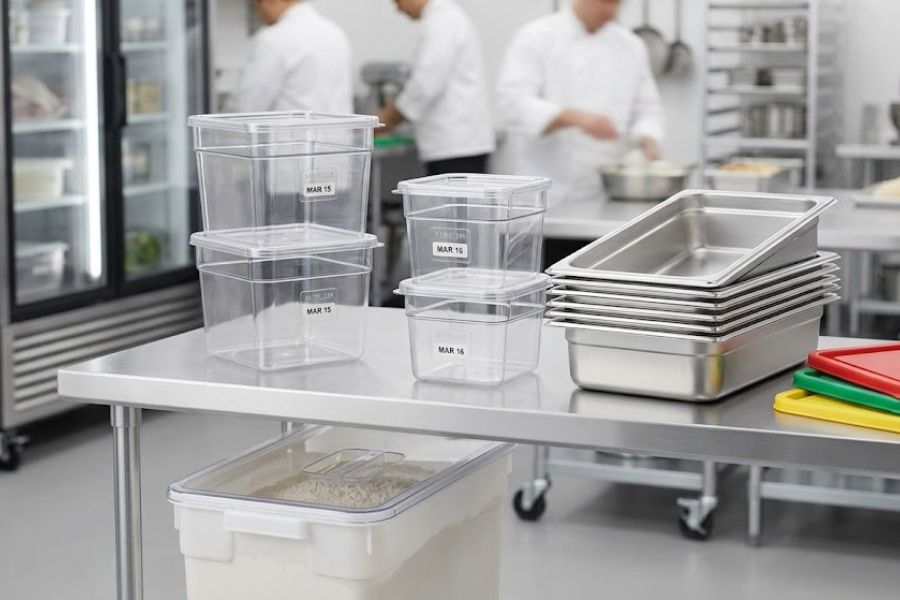
Every professional chef and kitchen manager knows that a flawless dinner service starts long before the first ticket prints. It begins the exact moment your suppliers drop off fresh ingredients at the back door. Securing those ingredients properly is the most critical step in protecting your customers and your bottom line. Food storage containers are the absolute unsung heroes of the culinary world. Without them, kitchens would descend into chaos, inventory would spoil rapidly, and the risk of foodborne illness would skyrocket. At Canada Food Equipment, we have spent decades helping Canadian restaurants, bakeries, and catering companies build incredibly safe and highly efficient prep areas. We talk to operators every single day who want to completely eliminate the risk of bacterial spread in their walk-in coolers and dry pantries.
Cross-contamination happens when harmful bacteria or allergens transfer from one substance to another. This usually occurs through improper handling, using the wrong prep tools, or storing raw meats above ready-to-eat ingredients. Preventing this nightmare scenario requires strict discipline and the right gear. Upgrading your kitchen with high-quality food storage containers is the easiest and most effective way to ensure you pass your next health inspection with flying colours. In this comprehensive guide, we are going to explore the exact strategies, materials, and organizational methods you need to keep your commercial kitchen incredibly safe and perfectly organized.
Why Proper Food Storage Containers Are Crucial For Food Safety
When fresh produce and meats arrive at your restaurant, they are almost always packed in corrugated cardboard boxes. Those delivery boxes have travelled across the country on transport trucks, sat on loading docks, and been handled by dozens of people.
Bringing those cardboard boxes directly into your walk-in cooler is a massive mistake. Cardboard absorbs moisture, harbours dangerous bacteria, and provides the perfect nesting ground for pests.
To maintain a sterile environment, you must immediately transfer all fresh ingredients into proper food storage containers. This simple step forms the foundation of all Health Canada food safety practices for commercial establishments.
What Are The Key Issues For Food Safety Storage
- Always discard shipping cardboard immediately upon delivery to prevent bringing outside pests and dirt into your clean prep zones.
- Utilize tight fitting lids to create a solid barrier against airborne dust, accidental spills, and dripping condensation from cooling fans.
- Label every single bin with the date received and the use-by date to guarantee strict adherence to the first in first out inventory method.
- Store all bins at least six inches off the floor to allow for proper floor sweeping, mopping, and pest control monitoring.
- Never overfill your bins because food needs proper air circulation to cool down rapidly and stay out of the dangerous temperature danger zone.
How Do Improper And Proper Storage Methods Compare
| Storage Method Aspect | Improper Storage In Cardboard | Proper Commercial Container Storage |
|---|---|---|
| Moisture Resistance | Absorbs water and collapses easily. | Completely waterproof and structurally rigid. |
| Bacterial Growth Risk | High risk due to porous material trapping dirt. | Low risk due to smooth and washable surfaces. |
| Pest Attraction | Provides nesting material and easy food access. | Blocks smells and prevents pest entry entirely. |
| Health Inspection Result | Guaranteed citation or severe point deduction. | Meets all sanitation and safety requirements. |
Why Are Restaurant Food Storage Containers Better Than Cardboard
Restaurant food storage containers are specifically engineered to be completely non-porous. Cardboard acts like a sponge for raw meat juices, spilled sauces, and ambient humidity. Once cardboard gets wet, it breeds bacteria rapidly and cannot be sanitized. Commercial bins made of hard plastics or metals can be run through a high temperature dishwasher repeatedly, ensuring they are completely sterile before they are used to hold a new batch of fresh ingredients.
How To Choose Between Polycarbonate And Stainless Steel Inserts
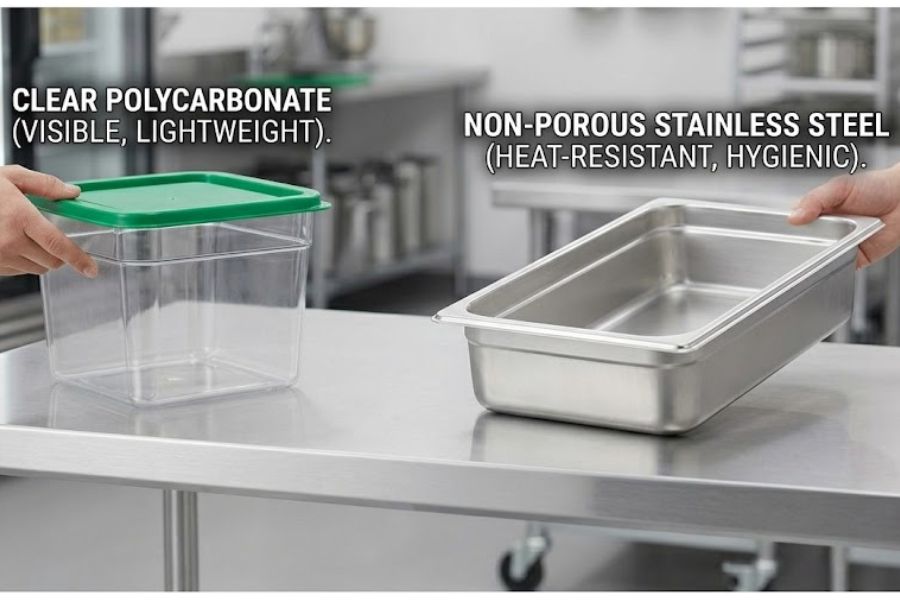
Selecting the exact material for your food storage needs can feel overwhelming because there are so many options on the market. Two of the absolute most popular choices for professional kitchens are clear polycarbonate plastics and heavy duty metals. Products like Cambro Camwear are made from incredibly tough polycarbonate. We highly recommend browsing our wide selection of Plastic Inserts because they offer crystal clear visibility. This allows your prep cooks to instantly identify exactly how much diced onion or sliced tomato is left without ever having to lift the lid and expose the food to the open air. On the other hand, we have our premium Stainless Inserts, which serve a completely different purpose. Stainless steel is incredibly conductive, making it the absolute best choice for hot holding soups on a steam table or rapidly chilling raw meats in an ice bath. Furthermore, stainless steel will never stain or absorb strong odours from ingredients like garlic, curry, or tomato sauce.
What Are The Materials For Commercial Kitchen Containers
- Polycarbonate bins are virtually unbreakable and allow for rapid visual inventory checks during a busy dinner rush.
- Polypropylene bins are slightly translucent but offer incredible chemical resistance, making them a very cost-effective option for large prep kitchens.
- Stainless steel inserts provide unmatched temperature transfer for chilling raw seafood quickly to prevent rapid bacterial multiplication.
- Metal pans are completely non-porous and are the safest possible material for storing raw poultry and bloody cuts of beef.
- Always pair your inserts with their exact matching lids to ensure the seal is completely flush and secure against spills.
How Do Polycarbonate And Stainless Steel Materials Compare
| Feature Comparison | Clear Polycarbonate Bins | Stainless Steel Metal Pans |
|---|---|---|
| Content Visibility | Crystal clear for instant visual inventory checks. | Completely opaque requiring lid removal to see inside. |
| Impact Resistance | Highly durable but can eventually crack if dropped on hard floors. | Will dent if dropped but will never completely shatter or crack. |
| Stain and Odour Resistance | Can slowly absorb colours from heavy tomato sauces over time. | Completely impervious to all stains, acids, and strong odours. |
| Temperature Application | Best suited for cold walk-in storage and ambient dry goods. | Excellent for extreme heat on steam tables and extreme cold in freezers. |
Are Polycarbonate Food Storage Containers Safe For Hot Foods
While high-quality polycarbonate can withstand relatively high temperatures, it is generally not recommended for direct cooking or holding boiling liquids for extended periods. They are absolutely perfect for storing freshly prepped cold ingredients, dry goods, and cooled leftovers. If you need to hold simmering sauces or hot foods on a buffet line, you should always transition to stainless steel pans to prevent any risk of the plastic degrading or warping over time.
How Colour-Coded Containers Prevent Accidental Cross Contamination
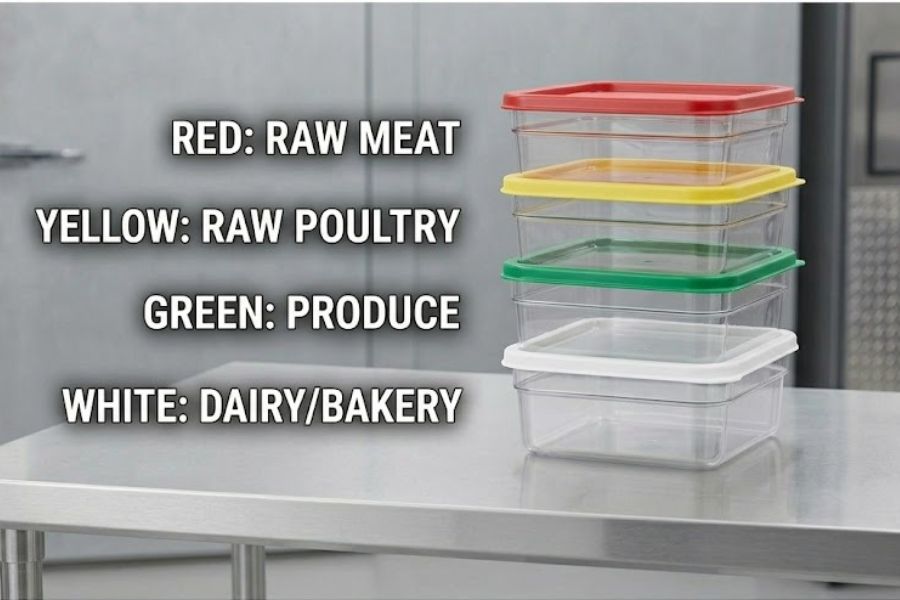
Human error is the leading cause of cross-contamination in busy commercial kitchens. When tickets are printing endlessly, and the line is completely slammed, cooks move incredibly fast. It is very easy to accidentally grab a bin that previously held raw chicken and use it to store freshly washed salad greens. To combat this dangerous problem, the food service industry relies heavily on strict colour coding systems. We highly advise outfitting your kitchen with our durable Cutting Boards in standard HACCP colours. When a cook uses a red cutting board to slice raw beef and then slides that beef directly into a bin with a bright red lid, the risk of ingredient mix-ups drops to zero.
What Are The Important Factors for Colour-Coded Kitchen Systems
- Implementing a strict colour system eliminates the guesswork for new hires and temporary kitchen staff.
- Red is universally designated for storing and prepping all raw red meats to keep bloody juices isolated.
- Yellow is strictly reserved for raw poultry because chicken poses the highest risk of Salmonella contamination.
- Blue is utilized for all raw seafood and shellfish to prevent dangerous allergens from touching other meals.
- Green is dedicated entirely to washed, fresh produce and ready-to-eat salads, ensuring they remain crisp and safe.
What Does A Standard Kitchen Colour-Coding System Look Like
| Designated Colour | Specific Food Category | Primary Safety Purpose |
|---|---|---|
| Red | Raw Beef and Pork | Isolates bloody proteins from ready-to-eat items. |
| Yellow | Raw Chicken and Turkey | Contains salmonella risk to one specific prep zone. |
| Blue | Raw Fish and Shellfish | Prevents severe seafood allergens from spreading. |
| Green | Fresh Fruits and Vegetables | Keeps produce completely free of meat juices. |
| White | Dairy and Bakery Goods | Maintains the purity of sensitive dairy and bread products. |
Do Colour-Coded Food Storage Bins Actually Improve Kitchen Efficiency
Yes, colour coding drastically improves the speed and efficiency of a commercial kitchen. When a line cook runs out of diced tomatoes during a massive rush, they do not have to waste precious minutes opening five different opaque bins to find the right ingredient. They simply scan the walk-in cooler shelves for a green lid, grab the bin, and get immediately back to the cooking line. This visual system reduces hesitation and streamlines the entire restocking process.
Why Airtight Ingredient Bins And Dough Boxes Protect Your Inventory
Restaurants are not the only businesses that need to worry about contamination. Bakeries, pizzerias, and large-scale cafeterias face completely different challenges when dealing with massive quantities of dry goods. Flour, sugar, rice, and grains are incredibly sensitive to ambient humidity. The best way to secure your dry inventory is to utilize heavy-duty Ingredient Bins. These large capacity, mobile units feature sliding airtight lids that lock out humidity and pests while allowing bakers to scoop out exact measurements quickly. For pizzerias, protecting the dough during the proofing process is equally critical. Our professional-grade stackable Dough Boxes prevent the surface of the dough from drying out and crusting over. By creating a completely sealed environment, these boxes ensure your yeast ferments perfectly without any interference from airborne flour dust from other prep stations.

What Are The Top Issues For Bulk Dry Storage Safety
- Always transfer bulk dry goods out of their original paper sacks immediately to prevent devastating pest infestations.
- Utilize mobile ingredient bins with heavy-duty casters so you can easily roll massive amounts of flour directly to the mixing station.
- Look for bins with clear sliding lids so you can instantly check inventory levels without fully exposing the dry goods to the kitchen air.
- Never mix new flour with old flour in the same bin to ensure you are strictly following the first-in-first-out freshness rule.
- Stackable dough boxes save an incredible amount of floor space while keeping individual dough balls perfectly round and hydrated.
How Do Open Bags And Sealed Ingredient Bins Compare
| Dry Storage Factor | Leaving Goods In Open Bags | Using Sealed Ingredient Bins |
|---|---|---|
| Humidity Control | Fails completely, causing ingredients to clump and spoil. | Locks out all ambient moisture to keep powders perfectly dry. |
| Pest Vulnerability | Extremely high risk for mice, ants, and pantry weevils. | Creates an impenetrable barrier against all kitchen pests. |
| Mobility and Workflow | Requires heavy lifting and carrying bags across the kitchen. | Rolls smoothly on casters directly to the prep tables. |
| Overall Cleanliness | Spills constantly on the floor when scooped from a torn bag. | Keeps all ingredients contained during the scooping process. |
How Often Should You Wash Bulk Commercial Ingredient Bins
You should completely empty, wash, and thoroughly sanitize your bulk ingredient bins every single time the bin runs empty, before you refill it with a brand new batch of dry goods. It is absolutely critical to ensure the bin is one hundred percent dry before adding new flour or sugar. Even a single drop of leftover water from the cleaning process will cause the new dry goods to immediately mold and ruin the entire fresh batch.
How To Organize Your Commercial Fridge To Stop Bacterial Spread
Buying the best food storage containers in the world will not help you if you place them on the wrong shelves. Commercial refrigerators must be organized following a very strict vertical hierarchy based entirely on the required cooking temperature of the food. The rule is very simple. The higher the final cooking temperature required to kill bacteria, the lower the time that food must sit on the shelving rack. Whether you are installing a brand new walk-in cooler or outfitting your kitchen after buying used restaurant equipment, you must set up your shelves correctly on day one. Ready-to-eat foods, fresh salads, and delicate desserts must always claim the highest shelves. Raw seafood and whole cuts of beef or pork sit directly below them. Raw ground meats, which require a higher cooking temperature than whole cuts, go on the next shelf down.

What Are the Essentials for Fridge Organization
- Never stack bins of raw meat directly on top of each other without a solid shelf between them to prevent crushing and leaking.
- Ensure all your bins have tight-fitting lids applied securely before they are ever placed onto the refrigeration racks.
- Leave ample space between your food storage containers to allow the cold air to circulate properly and maintain safe holding temperatures.
- Place newer inventory towards the back of the shelf and pull older inventory to the front to ensure nothing expires and goes to waste.
- Use specialized drain shelves inside your meat bins to elevate the proteins out of their own juices and drastically extend their shelf life.
What Is The Correct Commercial Fridge Shelf Order
| Shelf Position | Food Category To Store | Reasoning For This Placement |
|---|---|---|
| Top Shelves | Ready-to-eat foods, produce, and cooked items. | Nothing above them can drip and cause contamination. |
| Upper Middle Shelves | Raw seafood and whole cuts of beef or pork. | Requires a lower cooking temperature than ground meats. |
| Lower Middle Shelves | Raw ground meats and ground fish. | Requires a higher internal cooking temperature to be safe. |
| Bottom Shelves | Raw poultry, whole chickens, and raw eggs. | Carries the highest biological risk and must never drip on anything else. |
Why Do Raw Poultry Containers Always Go On The Bottom Shelf
Raw poultry carries the highest natural risk of containing dangerous Salmonella bacteria and requires the highest internal cooking temperature to be rendered safe for human consumption. By placing your chicken food storage containers on the bottom shelf of the fridge, you ensure that if a lid fails or a bin cracks, contaminated juices cannot drip onto foods that require lower cooking temperatures or items that will be served raw.
Protecting your kitchen from the dangers of cross-contamination requires a combination of high-quality tools and strict daily routines. By investing in clear polycarbonate bins for your prep stations, durable stainless steel pans for your hot lines, and massive ingredient bins for your dry storage, you give your culinary team the exact tools they need to succeed safely. Take the time to implement a universal colour coding system and enforce strict walk-in cooler shelf hierarchies. When you prioritize food safety, you protect your reputation, streamline your prep times, and ensure every single meal you serve is absolutely perfect. At Canada Food Equipment, we are always ready to help you find the exact storage solutions to fit your unique menu and kitchen layout.